

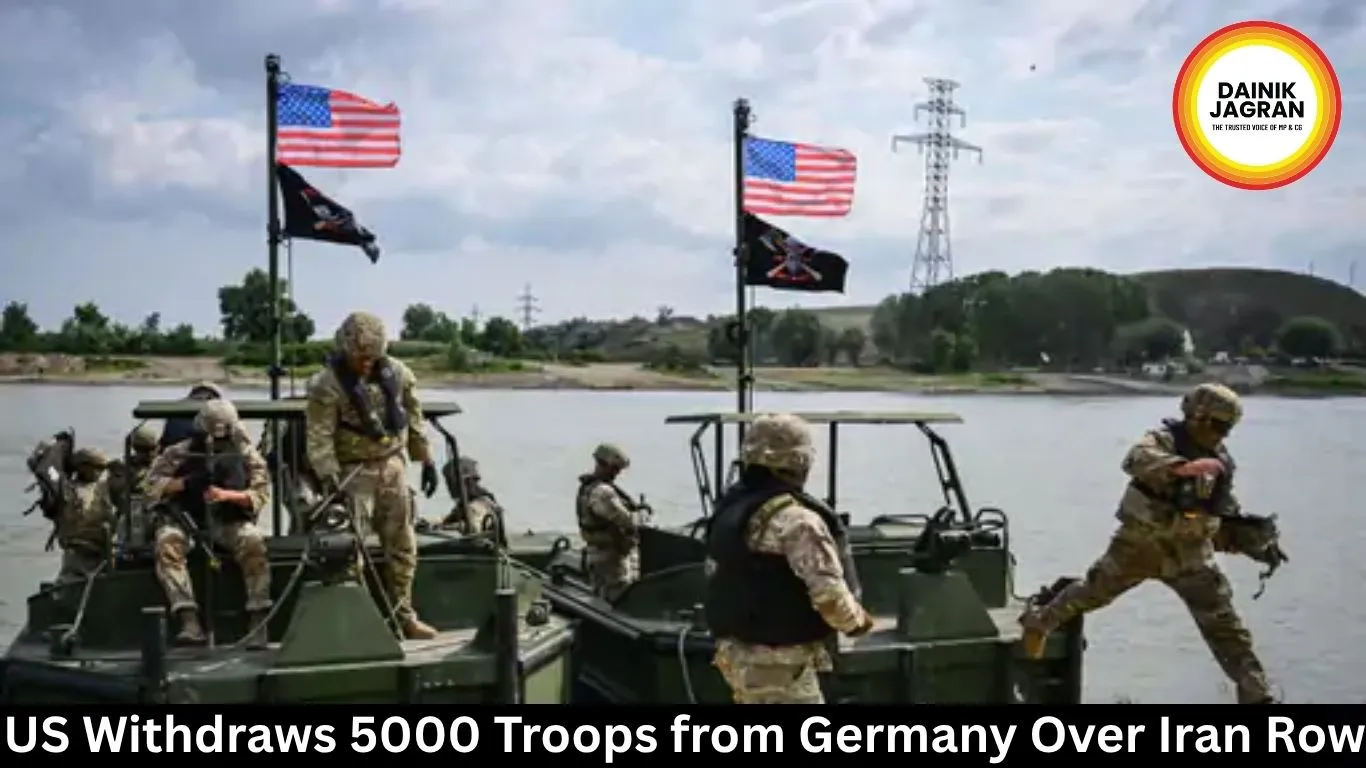
US Withdraws 5000 Troops from Germany Over Iran Row

Digital Desk

US Withdraws 5000 Troops from Germany Over Iran Row

US to withdraw 5,000 troops from Germany following Trump-Merz clash over Iran policy. Experts warn of NATO unity risks as American forces leave European bases.

US to Withdraw 5,000 Troops from Germany Amid Iran Policy Clash

Decision follows sharp criticism from German Chancellor Friedrich Merz over Trump administration’s Iran strategy; NATO unity concerns emerge.

In a significant move that signals growing transatlantic friction, the United States has decided to pull out approximately 5,000 troops from Germany. The Pentagon confirmed that the withdrawal process will be completed over the next six to twelve months.

The decision follows a very public war of words between US President Donald Trump and German Chancellor Friedrich Merz. The friction, officials say, has been brewing for weeks but escalated after Merz publicly questioned Washington's strategy on Iran.

Behind the Diplomatic Spat

The roots of the confrontation lie in a recent event where Chancellor Merz reportedly criticised the lack of a coherent US exit plan regarding tensions with Tehran. According to sources familiar with the matter, Merz suggested that American negotiators have been outmanoeuvred repeatedly.

"He implied that Iran is an expert at stalling talks and that Washington walked away with nothing but humiliation," a diplomatic source recalled. While the White House has not issued a detailed rebuttal, President Trump did not hold back his irritation. He accused Merz of doing a "very poor job" and suggested the German leader lacks a grasp of reality regarding the nuclear threat.

Changing Landscape in Europe

Currently, Germany hosts over 36,000 American service members as of December data—the second-largest contingent of US forces overseas after Japan, which has roughly 55,000. Italy and the UK host an additional 12,000 and 10,000 troops respectively.

This is not the first time the American leader has pushed for a drawdown. During his previous term, a proposal to remove 12,000 troops from Germany was blocked by the US Congress and later reversed by President Joe Biden. Officials indicate that similar reductions might be on the cards for Italy and Spain, with Trump arguing these nations are not offering enough support against Iranian aggression.

Strategic Shift or Punishment?

Analysts are watching the situation closely. The move appears to be a stark departure from the traditional US policy of maintaining a robust deterrent against Russia in Central Europe.

However, insiders suggest there is a broader realignment at play. "Trump wants to shift focus to the Asia-Pacific to counter China," a defence ministry official said, requesting anonymity. "But pulling out of Germany specifically feels personal. It is a message to Europe that freeloading on defence is over."

The timing is particularly sensitive. European allies have consistently refused to join Washington's hawkish stance on Tehran, leading Trump to previously label European nations as "paper tigers" who never show up when it counts.

Ground Realities

The US military presence in Germany dates back to 1945. Over the decades, installations like Ramstein Air Base and the Landstuhl Regional Medical Center have become critical logistics hubs. These bases allow the US to project power into the Middle East, Africa, and Central Asia.

In Washington, the decision is facing sharp criticism. Senate Armed Services Committee member Jack Reed called the move reckless. "This shows our commitments are subject to the President's mood swings," Reed warned, adding that it could damage long-term security ties.

Experts warn that the hasty removal of troops could weaken NATO’s cohesion at a moment when Russia's war in Ukraine remains unresolved. "This isn't just about Germany. These bases are the launchpad for every major US operation from Iraq to recent missions near Iran," defence analyst Bradley Bowman explained.

Looking Ahead

As the Pentagon begins the complex logistical exercise of moving thousands of personnel out of Germany, questions remain about where these troops will go. While the official line points to a pivot towards Asia, the immediate impact is a widening rift within the NATO alliance.

For now, local authorities near the major US garrisons in places like Grafenwöhr and Wiesbaden are bracing for change, even as Berlin insists the bilateral relationship remains strong.

--------

🚨 Beat the News Rush – Join Now!

Get breaking alerts, hot exclusives, and game-changing stories instantly on your phone. No delays, no fluff – just the edge you need. ⚡

Tap to join: 

🟢 WhatsApp Channel: Dainik Jagran MP CG

Crave more?

🅕 Facebook: Dainik Jagran MP CG English

🅧 Twitter (X): Dainik Jagran MP CG

🅘 Instagram: Dainik Jagran MP CG

Share the fire – keep your crew ahead! 🗞️🔥

english.dainikjagranmpcg.com
02 May 2026 By Abhishek Joshi

US Withdraws 5000 Troops from Germany Over Iran Row

Digital Desk

US to Withdraw 5,000 Troops from Germany Amid Iran Policy Clash

Decision follows sharp criticism from German Chancellor Friedrich Merz over Trump administration’s Iran strategy; NATO unity concerns emerge.

In a significant move that signals growing transatlantic friction, the United States has decided to pull out approximately 5,000 troops from Germany. The Pentagon confirmed that the withdrawal process will be completed over the next six to twelve months.

The decision follows a very public war of words between US President Donald Trump and German Chancellor Friedrich Merz. The friction, officials say, has been brewing for weeks but escalated after Merz publicly questioned Washington's strategy on Iran.

Behind the Diplomatic Spat

The roots of the confrontation lie in a recent event where Chancellor Merz reportedly criticised the lack of a coherent US exit plan regarding tensions with Tehran. According to sources familiar with the matter, Merz suggested that American negotiators have been outmanoeuvred repeatedly.

"He implied that Iran is an expert at stalling talks and that Washington walked away with nothing but humiliation," a diplomatic source recalled. While the White House has not issued a detailed rebuttal, President Trump did not hold back his irritation. He accused Merz of doing a "very poor job" and suggested the German leader lacks a grasp of reality regarding the nuclear threat.

Changing Landscape in Europe

Currently, Germany hosts over 36,000 American service members as of December data—the second-largest contingent of US forces overseas after Japan, which has roughly 55,000. Italy and the UK host an additional 12,000 and 10,000 troops respectively.

This is not the first time the American leader has pushed for a drawdown. During his previous term, a proposal to remove 12,000 troops from Germany was blocked by the US Congress and later reversed by President Joe Biden. Officials indicate that similar reductions might be on the cards for Italy and Spain, with Trump arguing these nations are not offering enough support against Iranian aggression.

Strategic Shift or Punishment?

Analysts are watching the situation closely. The move appears to be a stark departure from the traditional US policy of maintaining a robust deterrent against Russia in Central Europe.

However, insiders suggest there is a broader realignment at play. "Trump wants to shift focus to the Asia-Pacific to counter China," a defence ministry official said, requesting anonymity. "But pulling out of Germany specifically feels personal. It is a message to Europe that freeloading on defence is over."

The timing is particularly sensitive. European allies have consistently refused to join Washington's hawkish stance on Tehran, leading Trump to previously label European nations as "paper tigers" who never show up when it counts.

Ground Realities

The US military presence in Germany dates back to 1945. Over the decades, installations like Ramstein Air Base and the Landstuhl Regional Medical Center have become critical logistics hubs. These bases allow the US to project power into the Middle East, Africa, and Central Asia.

In Washington, the decision is facing sharp criticism. Senate Armed Services Committee member Jack Reed called the move reckless. "This shows our commitments are subject to the President's mood swings," Reed warned, adding that it could damage long-term security ties.

Experts warn that the hasty removal of troops could weaken NATO’s cohesion at a moment when Russia's war in Ukraine remains unresolved. "This isn't just about Germany. These bases are the launchpad for every major US operation from Iraq to recent missions near Iran," defence analyst Bradley Bowman explained.

Looking Ahead

As the Pentagon begins the complex logistical exercise of moving thousands of personnel out of Germany, questions remain about where these troops will go. While the official line points to a pivot towards Asia, the immediate impact is a widening rift within the NATO alliance.

For now, local authorities near the major US garrisons in places like Grafenwöhr and Wiesbaden are bracing for change, even as Berlin insists the bilateral relationship remains strong.

https://english.dainikjagranmpcg.com/international/us-withdraws-5000-troops-from-germany-over-iran-row/article-17707

Related Posts

Latest News


