


Why Trump Backed Down Before Europe After Threatening Global Tariffs
Digital Desk
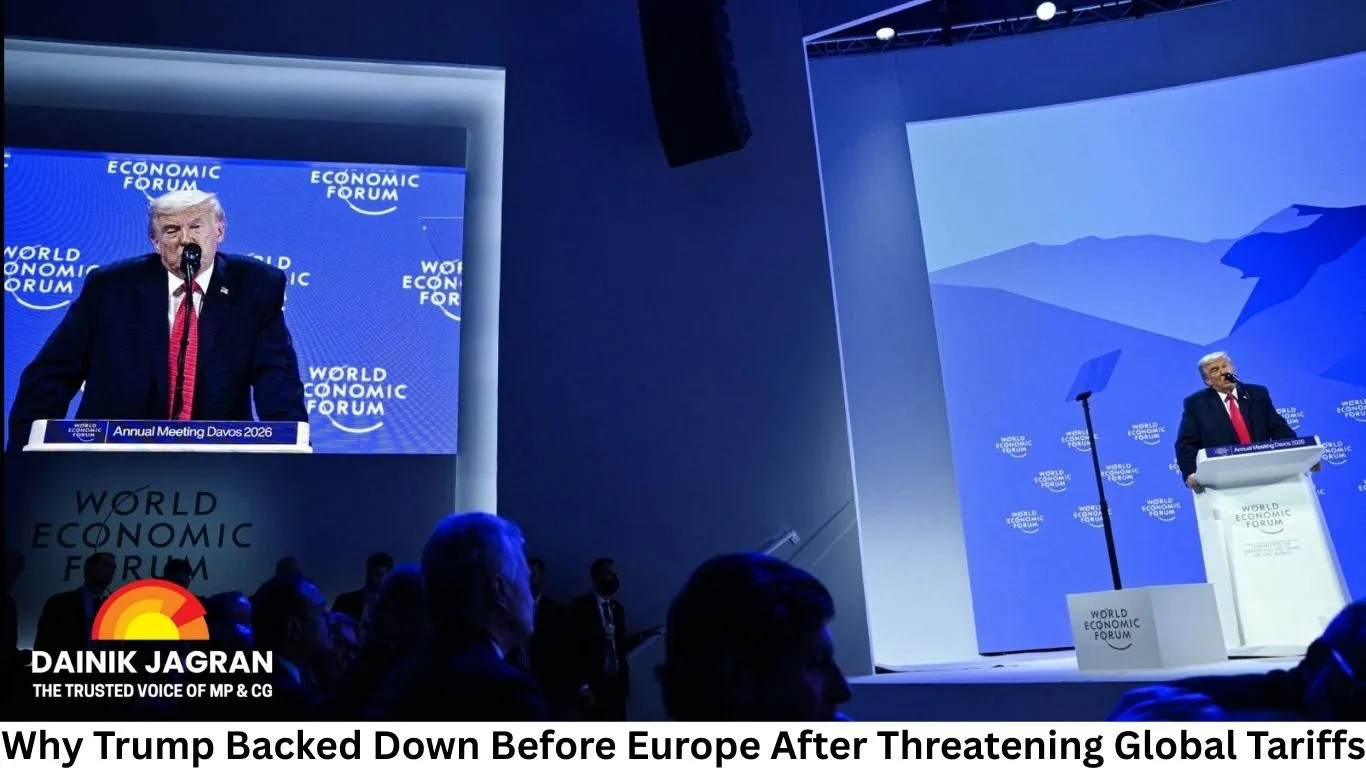
The confrontation unfolded in late January, after Trump announced plans to impose a blanket 10% tariff on European goods from February 1. Speaking days earlier at the World Economic Forum in Davos, Trump had openly mocked European countries, signalling little concern for their response. However, the tone shifted once Brussels made clear that it would not negotiate under threat.
European Commission officials warned that if Washington proceeded, the EU could restrict US imports and exports, bar American companies from EU public contracts, and limit US investments across the bloc’s market of 450 million consumers. The scale of potential losses for US firms, running into billions of dollars, altered the political and economic calculus for the White House.
By the end of the week, Trump stepped back from the tariff threat and also softened his stance on Greenland, saying he would not use force to annex the Danish territory. While no formal agreement was announced, EU leaders presented the outcome as proof that unity and preparedness had worked.
The Anti-Coercion Instrument, adopted by the EU in December 2023, was designed precisely for such scenarios. Its origins lie in a 2021 dispute when China imposed trade restrictions on Lithuania after it allowed Taiwan to open a representative office in Vilnius. Fearing that major powers could use trade as leverage against individual member states, the EU created a legal mechanism to respond collectively.
European leaders see the episode as part of a broader shift in global politics. With Russia’s ongoing war in Ukraine and renewed US pressure on allies, sovereignty and border security have returned to the centre of European strategy. “Appeasement does not work,” Polish Prime Minister Donald Tusk warned recently, reflecting a growing consensus in Brussels.
While the US remains Europe’s most important military and economic partner, trust has weakened. Analysts say the tariff standoff has strengthened calls within the EU for greater strategic autonomy, particularly in defence and trade policy. For now, Europe’s show of unity has demonstrated that coordinated economic power can still temper even the most aggressive threats.
.jpg)




