


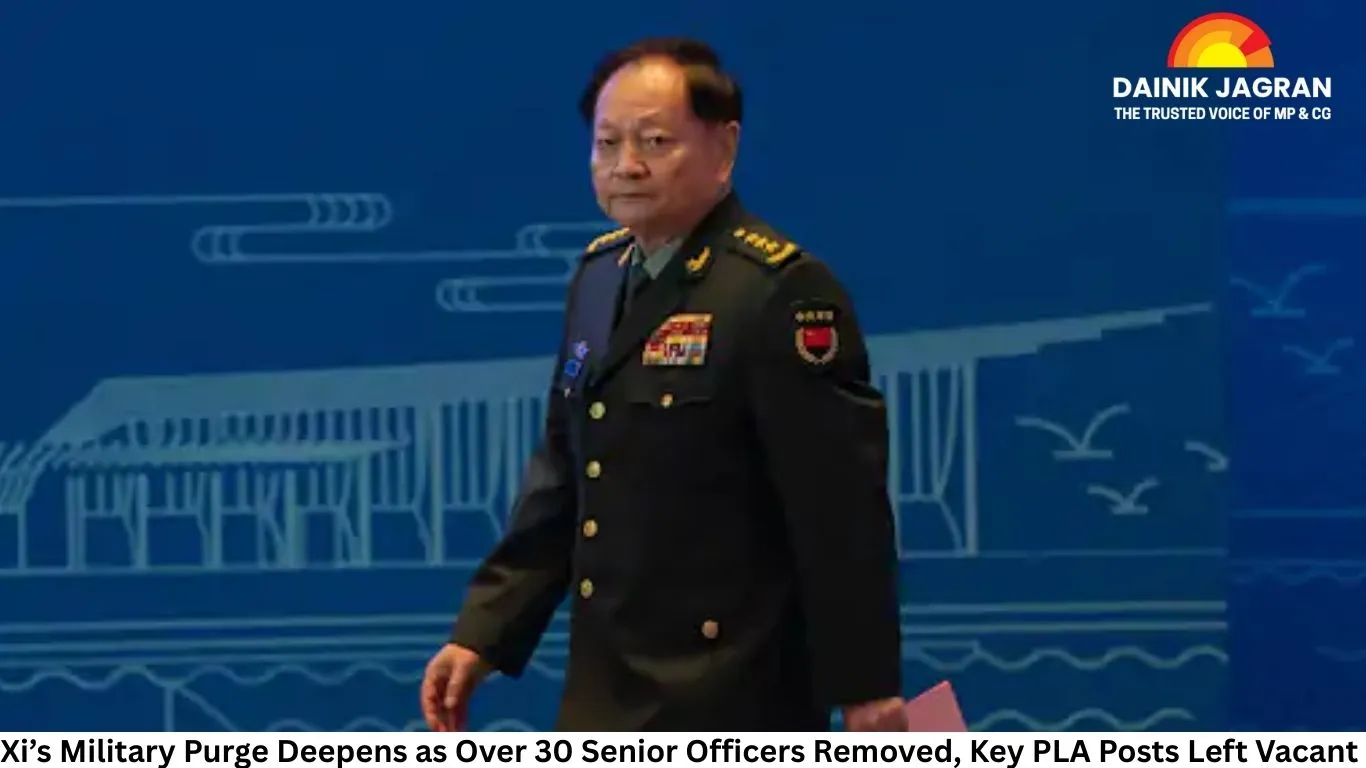
Xi’s Military Purge Deepens as Over 30 Senior Officers Removed, Key PLA Posts Left Vacant
Digital desk
The overhaul has primarily affected the Central Military Commission (CMC) — China’s top military decision-making body chaired by Xi — along with commanders across theatre commands and strategic branches such as the Rocket Force. Many of those dismissed are reported to be under investigation for corruption or “serious violations of discipline,” though observers say the campaign also reflects Xi’s determination to tighten political control over the military.
Among the most prominent figures removed are senior commanders previously linked to operational planning and procurement. Their absence has created unusual gaps in leadership at a time when China continues to modernise its forces and expand its regional footprint. Analysts note that some of the vacancies involve officers responsible for joint operations and missile forces, sectors central to Beijing’s long-term military strategy.
The purge has unfolded gradually since 2023 but has accelerated in recent months, with several high-ranking officers disappearing from public view or being formally placed under investigation. Official statements have framed the actions as part of a broader anti-corruption drive within the armed forces. The Chinese government has long described corruption as a major threat to combat readiness and party control.
Military scholars say the campaign underscores Xi’s insistence that the PLA remain firmly under Communist Party leadership. Since assuming power, he has repeatedly stressed political loyalty alongside professional competence, arguing that ideological discipline is essential to national security. The removal of senior figures once considered influential suggests that even well-placed commanders are not immune from scrutiny.
The developments come as China continues to boost defence spending and pursue rapid modernisation across its navy, air force and missile units. The country’s official defence budget has grown steadily in recent years, supporting investments in advanced weapons systems and expanded training operations.
Despite the leadership churn, state media have maintained that the anti-corruption effort will ultimately strengthen the military by improving discipline and efficiency. However, some international security experts caution that frequent turnover at senior levels could temporarily disrupt decision-making and operational continuity.
With the Communist Party preparing for key political milestones in the coming years, the reshaping of the military hierarchy is widely seen as part of Xi’s broader effort to consolidate authority and ensure dependable leadership within China’s most powerful institution after the party itself.
.jpg)




