


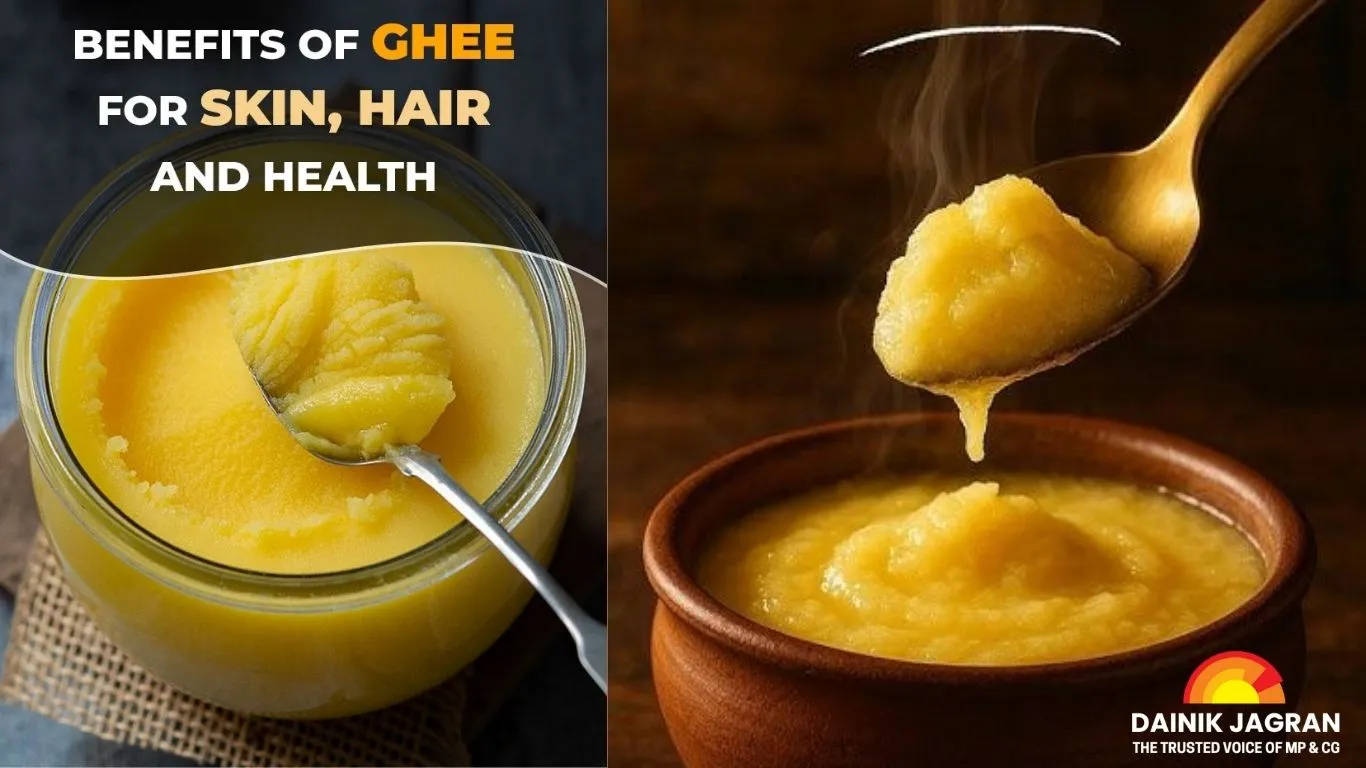
Natural Winter Hack: Why Adding a Spoon of Ghee to Your Dal Boosts Joint Health
Digital Desk
In the world of low-fat and low-carb trends, one Indian superfood has stood the test of time: Ghee. As North India shivers through the last leg of winter, nutritionists are advocating for "Ghee Loading"—a controlled increase in the intake of clarified butter to combat the season's specific health woes.
Winter brings with it two major complaints: dry, flaky skin and stiff, aching joints. While we spend crores on moisturizers and pain balms, the solution might be sitting in your kitchen roti basket. Ghee is a rich source of butyrate, a short-chain fatty acid that is crucial for gut health. But more importantly, it acts as a lubricant for the body from the inside out.
"Think of your body as a machine," says celebrity nutritionist Rajat Gupta. "In winter, the fluids in your body thicken. Ghee, being a saturated fat that melts at body temperature, helps maintain the fluidity of cell membranes. When you add a spoonful of desi ghee to your hot dal or roti, you are essentially 'oiling the hinges' of your body. This directly impacts joint mobility."
The hack for 2026 is not about deep-frying puris in ghee. It’s about "finishing" your meals with it. The traditional method of pouring a tadka (tempering) of ghee over dal or sprinkling it on steaming rice helps absorb fat-soluble vitamins (A, D, E, K) from the vegetables. For skin, the fatty acids combat the transepidermal water loss caused by cold winds, keeping the skin supple and hydrated from the dermis up.
So, ditch the imported supplements and embrace the golden liquid. A teaspoon of cow ghee with every meal is the most natural, delicious hack for winter wellness.
.jpg)




