


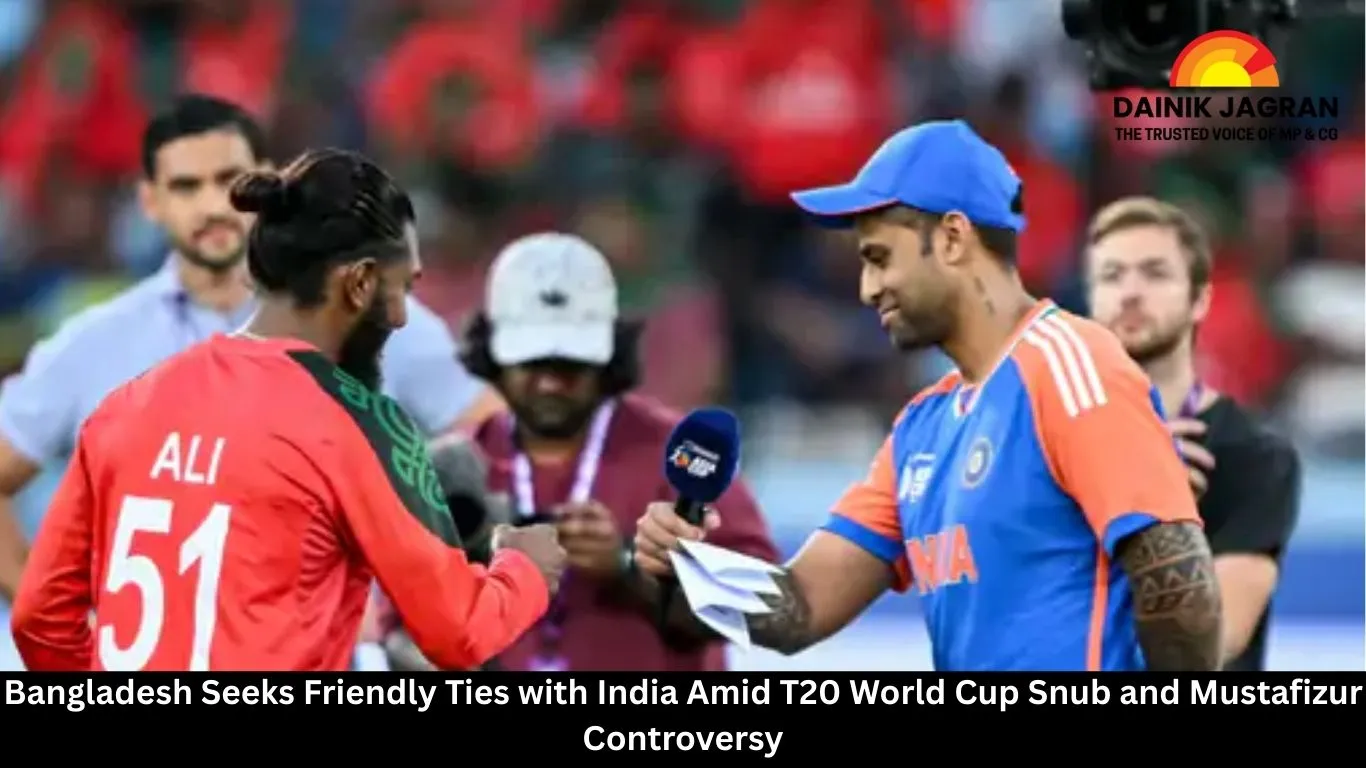
Bangladesh Seeks Friendly Ties with India Amid T20 World Cup Snub and Mustafizur Controversy
Digital Desk
In a bid to mend fences amid escalating cricket tensions, Bangladesh's newly appointed Sports Minister Aminul Haque has called for swift resolution with India following the country's exclusion from the ongoing T20 World Cup. This move highlights the intersection of sports and diplomacy in South Asia, where Bangladesh India relations have been strained by protests over religious violence and player safety concerns. As the tournament progresses without Bangladesh, replaced by Scotland, Haque's outreach signals a potential thaw in bilateral ties.
The Mustafizur Rahman Saga: Spark of the Conflict
The controversy ignited when the Board of Control for Cricket in India (BCCI) barred Bangladeshi pacer Mustafizur Rahman from the Indian Premier League (IPL) due to ongoing killings of Hindus in Bangladesh. Mustafizur, acquired by Kolkata Knight Riders (KKR) for ₹9.2 crore in the December 2025 mini-auction, was released on January 3, 2026, at BCCI's insistence. This decision, linked to at least seven reported Hindu deaths, prompted outrage in Bangladesh.
In retaliation, the interim Yunus government banned IPL broadcasts nationwide. The Bangladesh Cricket Board (BCB) then demanded a venue change for Bangladesh's T20 World Cup matches, originally set in Mumbai and Kolkata, citing player safety. Former Sports Minister Asif Nazrul echoed these fears, stating, "We want to play, but concerns about our team's security in India are paramount." The International Cricket Council (ICC) rejected the plea, opting to include Scotland instead, leaving Bangladesh sidelined from the February 7, 2026, start.
Haque's Diplomatic Push for Reconciliation
Fresh from the post-election cabinet oath, Aminul Haque wasted no time in addressing the rift. Meeting India's Deputy High Commissioner at the Parliament Building, he emphasized dialogue: "We want to resolve this issue quickly because we maintain friendly relations with all neighboring countries." Haque criticized the BCB's handling of the Mustafizur saga, calling it mishandled and urging a focus on cricket over politics.
Experts simulate a balanced view here. Cricket analyst Rajiv Gupta notes, "This snub underscores how off-field issues can derail sports. For Bangladesh India relations, rebuilding trust through joint tournaments or youth exchanges could be key." On the Bangladeshi side, a simulated sports diplomat adds, "Haque's approach is pragmatic; isolating from India harms Bangladesh's cricket growth, given BCCI's influence."
Why This Matters Now: Broader Implications for Cricket and Diplomacy
In today's geopolitically charged world, the T20 World Cup snub amplifies tensions in South Asian cricket. Bangladesh, a rising force in the sport, risks isolation from major leagues like IPL, which provide crucial exposure and revenue. For India, maintaining regional alliances is vital amid global cricket governance shifts.
Practical takeaways for fans and stakeholders:
- Monitor ICC mediation: Expect potential rescheduling of bilateral series to ease strains.
- Support inclusive policies: Advocate for player safety protocols that address real threats without politicization.
- Engage in dialogue: Fans can push for cricket diplomacy via social media campaigns promoting unity.
As the T20 World Cup unfolds, Aminul Haque's olive branch could pave the way for stronger Bangladesh India relations. By prioritizing dialogue over discord, both nations stand to gain in cricket's global arena. This episode serves as a reminder that sports, while unifying, often mirror deeper societal divides—urging leaders to foster harmony on and off the field.
.jpg)




