

Billionaires Turn to Technology for Better Sleep: Smart Rings and High-Tech Mattresses in Demand
Digital Desk
In a growing trend among the ultra-wealthy, technology is becoming an essential tool for improving sleep quality. Billionaires around the world are increasingly investing in devices like smart rings, sleep trackers, and advanced mattresses to monitor and enhance their nightly rest, highlighting the intersection of luxury and wellness.
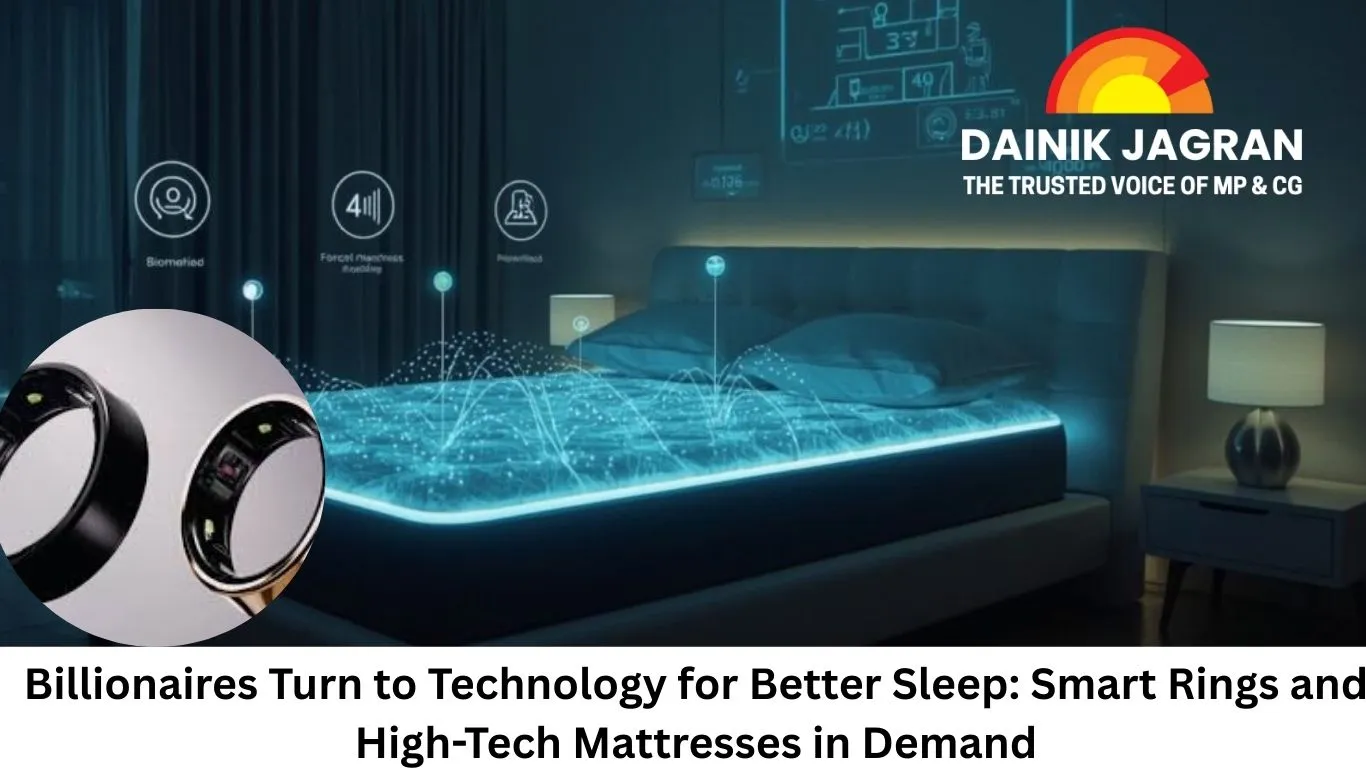
High-profile entrepreneurs and tech moguls are reportedly using smart rings, worn on the finger, to track sleep cycles, heart rate, and even oxygen levels while sleeping. These devices sync with smartphones or smart home systems to provide insights into sleep patterns and suggest improvements, helping users optimize rest despite demanding schedules.
Simultaneously, high-tech mattresses embedded with sensors are becoming popular in luxury homes. These mattresses can adjust firmness, temperature, and support in real-time, catering to individual comfort needs. Some models also integrate with bedroom lighting and sound systems to create the ideal sleep environment.
Sleep experts note that quality rest is crucial for maintaining productivity, cognitive function, and overall health, especially for high-net-worth individuals with intense work routines. Dr. Sara Al-Fahad, a wellness consultant in Dubai, said, “Billionaires often face extreme workloads and stress. Smart sleep technology allows them to monitor physiological metrics and adjust their routines to maximize restorative sleep.”
Luxury brands have taken note, offering bespoke sleep solutions that combine cutting-edge technology with comfort. From mattresses costing tens of thousands of dollars to personalized sleep coaching based on biometric data, the focus is on precision and performance.
Psychologists also point out the broader trend of integrating wellness into daily routines, where sleep is considered as important as diet or exercise. “Investing in sleep technology is not just about luxury—it’s about safeguarding physical and mental health,” added Dr. Al-Fahad.
This trend reflects a growing global interest in biohacking and health optimization, with sleep becoming a measurable and manageable factor. While initially seen as a niche for the rich, some smart sleep devices are gradually reaching mainstream markets, offering everyone the chance to monitor and improve their sleep quality.
As technology continues to advance, the way people approach sleep—whether through smart rings, connected mattresses, or AI-driven health analytics—is set to transform from a basic biological need into a data-driven wellness practice.
--------
🚨 Beat the News Rush – Join Now!
Get breaking alerts, hot exclusives, and game-changing stories instantly on your phone. No delays, no fluff – just the edge you need. ⚡
Tap to join:
🟢 WhatsApp Channel: Dainik Jagran MP CG
Crave more?
🅕 Facebook: Dainik Jagran MP CG English
🅧 Twitter (X): Dainik Jagran MP CG
🅘 Instagram: Dainik Jagran MP CG
Share the fire – keep your crew ahead! 🗞️🔥
Billionaires Turn to Technology for Better Sleep: Smart Rings and High-Tech Mattresses in Demand
Digital Desk
High-profile entrepreneurs and tech moguls are reportedly using smart rings, worn on the finger, to track sleep cycles, heart rate, and even oxygen levels while sleeping. These devices sync with smartphones or smart home systems to provide insights into sleep patterns and suggest improvements, helping users optimize rest despite demanding schedules.
Simultaneously, high-tech mattresses embedded with sensors are becoming popular in luxury homes. These mattresses can adjust firmness, temperature, and support in real-time, catering to individual comfort needs. Some models also integrate with bedroom lighting and sound systems to create the ideal sleep environment.
Sleep experts note that quality rest is crucial for maintaining productivity, cognitive function, and overall health, especially for high-net-worth individuals with intense work routines. Dr. Sara Al-Fahad, a wellness consultant in Dubai, said, “Billionaires often face extreme workloads and stress. Smart sleep technology allows them to monitor physiological metrics and adjust their routines to maximize restorative sleep.”
Luxury brands have taken note, offering bespoke sleep solutions that combine cutting-edge technology with comfort. From mattresses costing tens of thousands of dollars to personalized sleep coaching based on biometric data, the focus is on precision and performance.
Psychologists also point out the broader trend of integrating wellness into daily routines, where sleep is considered as important as diet or exercise. “Investing in sleep technology is not just about luxury—it’s about safeguarding physical and mental health,” added Dr. Al-Fahad.
This trend reflects a growing global interest in biohacking and health optimization, with sleep becoming a measurable and manageable factor. While initially seen as a niche for the rich, some smart sleep devices are gradually reaching mainstream markets, offering everyone the chance to monitor and improve their sleep quality.
As technology continues to advance, the way people approach sleep—whether through smart rings, connected mattresses, or AI-driven health analytics—is set to transform from a basic biological need into a data-driven wellness practice.


