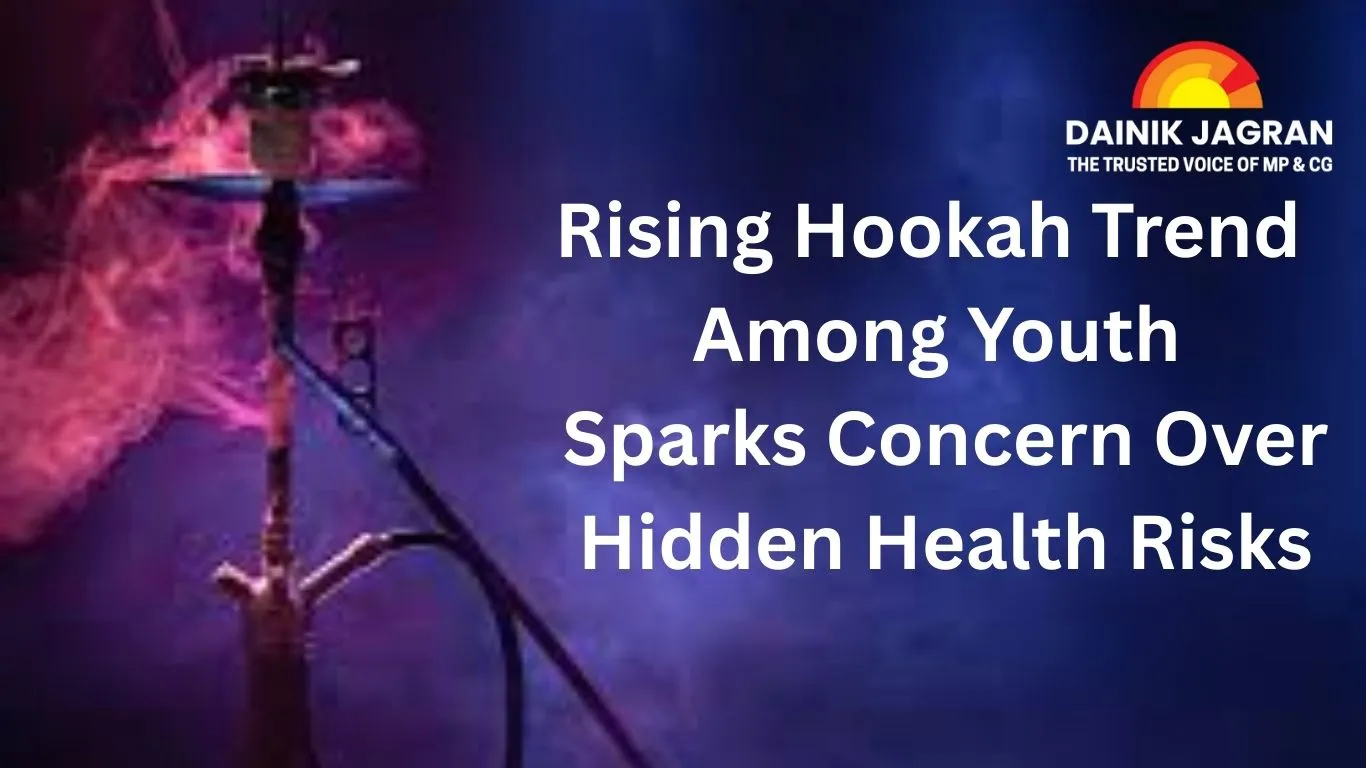
Rising Hookah Trend Among Youth Sparks Concern Over Hidden Health Risks
Ananya srivastava
The growing popularity of hookah smoking among young people has become a matter of serious concern for health experts and social observers. Often viewed as a fashionable and harmless social activity, hookah is increasingly being consumed in cafés, lounges and private gatherings, especially by urban youth. However, medical professionals warn that this trend carries significant health risks that are widely misunderstood.
A common belief among young users is that hookah is safer than cigarettes because the smoke passes through water. Experts strongly disagree, stating that water does not filter out most harmful toxins. In fact, a single hookah session can expose users to large amounts of nicotine, carbon monoxide and toxic chemicals, sometimes equal to or greater than those inhaled from multiple cigarettes.
Doctors point out that regular hookah use can lead to addiction, as nicotine levels are often high. Prolonged consumption has been linked to respiratory problems, reduced lung function and an increased risk of heart disease. There are also growing concerns about the impact on oral health, including gum disease and mouth infections.
Beyond individual health, hookah smoking poses social and public health challenges. Shared mouthpieces and hoses increase the risk of spreading infections, especially during seasonal illnesses. Health experts warn that this practice can easily transmit bacteria and viruses, making it a public safety issue as well.
Psychologists note that peer pressure and social media influence play a major role in promoting hookah use among youth. The attractive flavors, stylish settings and online portrayal of hookah as a “cool” lifestyle choice often overshadow its dangers. This normalisation can make it harder for young people to recognise the long-term consequences of their actions.
Public health advocates are calling for stronger awareness campaigns, clearer warning labels and stricter regulation of hookah lounges. They stress that education is key to changing perceptions and empowering youth to make informed choices.
As conversations around wellness and responsible living grow louder, experts urge young people to look beyond trends and prioritise their health. What may seem like a harmless pastime today could result in serious health challenges tomorrow, making awareness and prevention more important than ever.
--------
🚨 Beat the News Rush – Join Now!
Get breaking alerts, hot exclusives, and game-changing stories instantly on your phone. No delays, no fluff – just the edge you need. ⚡
Tap to join:
🟢 WhatsApp Channel: Dainik Jagran MP CG
Crave more?
🅕 Facebook: Dainik Jagran MP CG English
🅧 Twitter (X): Dainik Jagran MP CG
🅘 Instagram: Dainik Jagran MP CG
Share the fire – keep your crew ahead! 🗞️🔥
Rising Hookah Trend Among Youth Sparks Concern Over Hidden Health Risks
Ananya srivastava
A common belief among young users is that hookah is safer than cigarettes because the smoke passes through water. Experts strongly disagree, stating that water does not filter out most harmful toxins. In fact, a single hookah session can expose users to large amounts of nicotine, carbon monoxide and toxic chemicals, sometimes equal to or greater than those inhaled from multiple cigarettes.
Doctors point out that regular hookah use can lead to addiction, as nicotine levels are often high. Prolonged consumption has been linked to respiratory problems, reduced lung function and an increased risk of heart disease. There are also growing concerns about the impact on oral health, including gum disease and mouth infections.
Beyond individual health, hookah smoking poses social and public health challenges. Shared mouthpieces and hoses increase the risk of spreading infections, especially during seasonal illnesses. Health experts warn that this practice can easily transmit bacteria and viruses, making it a public safety issue as well.
Psychologists note that peer pressure and social media influence play a major role in promoting hookah use among youth. The attractive flavors, stylish settings and online portrayal of hookah as a “cool” lifestyle choice often overshadow its dangers. This normalisation can make it harder for young people to recognise the long-term consequences of their actions.
Public health advocates are calling for stronger awareness campaigns, clearer warning labels and stricter regulation of hookah lounges. They stress that education is key to changing perceptions and empowering youth to make informed choices.
As conversations around wellness and responsible living grow louder, experts urge young people to look beyond trends and prioritise their health. What may seem like a harmless pastime today could result in serious health challenges tomorrow, making awareness and prevention more important than ever.