

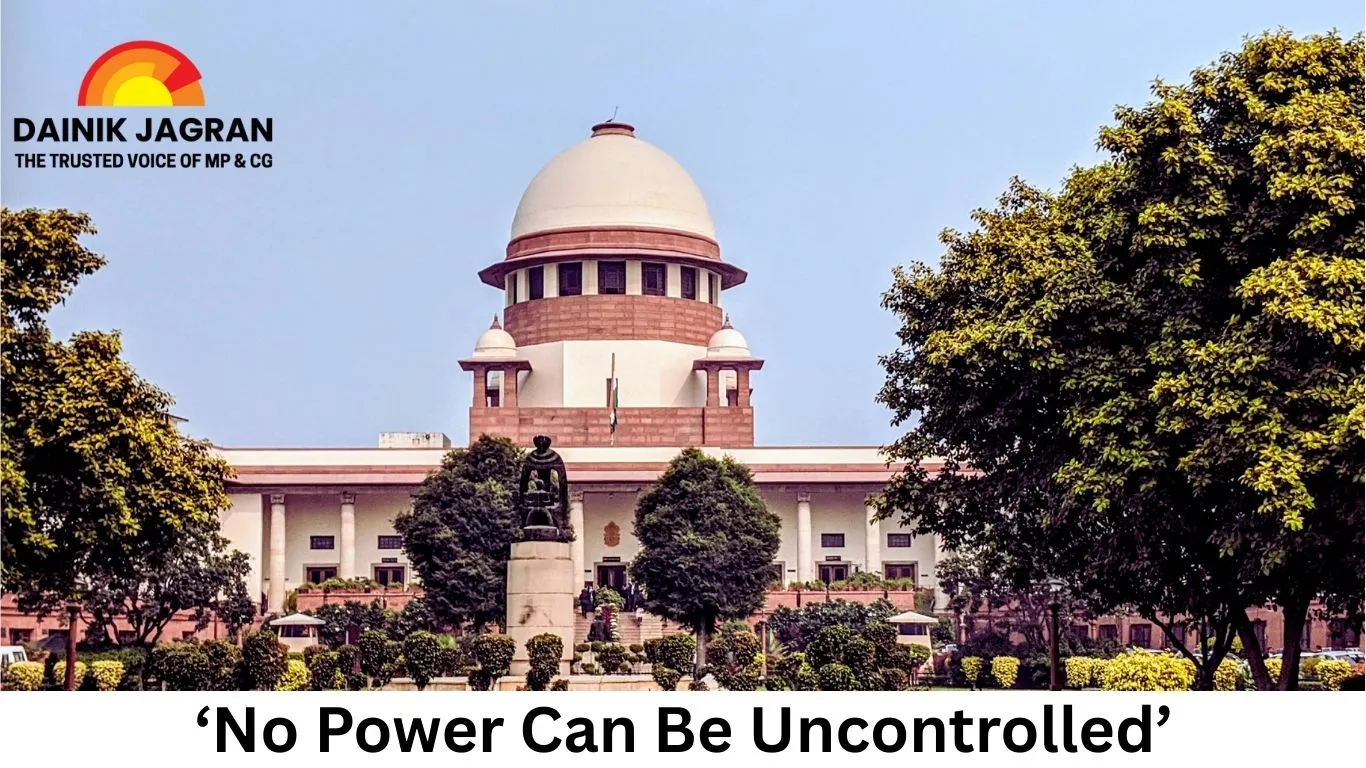
‘No Power Can Be Uncontrolled’: Supreme Court Questions Electoral Roll Revision Process
Digital Desk
The Supreme Court on Wednesday cautioned that revising electoral rolls can have serious civil consequences, particularly when eligible voters are excluded, and asserted that no authority can exercise unchecked power. The observation came during a hearing on petitions challenging the Special Intensive Revision (SIR) of electoral rolls being conducted in several states, including Bihar.
A Bench comprising Chief Justice Suryakant and Justice Joymalya Bagchi examined whether the Election Commission of India (ECI) has the authority to demand additional documents beyond those prescribed under existing rules. The court questioned why voters are being asked to submit 11 documents under the SIR process when Form-6, used for voter registration, specifies only seven valid documents.
“If someone’s name is removed from the voter list, it has serious civil consequences. Why should such a process not strictly follow the rules?” the Chief Justice observed, underscoring that the right to vote is constitutionally protected.
Justice Bagchi raised pointed concerns over the scope of the Election Commission’s discretion. “No power can be completely open-ended. The Election Commission also cannot exercise authority without restraint,” he said, asking whether the Commission could arbitrarily add or remove documentation requirements.
Appearing for the Election Commission, senior advocate Rakesh Dwivedi argued that Section 21(3) of the Representation of the People Act grants the Commission an independent power distinct from routine amendments under Section 21(2). However, the Bench questioned how the Commission could exempt itself from procedural safeguards if compliance is required under one provision of the same law.
“The right to vote flows from the Constitution. No process can operate against constitutional guarantees,” the Chief Justice said. Justice Bagchi reiterated that “no power can be absolute.”
Dwivedi responded that while the law provides flexibility to the Election Commission, the process cannot be arbitrary and must withstand judicial scrutiny. He assured the court that the Commission would fully comply with Article 326 of the Constitution and act in a fair and transparent manner.
The hearing remained inconclusive and has been scheduled to resume on Thursday.
The case is part of a series of challenges to the SIR process across multiple states. In previous hearings, the Supreme Court has directed the Election Commission to provide additional opportunities for voter registration, publicly display draft electoral rolls, and reduce the workload on Booth Level Officers. The Commission has maintained that SIR is necessary to ensure electoral integrity and does not amount to deportation or disenfranchisement.
The outcome of the case is expected to have wide implications for voter verification procedures and the balance between electoral oversight and citizens’ constitutional rights.
--------
🚨 Beat the News Rush – Join Now!
Get breaking alerts, hot exclusives, and game-changing stories instantly on your phone. No delays, no fluff – just the edge you need. ⚡
Tap to join:
🟢 WhatsApp Channel: Dainik Jagran MP CG
Crave more?
🅕 Facebook: Dainik Jagran MP CG English
🅧 Twitter (X): Dainik Jagran MP CG
🅘 Instagram: Dainik Jagran MP CG
Share the fire – keep your crew ahead! 🗞️🔥
‘No Power Can Be Uncontrolled’: Supreme Court Questions Electoral Roll Revision Process
Digital Desk
A Bench comprising Chief Justice Suryakant and Justice Joymalya Bagchi examined whether the Election Commission of India (ECI) has the authority to demand additional documents beyond those prescribed under existing rules. The court questioned why voters are being asked to submit 11 documents under the SIR process when Form-6, used for voter registration, specifies only seven valid documents.
“If someone’s name is removed from the voter list, it has serious civil consequences. Why should such a process not strictly follow the rules?” the Chief Justice observed, underscoring that the right to vote is constitutionally protected.
Justice Bagchi raised pointed concerns over the scope of the Election Commission’s discretion. “No power can be completely open-ended. The Election Commission also cannot exercise authority without restraint,” he said, asking whether the Commission could arbitrarily add or remove documentation requirements.
Appearing for the Election Commission, senior advocate Rakesh Dwivedi argued that Section 21(3) of the Representation of the People Act grants the Commission an independent power distinct from routine amendments under Section 21(2). However, the Bench questioned how the Commission could exempt itself from procedural safeguards if compliance is required under one provision of the same law.
“The right to vote flows from the Constitution. No process can operate against constitutional guarantees,” the Chief Justice said. Justice Bagchi reiterated that “no power can be absolute.”
Dwivedi responded that while the law provides flexibility to the Election Commission, the process cannot be arbitrary and must withstand judicial scrutiny. He assured the court that the Commission would fully comply with Article 326 of the Constitution and act in a fair and transparent manner.
The hearing remained inconclusive and has been scheduled to resume on Thursday.
The case is part of a series of challenges to the SIR process across multiple states. In previous hearings, the Supreme Court has directed the Election Commission to provide additional opportunities for voter registration, publicly display draft electoral rolls, and reduce the workload on Booth Level Officers. The Commission has maintained that SIR is necessary to ensure electoral integrity and does not amount to deportation or disenfranchisement.
The outcome of the case is expected to have wide implications for voter verification procedures and the balance between electoral oversight and citizens’ constitutional rights.


