

Amarnath Ice Shivling Forms; 3.6 Lakh Register for July Yatra

Digital Desk

 Amarnath Ice Shivling Forms; 3.6 Lakh Register for July Yatra

First images of Amarnath's ice Shivling emerge as 3.6 lakh pilgrims register for 2026 yatra. BSF personnel offer prayers; safety measures enhanced ahead of July 3 start.


Natural phenomenon signals spiritual readiness; BSF personnel offer prayers ahead of 57-day yatra

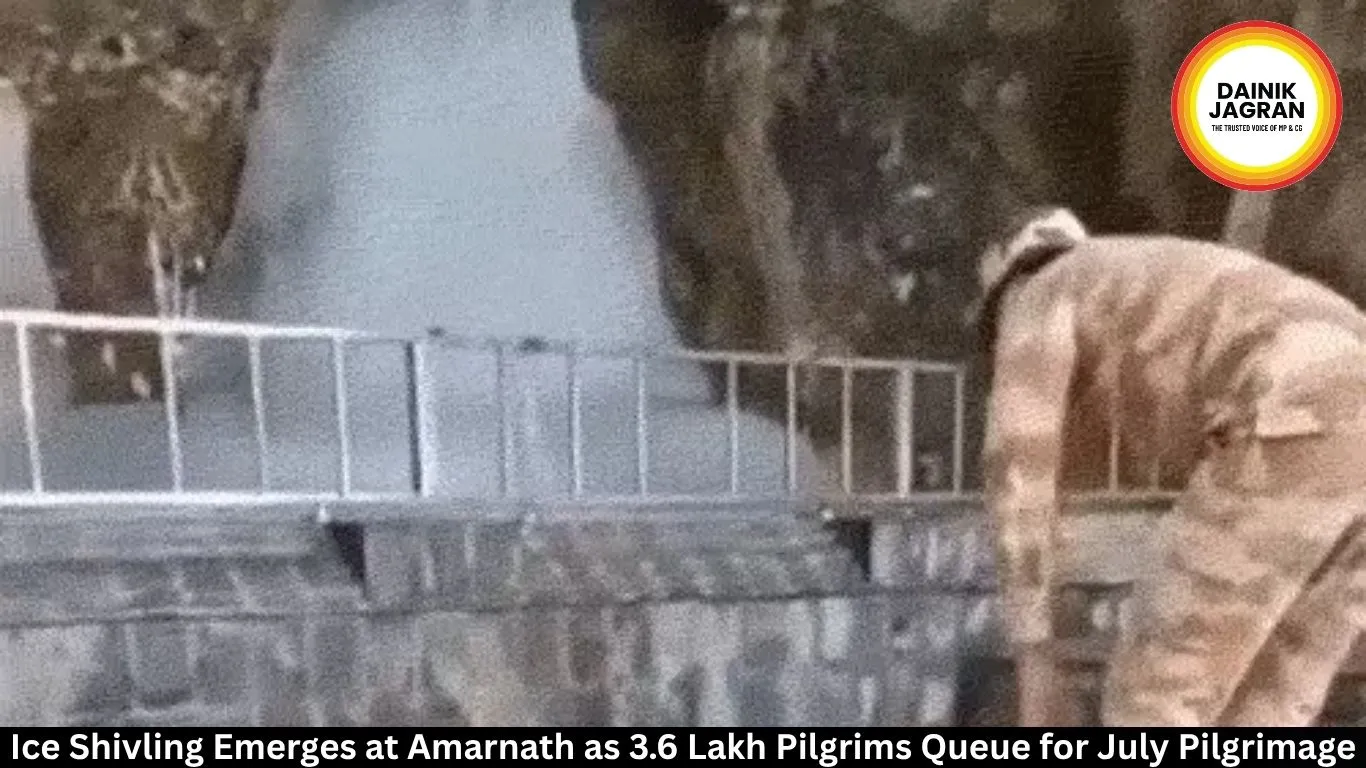
The natural ice formation that devotees revere as "Baba Barfani" has taken shape at the Amarnath shrine, marking the spiritual prelude to one of India's most demanding high-altitude pilgrimages. The 6–7 metre Shivling emerged over the weekend, prompting Border Security Force (BSF) personnel deployed in the valley to offer prayers before the main procession begins.

The photographs released Saturday showed the crystalline structure rising distinctly from the sanctuary floor—a phenomenon that occurs annually as glacial melt coalesces at the cave's inner chamber. For the security contingent stationed there, the appearance held symbolic weight. "The Shivling has formed," one official confirmed, noting that BSF jawans were among the first to pay their respects at the site.

Registration Surge Outpaces Last Year's Numbers

Interest in this year's Amarnath Yatra has already exceeded expectations. Over 3.6 lakh pilgrims have registered since the window opened on April 15, with officials bracing for the total to exceed 5 lakh before the yatra concludes.

The surge represents a significant jump from 2025, when 4.14 lakh devotees completed the journey. In 2024, the figure had crossed 5.10 lakh. "We're confident the numbers will grow," a spokesperson from the Shrine Board said, pointing to sustained interest despite the demanding terrain.

Registrations for group bookings—those traveling in groups of 5 to 30 people—closed on Wednesday. However, individual pilgrims and smaller parties can still register through designated bank branches across Jammu and Kashmir, Punjab National Bank, State Bank of India, and Yes Bank branches continue processing applications as capacity allows.

Snow Still Blocks High Routes; BRO Races to Clear Paths

The pilgrimage, set to commence on July 3 and stretch through August 9, faces an expected hurdle: significant snow accumulation along both the traditional and alternate routes. Current surveys indicate 6–8 feet of snow in regular sections, climbing to 10–12 feet in avalanche-prone zones.

The Border Roads Organisation is executing an aggressive clearance strategy. As of this week, 9 kilometres of the Baltal route and 8 kilometres of the Nunwan-Pahalgam route have been cleared. Track widening operations to 12 feet are underway, alongside construction of retaining walls and culverts to manage runoff and stabilise pathways.

Officials maintain confidence: both routes should be fully operational by mid-June. "The weather window is tight, but we're confident," said a BRO representative. The organisation's timeline hinges on continued fair weather in the coming weeks—a condition not always assured in the higher elevations.

Modern Camps Replace Traditional Tent Structure

A notable shift this year involves accommodation infrastructure. Pre-fabricated and fibre structures are being constructed at base camps instead of traditional tents, a move aimed at improving comfort and weatherproofing.

Each modular unit houses 48 rooms, each equipped with an attached washroom, hot and cold water facilities, and access to pantry services. The structures are designed to withstand temperature fluctuations and rainfall—both common hazards during the yatra season. Work on these facilities began three years ago and is now approaching completion.

This departure from tent-based camps reflects lessons learned from previous pilgrimages, where sudden weather shifts and temperature drops posed health risks to devotees. The enclosed structures promise better insulation and easier emergency response protocols.

Disaster-Prone Zones Declared Off-Limits

Authorities have taken a precautionary stance regarding route safety. All sensitive and disaster-prone zones have been declared "no-entry areas" for pilgrims this year, a direct response to incidents of cloudbursts and flash flooding recorded in previous seasons.

The designation affects camp placements particularly. Rather than setting up way stations in flood-vulnerable stretches, organisers have shifted accommodation locations to higher-safety zones. Both the Baltal and Pahalgam routes have been widened and reinforced, with bridge structures upgraded to handle increased foot traffic and enhanced load capacity.

Yatra Spanning 57 Days Aligns with Sacred Dates

The pilgrimage will commence from both the Baltal-Sonamarg and the traditional Nunwan-Pahalgam routes on July 3. The 57-day expedition will conclude on August 28—a date coinciding with Raksha Bandhan and Sawan Purnima, occasions significant to Hindu devotional calendars.

The twin-route setup allows flexibility in crowd distribution and provides alternatives should weather disrupt one passage. However, the yatra remains one of the most physically demanding pilgrimages in the Indian subcontinent, requiring multi-day treks at elevations exceeding 3,800 metres.

With registrations still open and preparations accelerating, the Amarnath Shrine Board is positioning 2026 as a milestone year for both participation and safety infrastructure. The emergence of Baba Barfani, in the minds of the faithful, signals readiness—both spiritual and logistical—for the journey ahead.


--------

๐Ÿšจ Beat the News Rush โ€“ Join Now!

Get breaking alerts, hot exclusives, and game-changing stories instantly on your phone. No delays, no fluff โ€“ just the edge you need. โšก

Tap to join:ย 

๐ŸŸข WhatsApp Channel: Dainik Jagran MP CG

Crave more?

๐Ÿ…• Facebook: Dainik Jagran MP CG English

๐Ÿ…ง Twitter (X): Dainik Jagran MP CG

๐Ÿ…˜ Instagram: Dainik Jagran MP CG

Share the fire โ€“ keep your crew ahead! ๐Ÿ—ž๏ธ๐Ÿ”ฅ

english.dainikjagranmpcg.com
23 May 2026 By Abhishek Joshi

Amarnath Ice Shivling Forms; 3.6 Lakh Register for July Yatra

Digital Desk

Natural phenomenon signals spiritual readiness; BSF personnel offer prayers ahead of 57-day yatra

The natural ice formation that devotees revere as "Baba Barfani" has taken shape at the Amarnath shrine, marking the spiritual prelude to one of India's most demanding high-altitude pilgrimages. The 6–7 metre Shivling emerged over the weekend, prompting Border Security Force (BSF) personnel deployed in the valley to offer prayers before the main procession begins.

The photographs released Saturday showed the crystalline structure rising distinctly from the sanctuary floor—a phenomenon that occurs annually as glacial melt coalesces at the cave's inner chamber. For the security contingent stationed there, the appearance held symbolic weight. "The Shivling has formed," one official confirmed, noting that BSF jawans were among the first to pay their respects at the site.

Registration Surge Outpaces Last Year's Numbers

Interest in this year's Amarnath Yatra has already exceeded expectations. Over 3.6 lakh pilgrims have registered since the window opened on April 15, with officials bracing for the total to exceed 5 lakh before the yatra concludes.

The surge represents a significant jump from 2025, when 4.14 lakh devotees completed the journey. In 2024, the figure had crossed 5.10 lakh. "We're confident the numbers will grow," a spokesperson from the Shrine Board said, pointing to sustained interest despite the demanding terrain.

Registrations for group bookings—those traveling in groups of 5 to 30 people—closed on Wednesday. However, individual pilgrims and smaller parties can still register through designated bank branches across Jammu and Kashmir, Punjab National Bank, State Bank of India, and Yes Bank branches continue processing applications as capacity allows.

Snow Still Blocks High Routes; BRO Races to Clear Paths

The pilgrimage, set to commence on July 3 and stretch through August 9, faces an expected hurdle: significant snow accumulation along both the traditional and alternate routes. Current surveys indicate 6–8 feet of snow in regular sections, climbing to 10–12 feet in avalanche-prone zones.

The Border Roads Organisation is executing an aggressive clearance strategy. As of this week, 9 kilometres of the Baltal route and 8 kilometres of the Nunwan-Pahalgam route have been cleared. Track widening operations to 12 feet are underway, alongside construction of retaining walls and culverts to manage runoff and stabilise pathways.

Officials maintain confidence: both routes should be fully operational by mid-June. "The weather window is tight, but we're confident," said a BRO representative. The organisation's timeline hinges on continued fair weather in the coming weeks—a condition not always assured in the higher elevations.

Modern Camps Replace Traditional Tent Structure

A notable shift this year involves accommodation infrastructure. Pre-fabricated and fibre structures are being constructed at base camps instead of traditional tents, a move aimed at improving comfort and weatherproofing.

Each modular unit houses 48 rooms, each equipped with an attached washroom, hot and cold water facilities, and access to pantry services. The structures are designed to withstand temperature fluctuations and rainfall—both common hazards during the yatra season. Work on these facilities began three years ago and is now approaching completion.

This departure from tent-based camps reflects lessons learned from previous pilgrimages, where sudden weather shifts and temperature drops posed health risks to devotees. The enclosed structures promise better insulation and easier emergency response protocols.

Disaster-Prone Zones Declared Off-Limits

Authorities have taken a precautionary stance regarding route safety. All sensitive and disaster-prone zones have been declared "no-entry areas" for pilgrims this year, a direct response to incidents of cloudbursts and flash flooding recorded in previous seasons.

The designation affects camp placements particularly. Rather than setting up way stations in flood-vulnerable stretches, organisers have shifted accommodation locations to higher-safety zones. Both the Baltal and Pahalgam routes have been widened and reinforced, with bridge structures upgraded to handle increased foot traffic and enhanced load capacity.

Yatra Spanning 57 Days Aligns with Sacred Dates

The pilgrimage will commence from both the Baltal-Sonamarg and the traditional Nunwan-Pahalgam routes on July 3. The 57-day expedition will conclude on August 28—a date coinciding with Raksha Bandhan and Sawan Purnima, occasions significant to Hindu devotional calendars.

The twin-route setup allows flexibility in crowd distribution and provides alternatives should weather disrupt one passage. However, the yatra remains one of the most physically demanding pilgrimages in the Indian subcontinent, requiring multi-day treks at elevations exceeding 3,800 metres.

With registrations still open and preparations accelerating, the Amarnath Shrine Board is positioning 2026 as a milestone year for both participation and safety infrastructure. The emergence of Baba Barfani, in the minds of the faithful, signals readiness—both spiritual and logistical—for the journey ahead.


https://english.dainikjagranmpcg.com/national/-amarnath-ice-shivling-forms-36-lakh-register-for-july/article-19151

Related Posts

Latest News


