


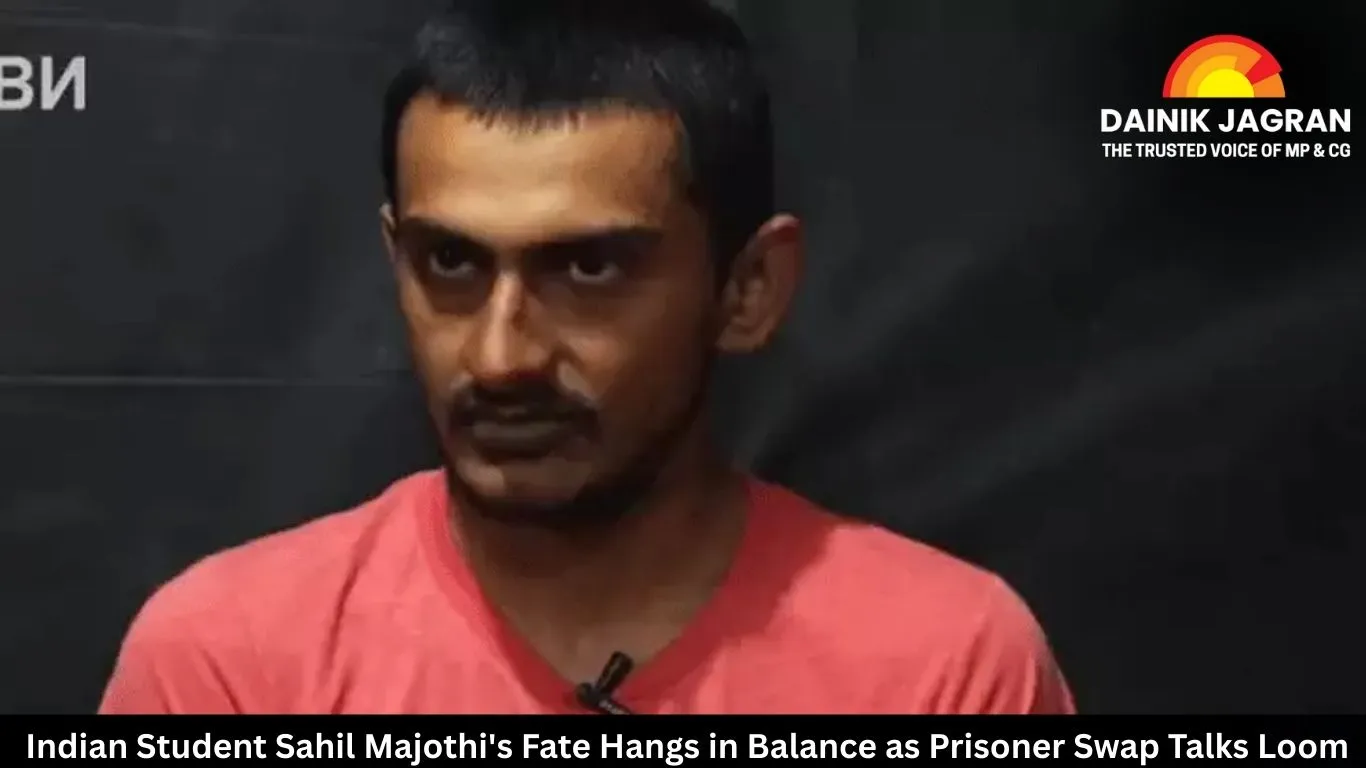
Indian Student Sahil Majothi's Fate Hangs in Balance as Prisoner Swap Talks Loom
Digital Desk
In a case that underscores the perilous position of civilians caught in geopolitical conflicts, the fate of Sahil Mahmad Husen Majothi, a 22-year-old Indian student from Gujarat, remains uncertain. Detained by Ukrainian forces after being allegedly coerced into fighting for Russia, Majothi's safe return to India now hinges on urgent diplomatic efforts. With talks of new prisoner exchanges between Russia and Ukraine emerging, his legal team is raising an alarm, warning that his repatriation to Russia could be disastrous .
The Delhi High Court has intervened, directing the Ministry of External Affairs (MEA) to take "urgent steps" to bring him home . However, a critical diplomatic gap on the ground and the complex machinery of war-time prisoner swaps have left his family in agonizing suspense.
A Student's Descent into the War Zone
Sahil Majothi's ordeal began in early 2024 when he traveled to St. Petersburg on a student visa to pursue a course in Russian language and culture at ITMO University . To support himself, he worked part-time as a courier. His family claims that in April 2024, he was falsely implicated in a narcotics case, arrested, and later sentenced to seven years in a Russian prison .
Facing a lengthy prison term, Majothi says he was given a choice: sign a contract with the Russian military or remain incarcerated. He chose the former, calling it the "biggest mistake" of his life . After minimal training, he was deployed to the front lines in Ukraine in October 2025, where he surrendered to Ukrainian forces within days . He has since been held in a Ukrainian military facility.
Courts Direct, But Diplomacy Lags
With representations to the government yielding little result, Majothi's mother, a cancer patient, approached the Delhi High Court. In a significant order, Justice Sachin Datta observed that the student appeared to have been compelled to join the Russian Army under duress and directed the Centre to "take all steps to bring him back" .
The court mandated:
Appointing a liaison officer to coordinate with Ukrainian authorities.
Securing consular access to Majothi.
Filing a status report on the actions taken .
Despite this clear judicial directive, progress has been slow. Advocate Deepa Joseph, who met Majothi in Ukraine in early January, reported a lack of affirmative response from the MEA and highlighted slow coordination, stating the Indian ambassador was unavailable during her visit .
The Looming Threat of a Prisoner Exchange
The most immediate danger to Majothi's safety is the potential for him to be included in a prisoner-of-war exchange between Ukraine and Russia. Ukraine's Ombudsman office has confirmed that talks for a new swap are underway .
Historic Precedent: The two nations have conducted multiple large-scale swaps, including one of 303 prisoners each in May 2025 .
Grave Risk: If Majothi is transferred to Russia as part of such an exchange, his lawyer warns that Russian authorities could be "very hostile" towards him for surrendering .
This creates a race against time for Indian diplomacy to secure his direct repatriation to India before he is swept into the broader exchange mechanism.
A Warning to Others and a Test for Indian Diplomacy
From custody, Majothi has sent video messages pleading for help from Prime Minister Narendra Modi and External Affairs Minister S. Jaishankar . He also issued a public warning: "Those coming to Russia for higher studies or work should be very careful. There are many scammers here" .
His case is not isolated. The Indian government has previously called for the release of other nationals reportedly serving with the Russian military . This situation tests India's diplomatic resolve and its ability to protect citizens abroad in complex conflict zones where traditional consular access is constrained.
The coming weeks are critical. The Delhi High Court continues to monitor the government's actions, and the window to extract Majothi from the prisoner-exchange pipeline is narrowing. His safe return will require not just diplomatic requests, but decisive and creative statecraft to navigate a brutal war and bring one young student home.


.jpg)




