Modi Attacks SP, Congress at Ganga Expressway Launch Event

Digital Desk

 Modi Attacks SP, Congress at Ganga Expressway Launch Event

PM Modi inaugurates โ‚น36,230 crore Ganga Expressway, criticises SP and Congress over UP's past governance. Highlights infrastructure growth ahead of 2027 elections.

Modi Uses Ganga Expressway Launch to Attack SP, Congress

PM draws contrast with 'jungle raj' era as state eyes 2027 polls

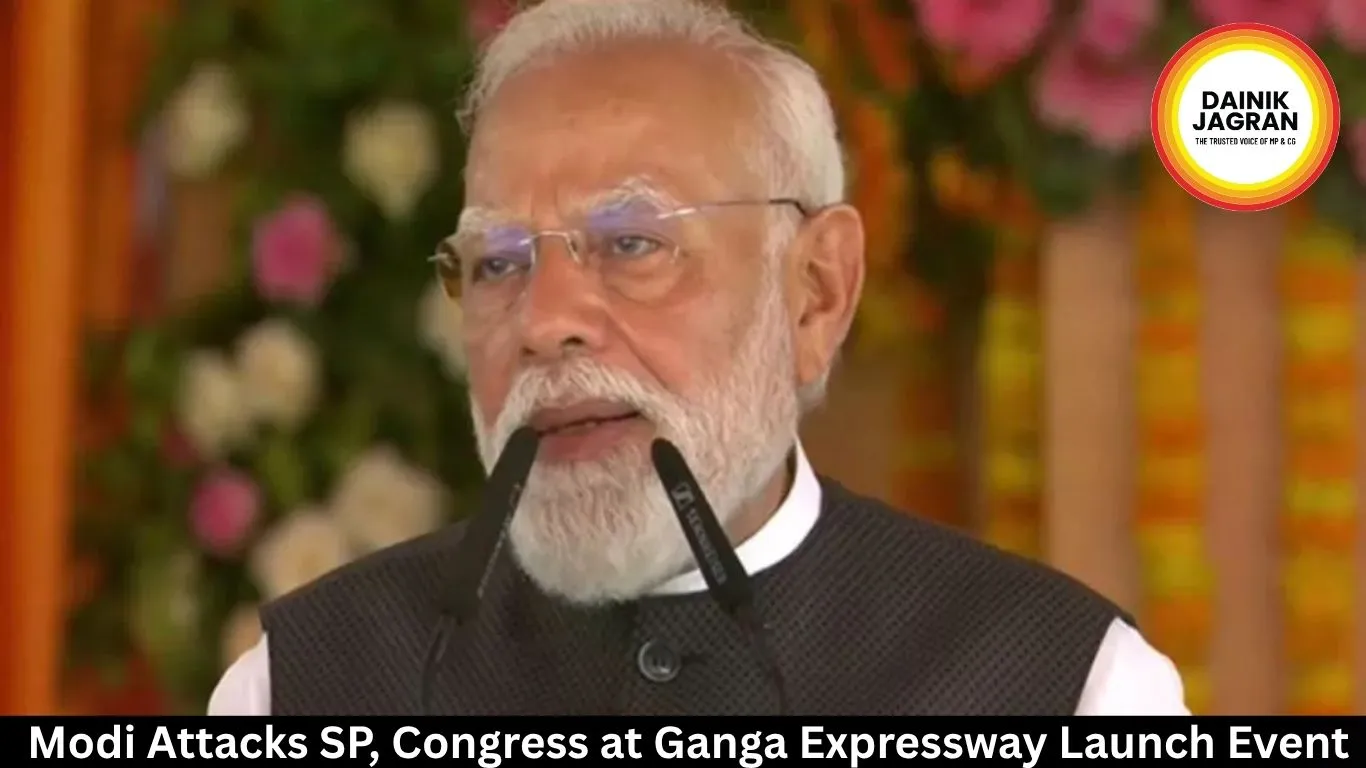
Prime Minister Narendra Modi on Wednesday used the inauguration of the โ‚น36,230 crore Ganga Expressway to sharply criticise the Samajwadi Party and Congress, highlighting what he described as Uttar Pradesh's dramatic transformation from a lawless state into an infrastructure-led growth centre.

Speaking at the event in Hardoi, Modi painted a stark picture of the state's past. He alleged that previous governments had saddled Uttar Pradesh with an image of "jungle raj," poor roads, and unchecked crime—a narrative, he argued, that was so pervasive it inspired films about the state's mafia culture. The contrast was deliberate: modern highways, functional airports, improved law and order.

"Today, Uttar Pradesh has the highest number of expressways in the country and 21 airports, including five international ones," Modi said, framing infrastructure as the measure of governmental success. He described the state's transformation as a model that others across India are now studying.

The Cultural Angle

Beyond infrastructure metrics, Modi invoked Uttar Pradesh's religious and cultural identity. The state, he said, is the land of Lord Ram and Lord Krishna—a reference that carries particular weight given the political significance of both figures in contemporary Indian politics. He claimed these cultural roots had been obscured by previous governance failures, a framing that links Hindu heritage with development outcomes.

This rhetorical move serves multiple audiences: it appeals to the BJP's core constituency while also suggesting that good governance and cultural assertion go hand in hand.

Global Context, Local Politics

Modi briefly stepped back to place India's progress within a global context. Amid ongoing international conflicts and economic uncertainty, he argued, India continues to advance steadily. He used this as a launching pad to promote the Atmanirbhar Bharat (self-reliance) initiative, positioning infrastructure—and the Ganga Expressway specifically—as evidence of India's capacity to build without external dependency.

The timing of these remarks carries obvious political weight. Uttar Pradesh Assembly elections are scheduled for 2027, and the state remains central to the BJP's national narrative. The expressway inauguration provides a platform to showcase tangible development while attacking political rivals.

The Infrastructure Play

The Ganga Expressway itself is no minor project. Spanning key districts in the state, the six-lane highway is designed to reduce travel time between the region and Delhi, with implications for both commerce and connectivity. Officials have positioned it as part of a broader infrastructure push aimed at decentralising economic activity away from major metros.

Modi's emphasis on numbers—expressways, airports, international terminals—reflects a broader governmental strategy of measuring progress through completed projects. Whether this approach adequately captures governance quality remains contested, but it provides clear, visible markers that can be highlighted during political campaigns.

Law and Order Claims

The PM's assertion that law and order has improved "significantly" drew implicit comparisons with the Samajwadi Party's tenure. This has been a recurring theme in BJP campaigns, particularly in Uttar Pradesh, where crime statistics have long been a flashpoint in electoral discourse. By framing improved security as a direct result of his government's work, Modi sought to consolidate support among voters prioritising safety.

However, ground-level assessments of law and order improvements remain mixed, with various reports offering conflicting pictures of crime trends.

What Lies Ahead

The inauguration marks another infrastructure milestone in Modi's development agenda, though the immediate political context is impossible to ignore. With assembly elections less than a year away, the launch serves dual purposes: celebrating concrete achievements while positioning the ruling party as the agent of transformation.

For Uttar Pradesh residents depending on improved connectivity, the expressway offers practical benefits. For the BJP, it provides a tangible counter-narrative to opposition claims of inadequate development—a narrative that will likely feature prominently in campaign messaging ahead of 2027.


 

--------

๐Ÿšจ Beat the News Rush โ€“ Join Now!

Get breaking alerts, hot exclusives, and game-changing stories instantly on your phone. No delays, no fluff โ€“ just the edge you need. โšก

Tap to join:ย 

๐ŸŸข WhatsApp Channel: Dainik Jagran MP CG

Crave more?

๐Ÿ…• Facebook: Dainik Jagran MP CG English

๐Ÿ…ง Twitter (X): Dainik Jagran MP CG

๐Ÿ…˜ Instagram: Dainik Jagran MP CG

Share the fire โ€“ keep your crew ahead! ๐Ÿ—ž๏ธ๐Ÿ”ฅ

english.dainikjagranmpcg.com
29 Apr 2026 By Abhishek Joshi

Modi Attacks SP, Congress at Ganga Expressway Launch Event

Digital Desk

Modi Uses Ganga Expressway Launch to Attack SP, Congress

PM draws contrast with 'jungle raj' era as state eyes 2027 polls

Prime Minister Narendra Modi on Wednesday used the inauguration of the โ‚น36,230 crore Ganga Expressway to sharply criticise the Samajwadi Party and Congress, highlighting what he described as Uttar Pradesh's dramatic transformation from a lawless state into an infrastructure-led growth centre.

Speaking at the event in Hardoi, Modi painted a stark picture of the state's past. He alleged that previous governments had saddled Uttar Pradesh with an image of "jungle raj," poor roads, and unchecked crime—a narrative, he argued, that was so pervasive it inspired films about the state's mafia culture. The contrast was deliberate: modern highways, functional airports, improved law and order.

"Today, Uttar Pradesh has the highest number of expressways in the country and 21 airports, including five international ones," Modi said, framing infrastructure as the measure of governmental success. He described the state's transformation as a model that others across India are now studying.

The Cultural Angle

Beyond infrastructure metrics, Modi invoked Uttar Pradesh's religious and cultural identity. The state, he said, is the land of Lord Ram and Lord Krishna—a reference that carries particular weight given the political significance of both figures in contemporary Indian politics. He claimed these cultural roots had been obscured by previous governance failures, a framing that links Hindu heritage with development outcomes.

This rhetorical move serves multiple audiences: it appeals to the BJP's core constituency while also suggesting that good governance and cultural assertion go hand in hand.

Global Context, Local Politics

Modi briefly stepped back to place India's progress within a global context. Amid ongoing international conflicts and economic uncertainty, he argued, India continues to advance steadily. He used this as a launching pad to promote the Atmanirbhar Bharat (self-reliance) initiative, positioning infrastructure—and the Ganga Expressway specifically—as evidence of India's capacity to build without external dependency.

The timing of these remarks carries obvious political weight. Uttar Pradesh Assembly elections are scheduled for 2027, and the state remains central to the BJP's national narrative. The expressway inauguration provides a platform to showcase tangible development while attacking political rivals.

The Infrastructure Play

The Ganga Expressway itself is no minor project. Spanning key districts in the state, the six-lane highway is designed to reduce travel time between the region and Delhi, with implications for both commerce and connectivity. Officials have positioned it as part of a broader infrastructure push aimed at decentralising economic activity away from major metros.

Modi's emphasis on numbers—expressways, airports, international terminals—reflects a broader governmental strategy of measuring progress through completed projects. Whether this approach adequately captures governance quality remains contested, but it provides clear, visible markers that can be highlighted during political campaigns.

Law and Order Claims

The PM's assertion that law and order has improved "significantly" drew implicit comparisons with the Samajwadi Party's tenure. This has been a recurring theme in BJP campaigns, particularly in Uttar Pradesh, where crime statistics have long been a flashpoint in electoral discourse. By framing improved security as a direct result of his government's work, Modi sought to consolidate support among voters prioritising safety.

However, ground-level assessments of law and order improvements remain mixed, with various reports offering conflicting pictures of crime trends.

What Lies Ahead

The inauguration marks another infrastructure milestone in Modi's development agenda, though the immediate political context is impossible to ignore. With assembly elections less than a year away, the launch serves dual purposes: celebrating concrete achievements while positioning the ruling party as the agent of transformation.

For Uttar Pradesh residents depending on improved connectivity, the expressway offers practical benefits. For the BJP, it provides a tangible counter-narrative to opposition claims of inadequate development—a narrative that will likely feature prominently in campaign messaging ahead of 2027.

 

https://english.dainikjagranmpcg.com/politics/-modi-attacks-sp-congress-at-ganga-expressway-launch-event/article-17550

Related Posts

Latest News