

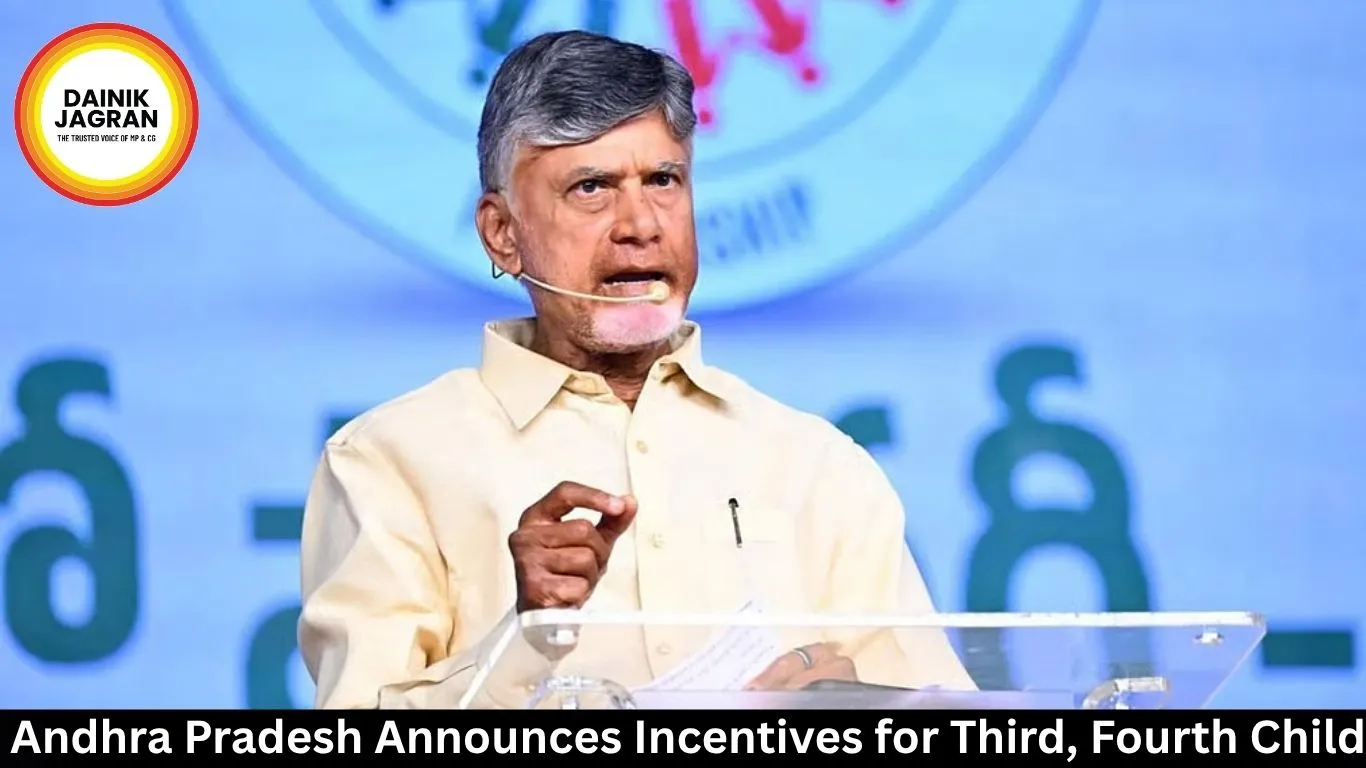
Andhra Pradesh Announces Incentives for Third, Fourth Child

Digital Desk

Andhra Pradesh Announces Incentives for Third, Fourth Child

Andhra Pradesh CM Chandrababu Naidu announced cash incentives for third and fourth child births, citing concerns over declining population growth.


Andhra Pradesh to Offer Cash Incentives for Third, Fourth Child Births

CM cites falling fertility concerns

Andhra Pradesh Chief Minister N. Chandrababu Naidu on Saturday announced a new population policy initiative under which families in the state will receive financial incentives for the birth of a third and fourth child. Addressing a public gathering in Srikakulam district, the Chief Minister said the government would provide โ‚น30,000 for the birth of a third child and โ‚น40,000 for a fourth child.

The announcement marks a significant shift in the state’s approach to population policy, with Naidu openly stating that he no longer supports strict population control measures. According to him, declining fertility rates and an ageing population could create long-term economic challenges if not addressed early.

Policy details awaited

While announcing the incentives, Naidu said the government would release a detailed framework within the next month. Officials are expected to outline eligibility conditions, implementation timelines and funding mechanisms after consultations with relevant departments.

The Chief Minister also recalled that the state government had earlier examined a proposal to provide โ‚น25,000 for the birth of a second child. That proposal was discussed in the Andhra Pradesh Assembly earlier this year, though no final rollout was announced at the time.

Saturday’s declaration, however, is being viewed as the clearest indication yet that the government intends to actively encourage larger families.

“Children are national wealth”

Speaking at the meeting, Naidu urged people not to treat children as a burden. He said a healthy and stable society requires a replacement fertility rate of around 2.1 children per woman and warned that several countries were already facing economic pressure because of shrinking young populations.

“Children are the nation’s wealth,” he said while explaining the rationale behind the proposed incentives.

The Chief Minister pointed to global demographic trends where falling birth rates have led to labour shortages and rising welfare burdens linked to ageing populations. Though India continues to have one of the world’s largest youth populations, policymakers in some southern states have increasingly expressed concern over declining fertility figures.

Earlier maternity benefits expanded

The latest announcement follows another population-related policy move made by the Andhra Pradesh government last year. In April 2025, Naidu had appealed to women to have more children and announced expanded maternity leave benefits for female government employees.

Under the revised rule, women employees became eligible for 26 weeks of maternity leave for every child, irrespective of the number of children. Earlier, full maternity leave benefits were restricted to the first two children, while shorter leave periods applied beyond that limit.

At the time, the government had argued that the measure would help maintain demographic balance while supporting women managing both employment and family responsibilities.

Delimitation debate resurfaces

Naidu’s latest remarks have also triggered political discussion around the long-pending Lok Sabha delimitation exercise. Southern states, including Andhra Pradesh, Tamil Nadu and Kerala, have repeatedly raised concerns that population-based redistribution of parliamentary seats could reduce their political representation compared to northern Hindi-speaking states.

The delimitation process has remained frozen for decades, largely to avoid penalising states that successfully controlled population growth.

Political observers say Naidu’s renewed emphasis on population growth may partly reflect concerns about future parliamentary representation, especially if delimitation resumes after the next Census exercise.

Amit Shah’s earlier assurance

Union Home Minister Amit Shah had earlier attempted to address fears surrounding delimitation. While speaking in Parliament, Shah said no southern state would suffer a disadvantage and explained that the total strength of the Lok Sabha could increase substantially.

According to the proposal discussed earlier, the number of Lok Sabha seats could rise from 543 to over 800 after delimitation and women’s reservation adjustments are factored in.

Based on projections cited during parliamentary discussions, Andhra Pradesh could see its Lok Sabha seats increase from 25 to 38 in a future expansion scenario, alongside gains for other southern states as well.

Population policy focus grows

The Andhra Pradesh government’s latest push signals a broader shift in demographic thinking among some policymakers who now see declining fertility as an economic issue rather than purely a population-control success story.

Whether the proposed cash incentives significantly influence birth rates remains uncertain, but the announcement has already sparked debate over welfare priorities, women’s health and the long-term political implications of demographic change in India.


--------

๐Ÿšจ Beat the News Rush โ€“ Join Now!

Get breaking alerts, hot exclusives, and game-changing stories instantly on your phone. No delays, no fluff โ€“ just the edge you need. โšก

Tap to join:ย 

๐ŸŸข WhatsApp Channel: Dainik Jagran MP CG

Crave more?

๐Ÿ…• Facebook: Dainik Jagran MP CG English

๐Ÿ…ง Twitter (X): Dainik Jagran MP CG

๐Ÿ…˜ Instagram: Dainik Jagran MP CG

Share the fire โ€“ keep your crew ahead! ๐Ÿ—ž๏ธ๐Ÿ”ฅ

english.dainikjagranmpcg.com
17 May 2026 By Abhishek Joshi

Andhra Pradesh Announces Incentives for Third, Fourth Child

Digital Desk

Andhra Pradesh to Offer Cash Incentives for Third, Fourth Child Births

CM cites falling fertility concerns

Andhra Pradesh Chief Minister N. Chandrababu Naidu on Saturday announced a new population policy initiative under which families in the state will receive financial incentives for the birth of a third and fourth child. Addressing a public gathering in Srikakulam district, the Chief Minister said the government would provide โ‚น30,000 for the birth of a third child and โ‚น40,000 for a fourth child.

The announcement marks a significant shift in the state’s approach to population policy, with Naidu openly stating that he no longer supports strict population control measures. According to him, declining fertility rates and an ageing population could create long-term economic challenges if not addressed early.

Policy details awaited

While announcing the incentives, Naidu said the government would release a detailed framework within the next month. Officials are expected to outline eligibility conditions, implementation timelines and funding mechanisms after consultations with relevant departments.

The Chief Minister also recalled that the state government had earlier examined a proposal to provide โ‚น25,000 for the birth of a second child. That proposal was discussed in the Andhra Pradesh Assembly earlier this year, though no final rollout was announced at the time.

Saturday’s declaration, however, is being viewed as the clearest indication yet that the government intends to actively encourage larger families.

“Children are national wealth”

Speaking at the meeting, Naidu urged people not to treat children as a burden. He said a healthy and stable society requires a replacement fertility rate of around 2.1 children per woman and warned that several countries were already facing economic pressure because of shrinking young populations.

“Children are the nation’s wealth,” he said while explaining the rationale behind the proposed incentives.

The Chief Minister pointed to global demographic trends where falling birth rates have led to labour shortages and rising welfare burdens linked to ageing populations. Though India continues to have one of the world’s largest youth populations, policymakers in some southern states have increasingly expressed concern over declining fertility figures.

Earlier maternity benefits expanded

The latest announcement follows another population-related policy move made by the Andhra Pradesh government last year. In April 2025, Naidu had appealed to women to have more children and announced expanded maternity leave benefits for female government employees.

Under the revised rule, women employees became eligible for 26 weeks of maternity leave for every child, irrespective of the number of children. Earlier, full maternity leave benefits were restricted to the first two children, while shorter leave periods applied beyond that limit.

At the time, the government had argued that the measure would help maintain demographic balance while supporting women managing both employment and family responsibilities.

Delimitation debate resurfaces

Naidu’s latest remarks have also triggered political discussion around the long-pending Lok Sabha delimitation exercise. Southern states, including Andhra Pradesh, Tamil Nadu and Kerala, have repeatedly raised concerns that population-based redistribution of parliamentary seats could reduce their political representation compared to northern Hindi-speaking states.

The delimitation process has remained frozen for decades, largely to avoid penalising states that successfully controlled population growth.

Political observers say Naidu’s renewed emphasis on population growth may partly reflect concerns about future parliamentary representation, especially if delimitation resumes after the next Census exercise.

Amit Shah’s earlier assurance

Union Home Minister Amit Shah had earlier attempted to address fears surrounding delimitation. While speaking in Parliament, Shah said no southern state would suffer a disadvantage and explained that the total strength of the Lok Sabha could increase substantially.

According to the proposal discussed earlier, the number of Lok Sabha seats could rise from 543 to over 800 after delimitation and women’s reservation adjustments are factored in.

Based on projections cited during parliamentary discussions, Andhra Pradesh could see its Lok Sabha seats increase from 25 to 38 in a future expansion scenario, alongside gains for other southern states as well.

Population policy focus grows

The Andhra Pradesh government’s latest push signals a broader shift in demographic thinking among some policymakers who now see declining fertility as an economic issue rather than purely a population-control success story.

Whether the proposed cash incentives significantly influence birth rates remains uncertain, but the announcement has already sparked debate over welfare priorities, women’s health and the long-term political implications of demographic change in India.


https://english.dainikjagranmpcg.com/national/andhra-pradesh-announces-incentives-for-third-fourth-child/article-18577

Related Posts

Latest News


