

Congress General Secretary Jairam Ramesh, in a post on X, used the phrase “Mogambo is happy in Washington” to allege that the Prime Minister had accepted unfavourable terms. Ramesh claimed that the announcement of the trade agreement followed a familiar pattern in which major policy decisions involving India are first disclosed by Trump or his representatives rather than by the Indian government.
The controversy erupted after Trump declared that the US had finalised a trade deal with India, reducing reciprocal tariffs on Indian goods from 25% to 18%. Trump further claimed that India would stop purchasing oil from Russia and instead source more energy from the United States and Venezuela. He said the agreement was concluded following discussions with Prime Minister Modi.
Questioning the process and substance of the deal, the Congress compared the episode to what it described as the government’s handling of the ceasefire during Operation Sindoor, alleging that even then, key information emerged from US statements before official confirmation from India. Ramesh said this trend raised serious concerns about transparency and sovereignty in decision-making.
The opposition party also flagged reports suggesting that India may significantly increase imports from the US, including energy and other commodities. Congress leaders asked how such commitments align with the government’s flagship ‘Make in India’ initiative and whether strategic ties with Russia were being diluted as part of the trade negotiations.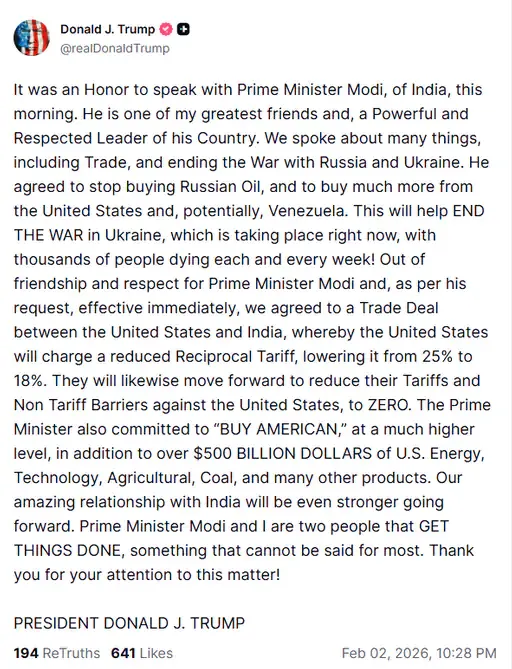
Trump, in a post on his social media platform Truth Social, claimed that India had agreed to purchase over $500 billion worth of US goods spanning energy, technology, agriculture and coal. He also said the two leaders discussed broader geopolitical issues, including efforts to end the Russia–Ukraine war.
Responding to Trump’s announcement, Prime Minister Modi acknowledged the conversation and welcomed the reduction in tariffs on Indian products. In a post on X, Modi thanked Trump for the decision, describing it as beneficial for Indian exporters and made on behalf of 1.4 billion Indians.
The government has not yet issued a detailed statement clarifying the scope of the agreement, fuel import commitments, or its long-term implications. With Parliament’s next session approaching, the trade deal is expected to trigger a broader political debate over economic strategy, foreign policy alignment and the government’s communication on international negotiations.

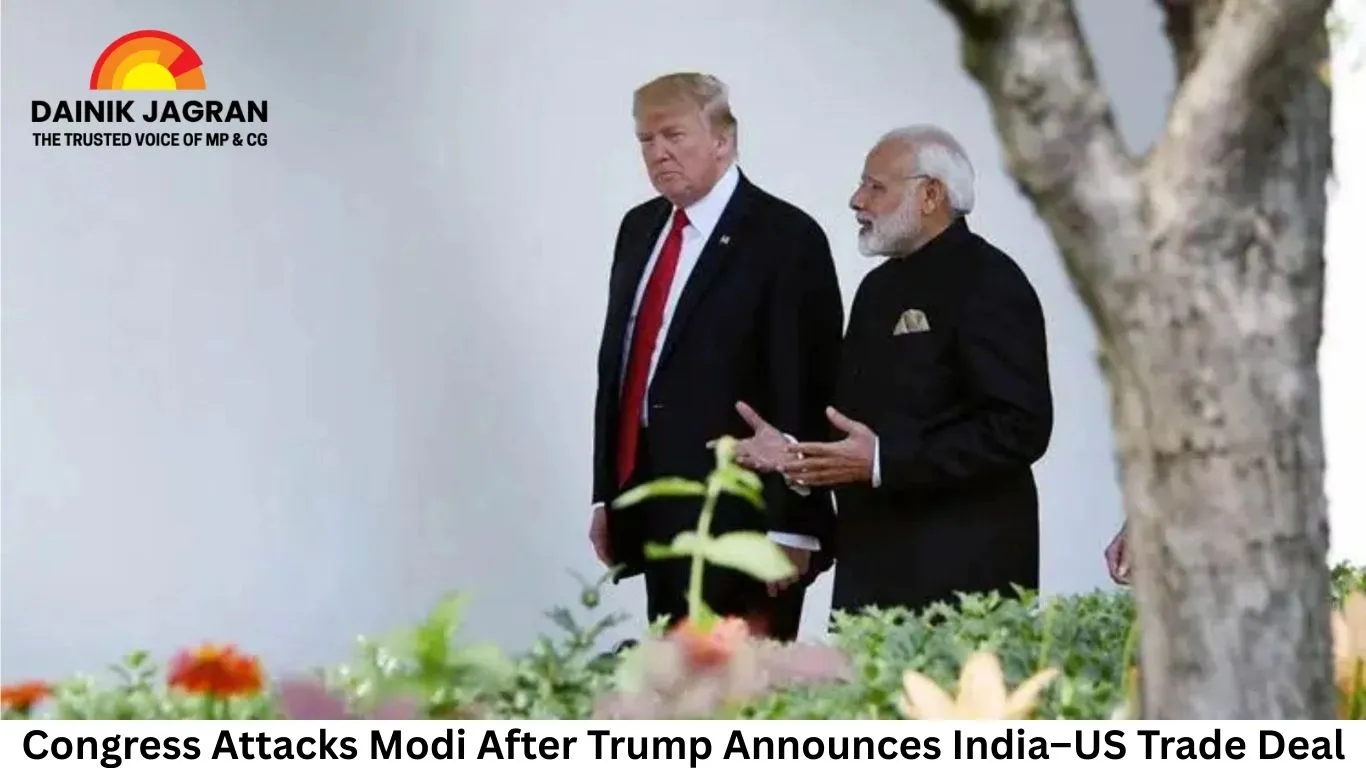
Congress Attacks Modi After Trump Announces India–US Trade Deal, Questions Government’s Transparency
Digital Desk
Congress General Secretary Jairam Ramesh, in a post on X, used the phrase “Mogambo is happy in Washington” to allege that the Prime Minister had accepted unfavourable terms. Ramesh claimed that the announcement of the trade agreement followed a familiar pattern in which major policy decisions involving India are first disclosed by Trump or his representatives rather than by the Indian government.
The controversy erupted after Trump declared that the US had finalised a trade deal with India, reducing reciprocal tariffs on Indian goods from 25% to 18%. Trump further claimed that India would stop purchasing oil from Russia and instead source more energy from the United States and Venezuela. He said the agreement was concluded following discussions with Prime Minister Modi.
Questioning the process and substance of the deal, the Congress compared the episode to what it described as the government’s handling of the ceasefire during Operation Sindoor, alleging that even then, key information emerged from US statements before official confirmation from India. Ramesh said this trend raised serious concerns about transparency and sovereignty in decision-making.
The opposition party also flagged reports suggesting that India may significantly increase imports from the US, including energy and other commodities. Congress leaders asked how such commitments align with the government’s flagship ‘Make in India’ initiative and whether strategic ties with Russia were being diluted as part of the trade negotiations.
Trump, in a post on his social media platform Truth Social, claimed that India had agreed to purchase over $500 billion worth of US goods spanning energy, technology, agriculture and coal. He also said the two leaders discussed broader geopolitical issues, including efforts to end the Russia–Ukraine war.
Responding to Trump’s announcement, Prime Minister Modi acknowledged the conversation and welcomed the reduction in tariffs on Indian products. In a post on X, Modi thanked Trump for the decision, describing it as beneficial for Indian exporters and made on behalf of 1.4 billion Indians.
The government has not yet issued a detailed statement clarifying the scope of the agreement, fuel import commitments, or its long-term implications. With Parliament’s next session approaching, the trade deal is expected to trigger a broader political debate over economic strategy, foreign policy alignment and the government’s communication on international negotiations.
.jpg)




