


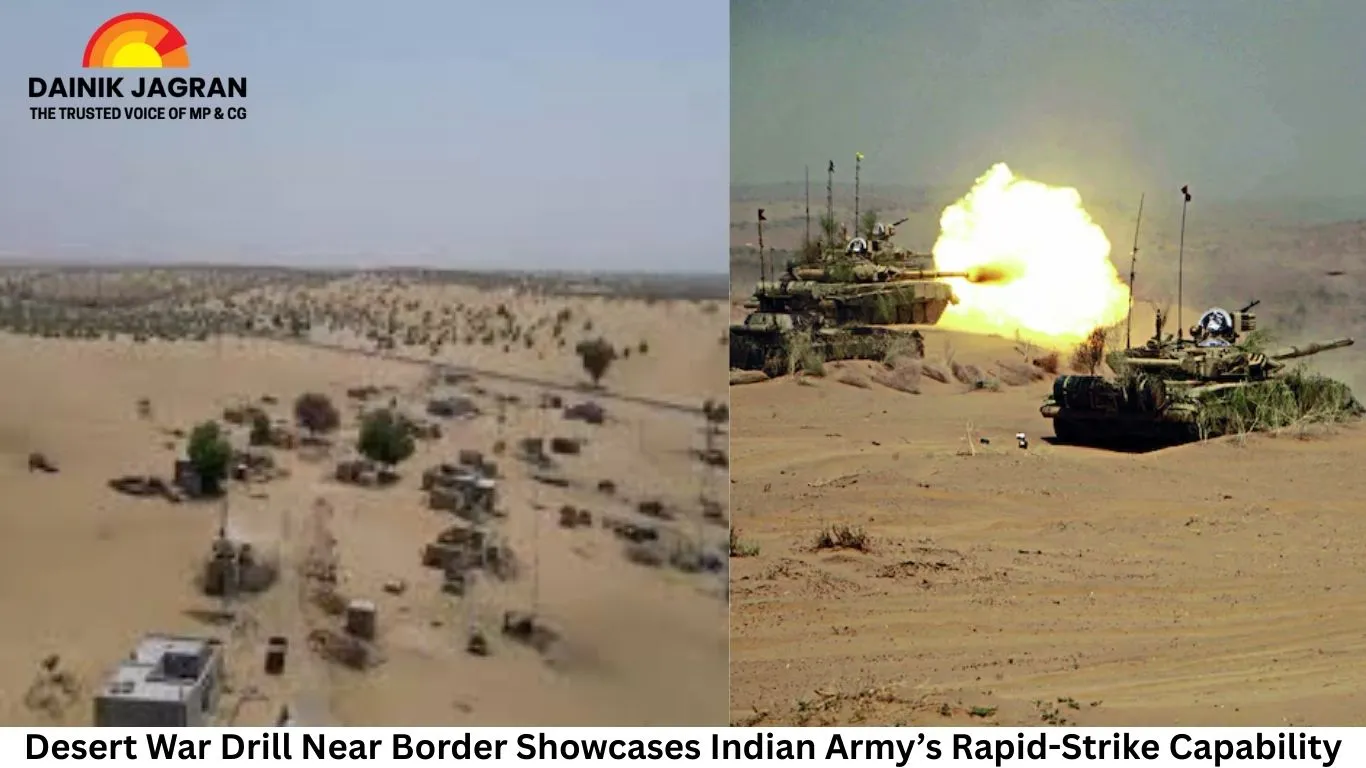
Desert War Drill Near Border Showcases Indian Army’s Rapid-Strike Capability
Digital Desk
The exercise was led by the Konark Corps, which deployed armoured, artillery, and infantry units in coordinated assault simulations. According to an army spokesperson, the objective was to validate rapid response capability in conditions where visibility, distance, and shifting sands can complicate combat operations. “The aim is to ensure that once enemy movement is detected, response time is minimal and accuracy remains uncompromised,” the official said.
A key feature of the drill was testing the “sensor-to-shooter” link, a system that transmits real-time data from drones, radars, and surveillance platforms directly to firing units. Commanders monitored how quickly intelligence could be processed and converted into precise strikes. Military authorities confirmed that simulated enemy targets were engaged successfully during both daytime and night operations.
The formation spearheading the exercise is popularly known as the Battle Axe division, headquartered in Jodhpur, reflecting its specialization in breaching fortified defensive lines. Officers noted that seamless coordination among combat arms was central to the exercise. Armoured columns advanced alongside infantry units while artillery provided covering fire, replicating real battlefield conditions.
Desert warfare presents unique technical challenges, including heat, dust, and unstable terrain that can affect weapon performance and mobility. Officials said the drills were designed to test equipment reliability in temperatures ranging from sub-zero winter nights to extreme summer heat exceeding 50°C in Rajasthan. The results, they added, confirmed that systems and personnel remained fully operational despite environmental stress.
Military planners also highlighted the growing importance of network-centric warfare. Real-time digital connectivity allowed commanders to track troop movement, target coordinates, and battlefield developments simultaneously, improving situational awareness and decision-making speed.
Defence observers view such exercises as routine preparedness measures rather than escalation signals. However, they acknowledge that drills near sensitive borders also serve as strategic messaging, demonstrating operational readiness and deterrence capability. The army said similar exercises will continue periodically to refine tactics, strengthen interoperability, and maintain high readiness levels for any contingency.
.jpg)




