


Drone Conspiracy and Rebel Training: 7 Foreigners Arrested in India in Major NIA Crackdown
Digital Desk
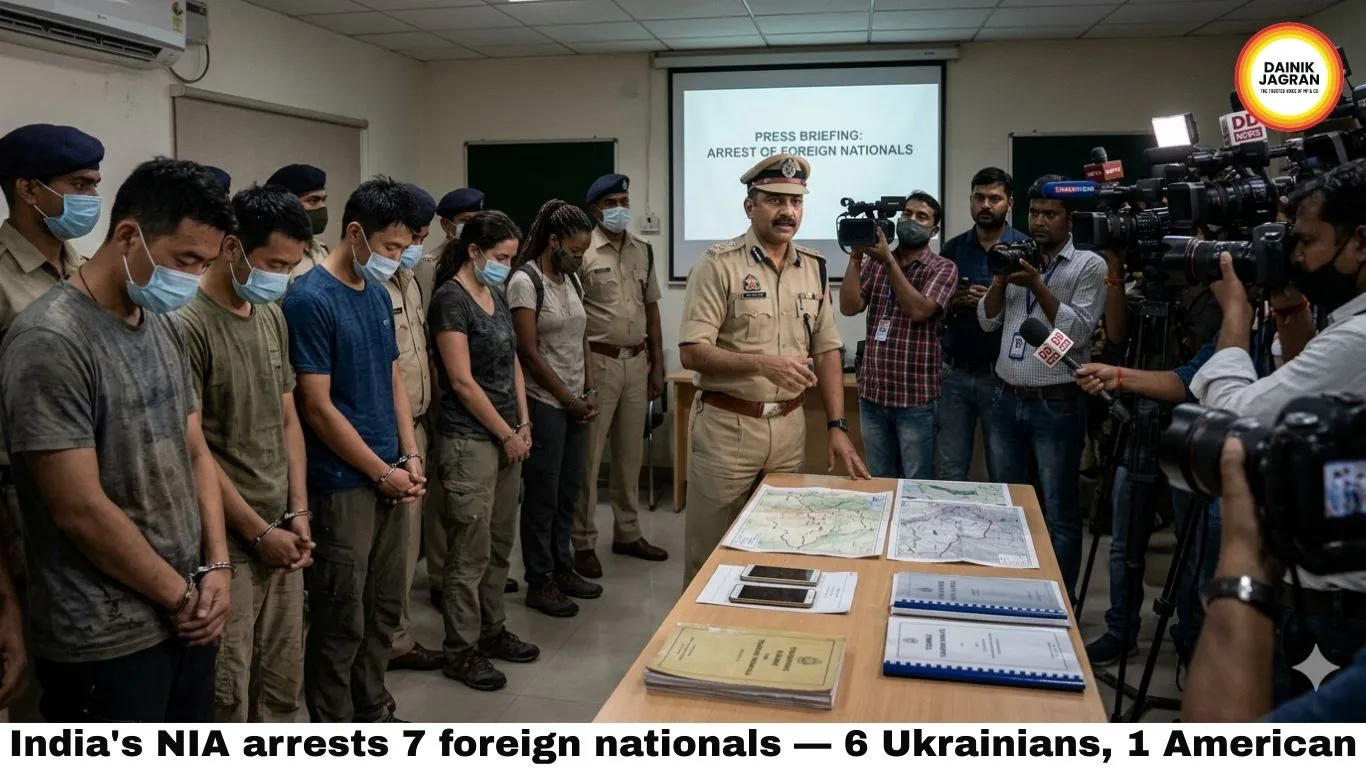
In a case that has sent ripples through India's security establishment, the National Investigation Agency (NIA) has arrested seven foreign nationals—six from Ukraine and one from the United States—on charges of conspiring to train insurgent groups along the volatile India-Myanmar border.
The arrests, confirmed by public radio broadcaster AIR and other media reports on Tuesday, point to a sophisticated operation involving illegal border crossings, weapons training, and the smuggling of a "huge consignment of drones from Europe." The development underscores India's growing anxiety over the spillover effects of Myanmar's civil war, now entering its fifth year.
The Alleged Plot: Training Camps and European Drones
According to official sources, the accused first illegally entered India's sensitive northeastern state of Mizoram without the required permits. From there, they allegedly crossed the porous jungle border into Myanmar, where they are suspected of training "ethnic war groups... associated with insurgent groups in India."
But the plot thickens. Investigators believe the network was not just about training rebels. The seven are also accused of orchestrating the illegal transport of a significant number of drones from Europe into India, with the ultimate goal of using them in Myanmar's conflict zones. The specific type of drones and their exact European country of origin have not been officially disclosed, but the revelation raises serious questions about transnational supply chains feeding into regional insurgencies.
Legal Proceedings and National Security Charges
A closed court in New Delhi has remanded the seven accused to 11 days of NIA custody for intense interrogation. The Ukrainians were picked up from Delhi and Lucknow, while the American national was arrested in Kolkata.
The charges against them are grave. Citing official sources, The Indian Express reported that the foreigners have been charged with conspiring to commit terrorist acts against the Indian state. If convicted, the offence carries a maximum penalty of life imprisonment. This charge indicates that the NIA believes the alleged training of Myanmar rebels was not a standalone operation, but one with potential links to, or consequences for, insurgent activity on Indian soil.
Why This Matters: The Volatile India-Myanmar Border
This case cannot be viewed in isolation. It is the latest flashpoint in a region under immense strain.
-
A 1,643-Kilometre Challenge: India shares a long, largely unfenced border with Myanmar, running through remote mountains and dense forests. While a fencing project is underway, the terrain makes it notoriously difficult to police.
-
Fear of Spillover: New Delhi has long feared that armed groups operating in Myanmar, some of which share ethnic ties with populations in India's northeast, could drag the conflict across the border.
-
A History of Warnings: Last year, Mizoram's chief minister made the explosive—and hard-to-verify—claim that "thousands" of Western mercenaries had passed through the state en route to Myanmar. This week's arrests suggest those warnings may have had some basis in reality.
The Bigger Picture: India's Delicate Balancing Act
For India, the Myanmar crisis is a diplomatic and security nightmare. On one hand, it maintains a cautious line of communication with the junta in Naypyidaw. On the other, it is sympathetic to the ethnic groups, particularly the Chin, who have fled violence into Mizoram by the thousands.
The presence of Ukrainian and American nationals allegedly training anti-junta forces adds a geopolitical layer. While Ukraine is officially preoccupied with its own war with Russia, the involvement of its citizens in a faraway conflict in Southeast Asia is puzzling. The NIA's interrogation will likely focus on who exactly these individuals were working for and how the drone smuggling network was financed.
What Happens Next?
For the next 11 days, the seven accused will face detailed questioning. The NIA will be looking to map the entire network: who recruited them, who funded the drone purchases, and most critically, which specific insurgent groups they were training.
For the residents of India's northeast, the case is a stark reminder that the civil war next door is not a distant conflict. It is knocking on India's door. And as this investigation unfolds, it may reveal just how deep the foreign involvement in Myanmar's battlefields truly runs.




.jpg)




