

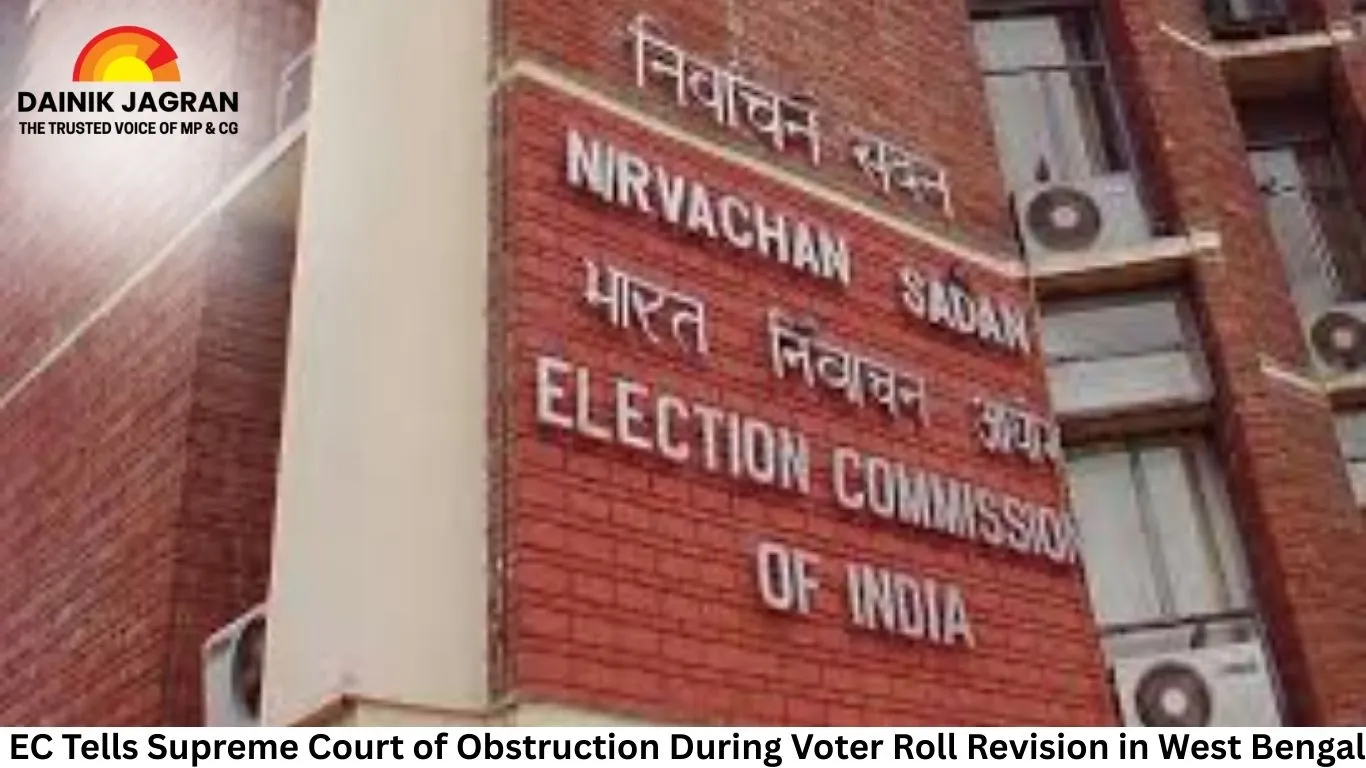
EC Tells Supreme Court of Obstruction During Voter Roll Revision in West Bengal; Alleges Threats to Officials and Police Inaction
Digital Desk
The Election Commission of India (EC) has informed the Supreme Court that election officials conducting the Special Intensive Revision (SIR) of electoral rolls in West Bengal are facing threats, violence and systematic obstruction, hampering the integrity of the voter list ahead of upcoming elections. The submissions were made in an affidavit filed on Thursday in response to petitions concerning the SIR process.
In the affidavit, the EC said the situation in West Bengal was markedly different from other states, where the SIR exercise was completed without major incidents. It alleged that Booth Level Officers (BLOs) encountered intimidation and physical obstruction while collecting data, and that local police often failed to register First Information Reports (FIRs) despite formal complaints.
The Commission told the court that police action was taken in several cases only after intervention by district election officers, and alleged that the state government did not comply with EC directives regarding prompt FIR registration and disciplinary action against those obstructing election work.
The EC underlined the importance of the ongoing revision, stating that the 2025 voter list could not be relied upon for assembly elections due to the identification of more than 58 lakh entries involving deceased, shifted or long-absent voters during the SIR. According to the affidavit, correcting these discrepancies is essential to ensure a credible and accurate electoral roll.
Referring to a protest on November 24, 2024, the EC said demonstrators had gheraoed the Chief Election Officer’s (CEO) office in Kolkata, attempted forced entry, damaged barricades, vandalised property and disrupted official functioning. The Commission said such incidents had a chilling effect on officials tasked with statutory duties.
The affidavit also noted that, following a threat assessment by the Union Home Ministry, the Chief Election Officer of West Bengal was provided Y-category security. The EC said this was the only instance in the country where an election official required such protection, underscoring the gravity of the situation.
Despite these challenges, the EC said the SIR process had made substantial progress. BLOs submitted more than 7.08 crore enumeration forms, accounting for 92.40 per cent of the total electorate. Electoral Registration Officers issued around 1.51 crore notices to verify eligibility and correct discrepancies.
The Commission emphasised that the notice and verification phase is critical to the accuracy of electoral rolls and must be conducted without fear or coercion. It reiterated its commitment to transparency, citing earlier Supreme Court directions requiring the display of names with discrepancies at Gram Panchayat and Block offices to facilitate objections and document submissions.
The Supreme Court is expected to consider the EC’s submissions while examining concerns over transparency, administrative conduct and voter rights in the revision process.
--------
🚨 Beat the News Rush – Join Now!
Get breaking alerts, hot exclusives, and game-changing stories instantly on your phone. No delays, no fluff – just the edge you need. ⚡
Tap to join:
🟢 WhatsApp Channel: Dainik Jagran MP CG
Crave more?
🅕 Facebook: Dainik Jagran MP CG English
🅧 Twitter (X): Dainik Jagran MP CG
🅘 Instagram: Dainik Jagran MP CG
Share the fire – keep your crew ahead! 🗞️🔥
EC Tells Supreme Court of Obstruction During Voter Roll Revision in West Bengal; Alleges Threats to Officials and Police Inaction
Digital Desk
In the affidavit, the EC said the situation in West Bengal was markedly different from other states, where the SIR exercise was completed without major incidents. It alleged that Booth Level Officers (BLOs) encountered intimidation and physical obstruction while collecting data, and that local police often failed to register First Information Reports (FIRs) despite formal complaints.
The Commission told the court that police action was taken in several cases only after intervention by district election officers, and alleged that the state government did not comply with EC directives regarding prompt FIR registration and disciplinary action against those obstructing election work.
The EC underlined the importance of the ongoing revision, stating that the 2025 voter list could not be relied upon for assembly elections due to the identification of more than 58 lakh entries involving deceased, shifted or long-absent voters during the SIR. According to the affidavit, correcting these discrepancies is essential to ensure a credible and accurate electoral roll.
Referring to a protest on November 24, 2024, the EC said demonstrators had gheraoed the Chief Election Officer’s (CEO) office in Kolkata, attempted forced entry, damaged barricades, vandalised property and disrupted official functioning. The Commission said such incidents had a chilling effect on officials tasked with statutory duties.
The affidavit also noted that, following a threat assessment by the Union Home Ministry, the Chief Election Officer of West Bengal was provided Y-category security. The EC said this was the only instance in the country where an election official required such protection, underscoring the gravity of the situation.
Despite these challenges, the EC said the SIR process had made substantial progress. BLOs submitted more than 7.08 crore enumeration forms, accounting for 92.40 per cent of the total electorate. Electoral Registration Officers issued around 1.51 crore notices to verify eligibility and correct discrepancies.
The Commission emphasised that the notice and verification phase is critical to the accuracy of electoral rolls and must be conducted without fear or coercion. It reiterated its commitment to transparency, citing earlier Supreme Court directions requiring the display of names with discrepancies at Gram Panchayat and Block offices to facilitate objections and document submissions.
The Supreme Court is expected to consider the EC’s submissions while examining concerns over transparency, administrative conduct and voter rights in the revision process.


