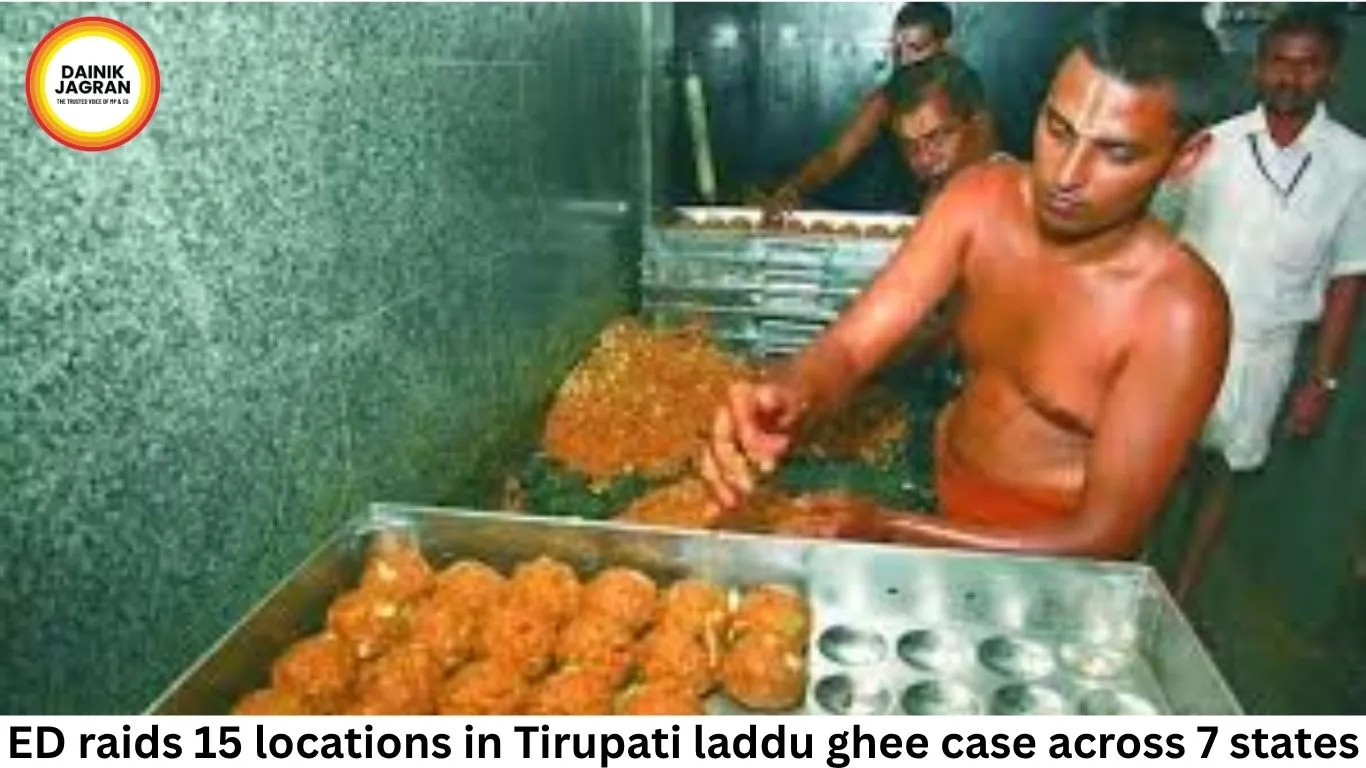
ED raids 15 locations in Tirupati laddu ghee case across 7 states
Digital Desk
The Tirupati laddu ghee case has intensified as the ED conducts multi-state raids, uncovering suspected financial irregularities, cash, and large-scale investments.
The Tirupati laddu ghee case has widened significantly as the Enforcement Directorate carried out coordinated searches at 15 locations across seven states. The action marks a deeper phase of investigation into alleged money laundering linked to the supply chain of ghee used in offerings at Tirupati Balaji Temple.
Officials said the raids uncovered cash, property documents, and evidence of large-scale financial transactions suspected to be part of a structured laundering network. The case now spans multiple business hubs across India.
Multi-state coordination
The enforcement action covered key cities including Delhi, Mumbai, Dehradun, Guntur, Dindigul, Roorkee, and Ahilyanagar.
According to officials, the Tirupati laddu ghee case probe is no longer confined to regional supply concerns but is now tracking financial flows across multiple states and sectors. Teams examined banking records, business ledgers, and digital transaction trails during the searches.
Bikaner search operation
A significant development emerged from Bikaner, where ED officials searched the residence and office of ghee trader Ashish Agarwal in Koyla Gali. The team examined financial documents and business records for several hours.
Sources indicated that investigators are verifying whether funds linked to the Tirupati laddu ghee case were routed through trading firms to mask their origin. However, no formal seizure details specific to the Bikaner premises have been officially disclosed.
Cash and assets seized
During the raids, investigators recovered around ₹60 lakh in cash from various locations. Preliminary findings suggest that investments and assets worth over ₹45 crore may be linked to suspected proceeds of crime.
The Tirupati laddu ghee case has now entered a crucial phase where asset tracing and financial mapping are central to the probe. Authorities are examining bank accounts, investment portfolios, and property holdings connected to individuals under scrutiny.
Property records examined
Officials also seized documents related to multiple immovable properties registered in the names of accused persons and their family members. These records are being analysed to determine ownership structures and possible benami arrangements.
Investigators suspect that layered financial transactions were used to integrate unaccounted money into legitimate business channels linked to the Tirupati laddu ghee case.
Alleged laundering network
Preliminary assessment points to the use of fake purchase and sales invoices to generate and circulate unaccounted income. The ED suspects that multiple entities across states were involved in creating a structured financial web.
The Tirupati laddu ghee case is now being examined as part of a broader money laundering framework, where legitimate supply chains may have allegedly been misused for financial layering.
Temple supply scrutiny
The controversy initially began with concerns over the quality of ghee used in offerings at Tirupati Balaji Temple. However, it has now evolved into a wider financial investigation involving multiple agencies.
Officials are also reviewing procurement contracts and vendor records to establish whether irregularities existed in the supply chain and financial routing.

--------
🚨 Beat the News Rush – Join Now!
Get breaking alerts, hot exclusives, and game-changing stories instantly on your phone. No delays, no fluff – just the edge you need. ⚡
Tap to join:
🟢 WhatsApp Channel: Dainik Jagran MP CG
Crave more?
🅕 Facebook: Dainik Jagran MP CG English
🅧 Twitter (X): Dainik Jagran MP CG
🅘 Instagram: Dainik Jagran MP CG
Share the fire – keep your crew ahead! 🗞️🔥
ED raids 15 locations in Tirupati laddu ghee case across 7 states
Digital Desk
The Tirupati laddu ghee case has widened significantly as the Enforcement Directorate carried out coordinated searches at 15 locations across seven states. The action marks a deeper phase of investigation into alleged money laundering linked to the supply chain of ghee used in offerings at Tirupati Balaji Temple.
Officials said the raids uncovered cash, property documents, and evidence of large-scale financial transactions suspected to be part of a structured laundering network. The case now spans multiple business hubs across India.
Multi-state coordination
The enforcement action covered key cities including Delhi, Mumbai, Dehradun, Guntur, Dindigul, Roorkee, and Ahilyanagar.
According to officials, the Tirupati laddu ghee case probe is no longer confined to regional supply concerns but is now tracking financial flows across multiple states and sectors. Teams examined banking records, business ledgers, and digital transaction trails during the searches.
Bikaner search operation
A significant development emerged from Bikaner, where ED officials searched the residence and office of ghee trader Ashish Agarwal in Koyla Gali. The team examined financial documents and business records for several hours.
Sources indicated that investigators are verifying whether funds linked to the Tirupati laddu ghee case were routed through trading firms to mask their origin. However, no formal seizure details specific to the Bikaner premises have been officially disclosed.
Cash and assets seized
During the raids, investigators recovered around ₹60 lakh in cash from various locations. Preliminary findings suggest that investments and assets worth over ₹45 crore may be linked to suspected proceeds of crime.
The Tirupati laddu ghee case has now entered a crucial phase where asset tracing and financial mapping are central to the probe. Authorities are examining bank accounts, investment portfolios, and property holdings connected to individuals under scrutiny.
Property records examined
Officials also seized documents related to multiple immovable properties registered in the names of accused persons and their family members. These records are being analysed to determine ownership structures and possible benami arrangements.
Investigators suspect that layered financial transactions were used to integrate unaccounted money into legitimate business channels linked to the Tirupati laddu ghee case.
Alleged laundering network
Preliminary assessment points to the use of fake purchase and sales invoices to generate and circulate unaccounted income. The ED suspects that multiple entities across states were involved in creating a structured financial web.
The Tirupati laddu ghee case is now being examined as part of a broader money laundering framework, where legitimate supply chains may have allegedly been misused for financial layering.
Temple supply scrutiny
The controversy initially began with concerns over the quality of ghee used in offerings at Tirupati Balaji Temple. However, it has now evolved into a wider financial investigation involving multiple agencies.
Officials are also reviewing procurement contracts and vendor records to establish whether irregularities existed in the supply chain and financial routing.