Govt Raises Gold, Silver Import Duty to 15% from 6%
Digital Desk
India has increased import duty on gold and silver to 15% to curb imports and support the rupee amid forex pressure. Gold prices jump ₹9,000+, silver up ₹18,000 on MCX. Details on impact and industry reaction.
Government Hikes Gold, Silver Import Duty to 15% to Ease Forex Pressure
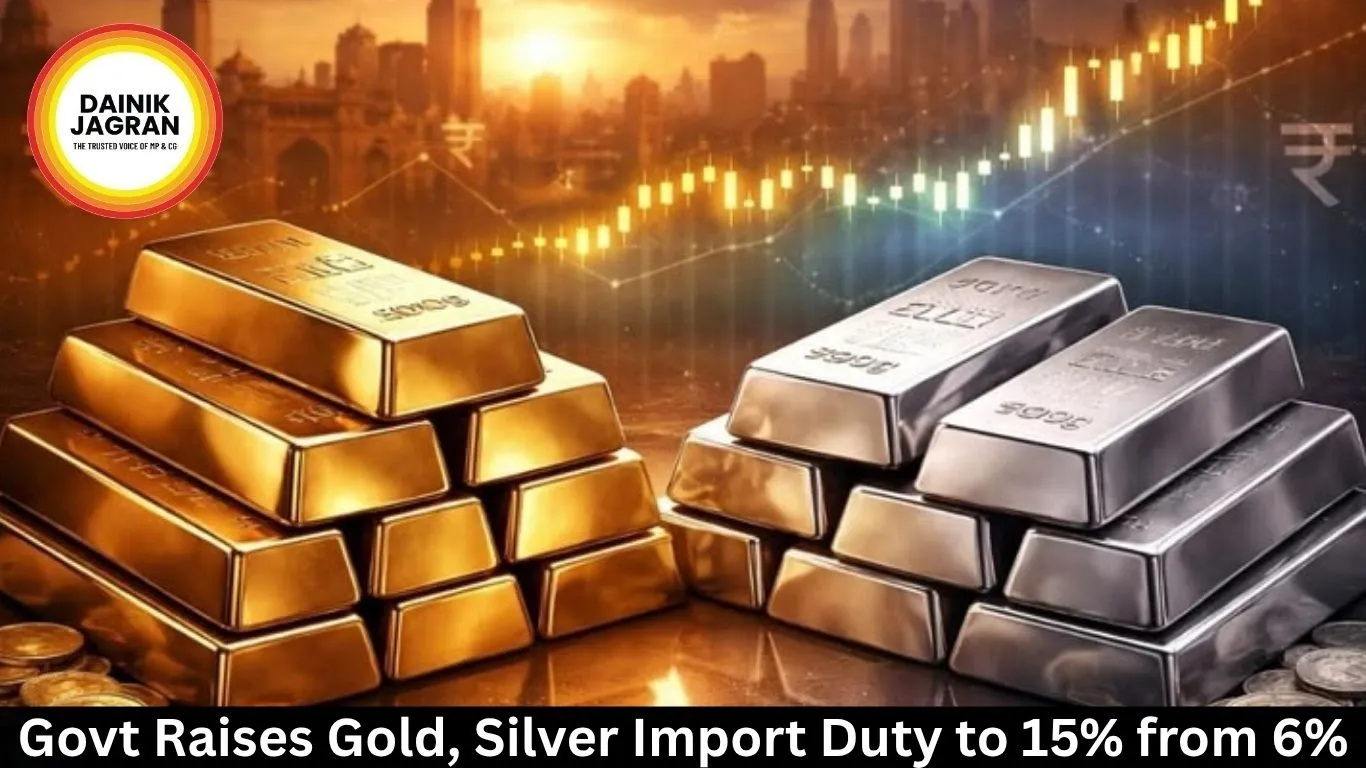
The Centre has sharply raised import duties on gold and silver to 15% from 6%, effective Wednesday, in a bid to curb overseas purchases and support the rupee, which touched a record low amid geopolitical tensions.
The decision comes days after Prime Minister Narendra Modi urged citizens to refrain from buying gold jewellery for a year in the national interest, as India grapples with widening trade deficits and pressure on foreign exchange reserves.
Duty Structure Revised
The government has imposed a 10% Basic Customs Duty along with a 5% Agriculture Infrastructure and Development Cess (AIDC) on imports of gold and silver. This effectively doubles the earlier levy, making the metals significantly costlier for importers.
Industry sources said the move follows the reduction of duties to 6% in the 2024 budget. Officials familiar with the matter indicated it aims to moderate non-essential imports at a time when the country is the world’s second-largest consumer of gold.
Prices Surge in Futures Market
Following the announcement, gold and silver futures on the Multi Commodity Exchange (MCX) jumped sharply. Gold prices rose by around ₹9,000-₹9,700, crossing ₹1.63 lakh per 10 grams in some contracts, while silver gained nearly ₹18,000, hovering close to ₹3 lakh per kg.
Physical market prices are also expected to reflect the higher landed costs soon, potentially affecting retail jewellery demand across the country.
Rupee Under Strain
The rupee had hit an all-time low of ₹95.50-₹95.63 against the US dollar earlier this week, weighed down by soaring oil prices linked to the US-Iran conflict and persistent foreign investor outflows.
By reducing gold and silver imports, which account for a substantial part of the import bill, the government hopes to ease pressure on reserves. In recent months, India has been importing an average of around 60 tonnes of gold monthly, contributing billions of dollars to the current account deficit.
Industry Reactions and Concerns
Bullion traders and jewellers have expressed mixed views. Surendra Mehta, National Secretary of the India Bullion and Jewellers Association, noted that the step was taken to control the current account deficit but could dampen demand given already elevated prices.
Some industry insiders in Mumbai warned that higher duties might revive smuggling networks, which had subsided after the previous reduction in levies. A private bank bullion dealer pointed out potential profit margins in unofficial channels at current price differentials.
Jewellery stocks reacted negatively on Tuesday, with shares of companies like Kalyan Jewellers, Senco Gold, Titan, and others falling between 7% and 10%.
Imports Likely to Hit Multi-Year Low
Analysts expect gold imports to drop significantly. Reports suggest April imports could touch a 30-year low, with banks already slowing shipments amid additional tax uncertainties.
India imports nearly all its gold requirements, with the annual bill running into lakhs of crores. The move is seen as part of broader efforts to promote austerity and conserve foreign exchange during uncertain global times.
Impact on Consumers and Markets
For ordinary buyers, especially ahead of the wedding season, the duty hike translates into higher prices for jewellery and coins. Local jewellers in major markets like Mumbai, Delhi, and Chennai are likely to pass on the costs, though some may absorb part of it initially to maintain sales.
The development follows PM Modi’s public appeal on May 10 and 11, where he recalled how people donated gold during crises and called for restraint in purchases for national interest. His remarks had already triggered some caution among buyers in states like Gujarat.
What Lies Ahead
Finance Ministry officials have not issued further detailed comments, but the timing suggests a coordinated policy response to external shocks. Markets will closely watch the impact on overall precious metals demand and the rupee’s trajectory in the coming days.
Whether this curbs imports effectively or pushes more activity underground remains to be seen. For now, the higher duties have immediately made gold and silver more expensive, reinforcing the government’s message of fiscal prudence amid challenging times.

--------
🚨 Beat the News Rush – Join Now!
Get breaking alerts, hot exclusives, and game-changing stories instantly on your phone. No delays, no fluff – just the edge you need. ⚡
Tap to join:
🟢 WhatsApp Channel: Dainik Jagran MP CG
Crave more?
🅕 Facebook: Dainik Jagran MP CG English
🅧 Twitter (X): Dainik Jagran MP CG
🅘 Instagram: Dainik Jagran MP CG
Share the fire – keep your crew ahead! 🗞️🔥
Govt Raises Gold, Silver Import Duty to 15% from 6%
Digital Desk
Government Hikes Gold, Silver Import Duty to 15% to Ease Forex Pressure
The Centre has sharply raised import duties on gold and silver to 15% from 6%, effective Wednesday, in a bid to curb overseas purchases and support the rupee, which touched a record low amid geopolitical tensions.
The decision comes days after Prime Minister Narendra Modi urged citizens to refrain from buying gold jewellery for a year in the national interest, as India grapples with widening trade deficits and pressure on foreign exchange reserves.
Duty Structure Revised
The government has imposed a 10% Basic Customs Duty along with a 5% Agriculture Infrastructure and Development Cess (AIDC) on imports of gold and silver. This effectively doubles the earlier levy, making the metals significantly costlier for importers.
Industry sources said the move follows the reduction of duties to 6% in the 2024 budget. Officials familiar with the matter indicated it aims to moderate non-essential imports at a time when the country is the world’s second-largest consumer of gold.
Prices Surge in Futures Market
Following the announcement, gold and silver futures on the Multi Commodity Exchange (MCX) jumped sharply. Gold prices rose by around ₹9,000-₹9,700, crossing ₹1.63 lakh per 10 grams in some contracts, while silver gained nearly ₹18,000, hovering close to ₹3 lakh per kg.
Physical market prices are also expected to reflect the higher landed costs soon, potentially affecting retail jewellery demand across the country.
Rupee Under Strain
The rupee had hit an all-time low of ₹95.50-₹95.63 against the US dollar earlier this week, weighed down by soaring oil prices linked to the US-Iran conflict and persistent foreign investor outflows.
By reducing gold and silver imports, which account for a substantial part of the import bill, the government hopes to ease pressure on reserves. In recent months, India has been importing an average of around 60 tonnes of gold monthly, contributing billions of dollars to the current account deficit.
Industry Reactions and Concerns
Bullion traders and jewellers have expressed mixed views. Surendra Mehta, National Secretary of the India Bullion and Jewellers Association, noted that the step was taken to control the current account deficit but could dampen demand given already elevated prices.
Some industry insiders in Mumbai warned that higher duties might revive smuggling networks, which had subsided after the previous reduction in levies. A private bank bullion dealer pointed out potential profit margins in unofficial channels at current price differentials.
Jewellery stocks reacted negatively on Tuesday, with shares of companies like Kalyan Jewellers, Senco Gold, Titan, and others falling between 7% and 10%.
Imports Likely to Hit Multi-Year Low
Analysts expect gold imports to drop significantly. Reports suggest April imports could touch a 30-year low, with banks already slowing shipments amid additional tax uncertainties.
India imports nearly all its gold requirements, with the annual bill running into lakhs of crores. The move is seen as part of broader efforts to promote austerity and conserve foreign exchange during uncertain global times.
Impact on Consumers and Markets
For ordinary buyers, especially ahead of the wedding season, the duty hike translates into higher prices for jewellery and coins. Local jewellers in major markets like Mumbai, Delhi, and Chennai are likely to pass on the costs, though some may absorb part of it initially to maintain sales.
The development follows PM Modi’s public appeal on May 10 and 11, where he recalled how people donated gold during crises and called for restraint in purchases for national interest. His remarks had already triggered some caution among buyers in states like Gujarat.
What Lies Ahead
Finance Ministry officials have not issued further detailed comments, but the timing suggests a coordinated policy response to external shocks. Markets will closely watch the impact on overall precious metals demand and the rupee’s trajectory in the coming days.
Whether this curbs imports effectively or pushes more activity underground remains to be seen. For now, the higher duties have immediately made gold and silver more expensive, reinforcing the government’s message of fiscal prudence amid challenging times.