


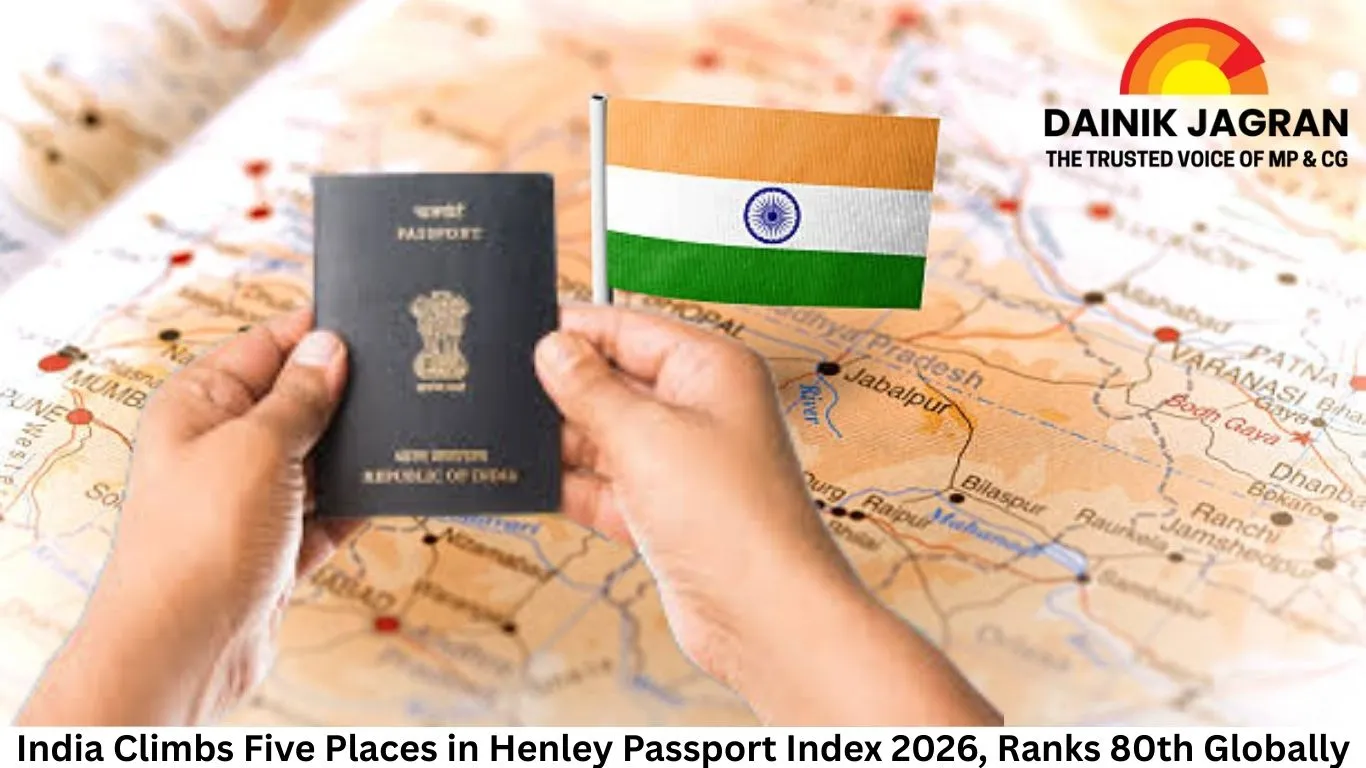
India Climbs Five Places in Henley Passport Index 2026, Ranks 80th Globally
Digital Desk
The annual index, compiled using exclusive data from the International Air Transport Association (IATA), evaluates passport strength based on visa-free access to 227 global destinations. India’s upward movement marks incremental progress compared to last year, though it continues to lag behind countries with the most powerful passports.
Singapore retained the top position in the 2026 index, offering its citizens visa-free or visa-on-arrival access to the highest number of destinations globally. It was followed by Japan and South Korea. European nations dominated the rest of the top 10, including Denmark, Luxembourg, Spain, Sweden, Switzerland, Austria and Belgium, underscoring the continued strength of European Union passports.
Henley & Partners noted that passport rankings are shaped by diplomatic relations, reciprocal visa agreements, economic stability and global trust. While India’s improved position signals gradual expansion of travel access, analysts say the gap with top-ranking countries remains significant.
For Indian passport holders, Asia continues to offer the widest visa-free access. Destinations include Bhutan, Nepal, Thailand, Indonesia, Malaysia, Maldives, Iran, Sri Lanka (ETA), and special administrative regions Hong Kong and Macao. In Africa, Indians can travel visa-free or with visa-on-arrival to countries such as Kenya, Tanzania, Mauritius, Seychelles, Rwanda and Senegal.
The Caribbean and Pacific regions also provide relatively open access, with destinations including Barbados, Jamaica, Grenada, Dominica, Fiji, Palau, Samoa and Vanuatu. In the Middle East, Qatar allows visa-on-arrival for Indian nationals, while in the Americas, countries such as Bolivia and El Salvador are accessible without a prior visa.
Experts emphasize that passport strength directly affects mobility, tourism, business travel and educational opportunities. A stronger passport reduces administrative hurdles, lowers travel costs and enhances global engagement for citizens. For countries, it reflects broader diplomatic reach and international credibility.
India’s ranking improvement comes amid ongoing efforts to strengthen bilateral ties and expand visa waiver agreements. However, policy analysts note that sustained gains will depend on deeper diplomatic engagement, improved migration management frameworks and reciprocal arrangements with key regions.
As global mobility rebounds and competition for talent and tourism intensifies, passport power is increasingly seen as a strategic asset. India’s gradual rise in the Henley Passport Index suggests progress, but also highlights the long road ahead toward broader, visa-free global access.
.jpg)




