India Netherlands sign 17 agreements in strategic pact
Digital Desk
India and Netherlands elevate ties to a Strategic Partnership, signing 17 agreements across semiconductors, defence, and green energy during PM Modi's visit.
India and Netherlands Seal Landmark Strategic Partnership with 17 Agreements
Prime Minister Narendra Modi’s visit to The Hague delivers major breakthroughs in semiconductor supply chains, defence manufacturing, and quantum technology.
A New Strategic Horizon
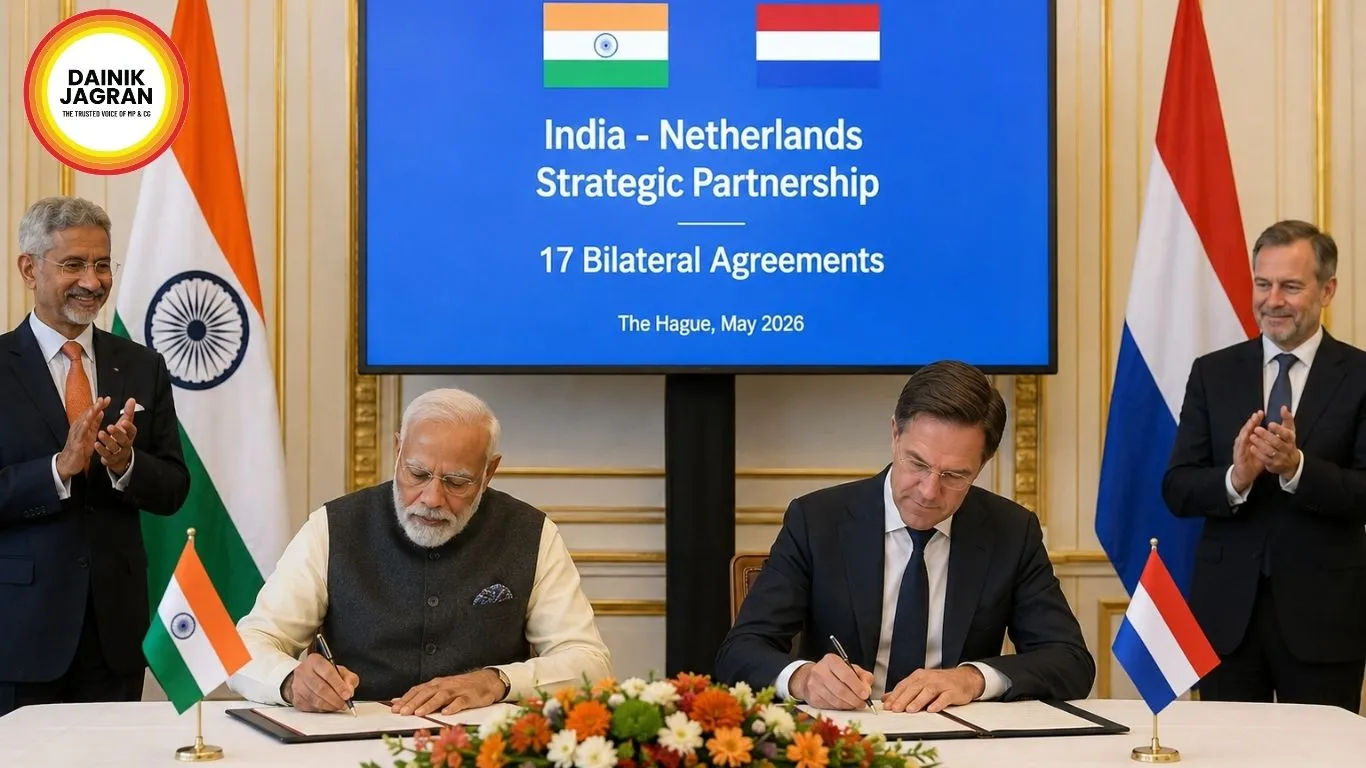
India and the Netherlands have officially elevated their bilateral ties to a full-scale Strategic Partnership following high-level delegations led by Prime Minister Narendra Modi in The Hague. The two nations concluded intense diplomatic parleys by signing 17 comprehensive agreements spanning critical sectors such as semiconductor manufacturing, maritime security, green hydrogen, and artificial intelligence.
According to officials familiar with the developments, the central pillar of this renewed engagement is a five-year roadmap running from 2026 to 2030, aimed at securing supply chains and boosting tech integration between European innovation hubs and Indian manufacturing sectors.
The Semiconductor Crown Jewel
The most significant commercial takeaway from the bilateral summit is the formalisation of a partnership between India’s Tata Electronics and Dutch semiconductor giant ASML. The collaboration is expected to provide a major boost to India's domestic semiconductor ecosystem under the ongoing Make in India initiative, granting Indian engineers access to advanced lithography insights and manufacturing frameworks.
"The ASML-Tata deal is a game-changer for our tech sovereignty," an official source from the Ministry of External Affairs stated on Monday evening. "It bridges the gap between European cutting-edge design and India's growing semiconductor manufacturing ambitions."
Deepening Maritime and Defence Ties
Beyond the technology corridor, the 17 agreements heavily emphasise maritime security and defence cooperation in the Indo-Pacific region. As commercial shipping lanes face evolving geopolitical challenges, both nations have agreed to joint naval hydrographic assessments and closer intelligence sharing on maritime logistics.
The defence pacts also cover co-development of automated military hardware and deep-tech radar components, marking a departure from traditional buyer-seller dynamics into mutual industrial production.
Looking Toward a Green Future
Energy transition emerged as another focal point during the bilateral discussions in the Netherlands. The two sides launched a joint Green Hydrogen task force tasked with bringing down production costs and aligning regulatory certifications for clean fuels.
With the conclusion of the formal state visit, working groups from both countries are scheduled to meet in New Delhi later this winter to monitor the ground-level implementation of these 17 agreements and push forward the agreed strategic roadmap.
--------
🚨 Beat the News Rush – Join Now!
Get breaking alerts, hot exclusives, and game-changing stories instantly on your phone. No delays, no fluff – just the edge you need. ⚡
Tap to join:
🟢 WhatsApp Channel: Dainik Jagran MP CG
Crave more?
🅕 Facebook: Dainik Jagran MP CG English
🅧 Twitter (X): Dainik Jagran MP CG
🅘 Instagram: Dainik Jagran MP CG
Share the fire – keep your crew ahead! 🗞️🔥
India Netherlands sign 17 agreements in strategic pact
Digital Desk
India and Netherlands Seal Landmark Strategic Partnership with 17 Agreements
Prime Minister Narendra Modi’s visit to The Hague delivers major breakthroughs in semiconductor supply chains, defence manufacturing, and quantum technology.
A New Strategic Horizon
India and the Netherlands have officially elevated their bilateral ties to a full-scale Strategic Partnership following high-level delegations led by Prime Minister Narendra Modi in The Hague. The two nations concluded intense diplomatic parleys by signing 17 comprehensive agreements spanning critical sectors such as semiconductor manufacturing, maritime security, green hydrogen, and artificial intelligence.
According to officials familiar with the developments, the central pillar of this renewed engagement is a five-year roadmap running from 2026 to 2030, aimed at securing supply chains and boosting tech integration between European innovation hubs and Indian manufacturing sectors.
The Semiconductor Crown Jewel
The most significant commercial takeaway from the bilateral summit is the formalisation of a partnership between India’s Tata Electronics and Dutch semiconductor giant ASML. The collaboration is expected to provide a major boost to India's domestic semiconductor ecosystem under the ongoing Make in India initiative, granting Indian engineers access to advanced lithography insights and manufacturing frameworks.
"The ASML-Tata deal is a game-changer for our tech sovereignty," an official source from the Ministry of External Affairs stated on Monday evening. "It bridges the gap between European cutting-edge design and India's growing semiconductor manufacturing ambitions."
Deepening Maritime and Defence Ties
Beyond the technology corridor, the 17 agreements heavily emphasise maritime security and defence cooperation in the Indo-Pacific region. As commercial shipping lanes face evolving geopolitical challenges, both nations have agreed to joint naval hydrographic assessments and closer intelligence sharing on maritime logistics.
The defence pacts also cover co-development of automated military hardware and deep-tech radar components, marking a departure from traditional buyer-seller dynamics into mutual industrial production.
Looking Toward a Green Future
Energy transition emerged as another focal point during the bilateral discussions in the Netherlands. The two sides launched a joint Green Hydrogen task force tasked with bringing down production costs and aligning regulatory certifications for clean fuels.
With the conclusion of the formal state visit, working groups from both countries are scheduled to meet in New Delhi later this winter to monitor the ground-level implementation of these 17 agreements and push forward the agreed strategic roadmap.