


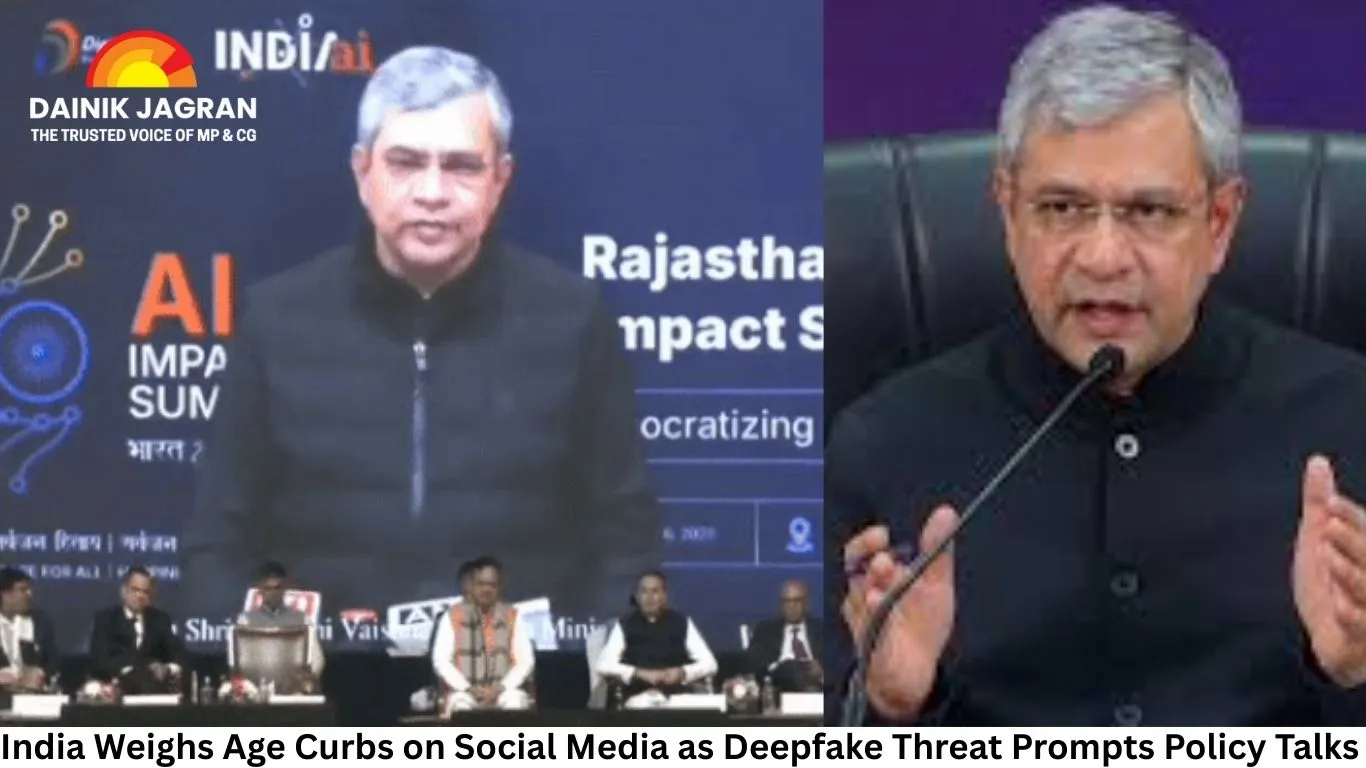
India Weighs Age Curbs on Social Media as Deepfake Threat Prompts Policy Talks
Digital Desk
Speaking in India, the minister stressed that all technology and streaming companies operating in the country must comply with domestic law and constitutional provisions. He said the misuse of artificial intelligence tools to generate deepfakes is rising rapidly and requires urgent regulatory attention, particularly to protect children and vulnerable users.
Officials indicated that policymakers are studying global approaches before framing any rules. In Australia, legislation banning children under 16 from creating accounts on designated social platforms has already taken effect, though it faces a constitutional challenge in the High Court of Australia from the Sydney-based Digital Freedom Project. Similar debates are unfolding in France and the United Kingdom, where governments are considering stricter parental consent and verification rules.
In India, the issue has drawn judicial attention as well. The Madras High Court recently suggested a ban on social media access for users under 16, reflecting mounting concern within legal and policy circles about the psychological and social impact of online exposure at a young age.
Vaishnaw said a parliamentary panel has already examined deepfakes in detail and that any major regulatory shift would require broad political consensus. The government’s approach, he added, is consultative rather than prescriptive at this stage, with industry stakeholders being asked whether additional safeguards are needed beyond existing rules.
Age differentiation is already embedded in India’s Digital Personal Data Protection framework, which envisions stricter standards for handling children’s data. The latest Economic Survey, tabled in the Parliament of India, recommended exploring age-based access limits and stronger verification systems to curb compulsive use and exposure to harmful content. It also suggested default settings tailored to minors and tighter oversight of features such as autoplay and targeted advertising.
No timeline has been announced for a final decision. However, officials say the direction of policy is clear: platforms may soon be expected to shoulder greater responsibility for verifying user age and ensuring safer digital environments. Analysts believe any eventual regulation will balance child protection with privacy, free-speech concerns, and technological feasibility.
.jpg)




