


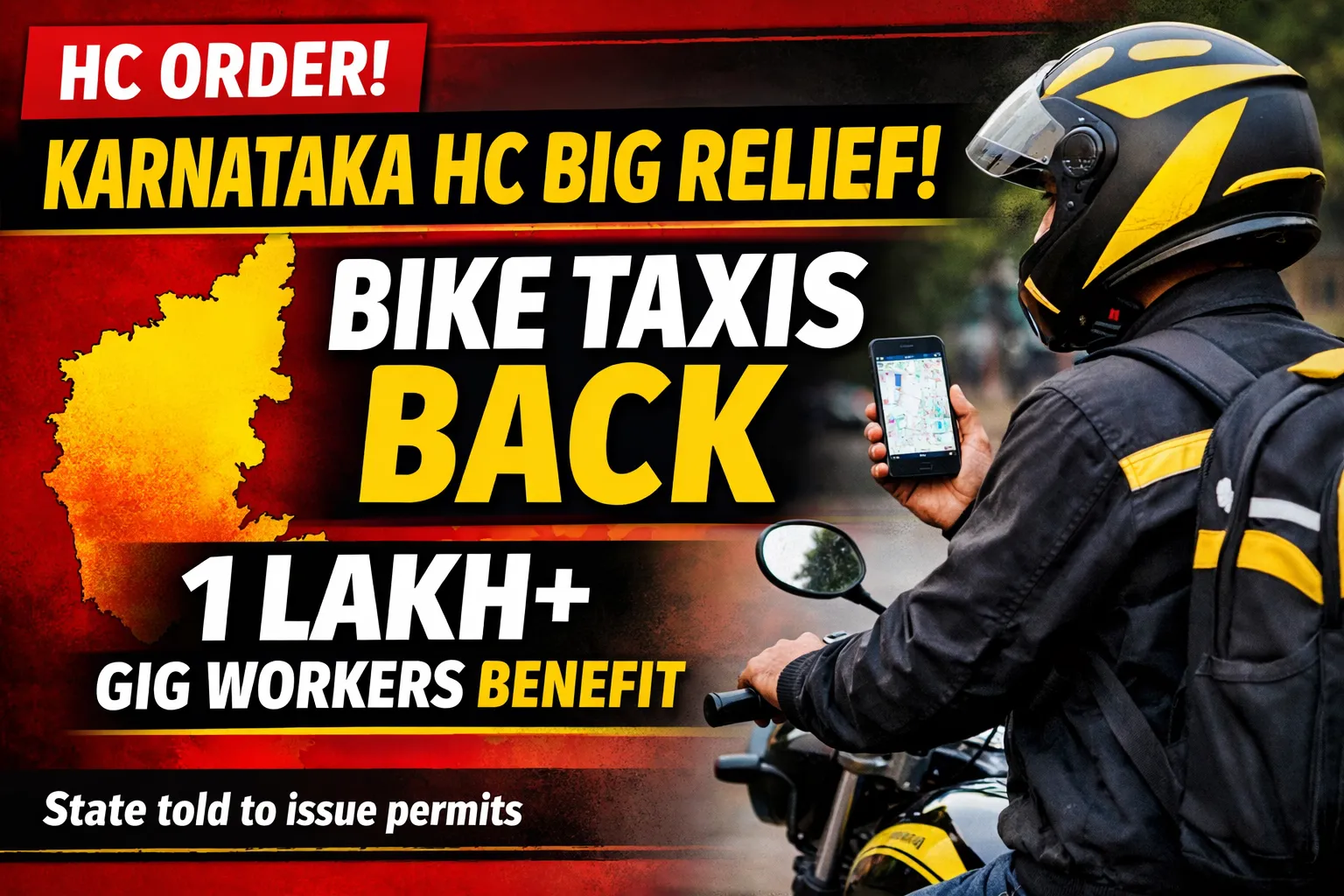
Karnataka HC Lifts Ban on Bike Taxis, Orders State to Issue Permits; Relief for Over One Lakh Gig Workers
Digital Desk
A division bench comprising Chief Justice Vibhu Bakhru and Justice C.M. Joshi passed the order while hearing petitions filed by app-based aggregators and rider associations challenging the state government’s earlier decision to prohibit bike taxis. The court said applications submitted by aggregators such as Ola and Uber were maintainable and could not be rejected solely on the ground that the vehicle involved was a two-wheeler.
“The Motor Vehicles Act permits motorcycles to be registered and used as transport vehicles, subject to compliance with statutory requirements,” the bench observed. It clarified that while the state is free to frame and enforce regulatory conditions for bike taxi operations, it cannot impose a blanket prohibition or deny permits without legal basis.
The judgment overturns the practical impact of an earlier order passed in April 2025, when the High Court had upheld a temporary ban on bike taxis, citing the absence of specific state rules governing their operation. Following that order and the government’s subsequent enforcement drive, bike taxi services were completely halted across Karnataka from June 2025.
The ban had triggered widespread protests from riders and associations, including the Namma Bike Taxi Association, which represents thousands of drivers across the state. The association argued that the prohibition had abruptly cut off livelihoods, particularly for young and migrant workers who rely on bike taxis as their primary source of income.
In representations submitted to political leaders, including Leader of Opposition Rahul Gandhi, the association said more than one lakh gig workers were affected, many of whom struggled to meet basic household expenses during the suspension of services.
Friday’s ruling is expected to provide immediate relief, although operators will still be required to apply for permits and comply with conditions laid down by the transport department. The court noted that the government retains the authority to regulate safety standards, licensing, fares and insurance, but must do so through clear rules rather than ad hoc bans.
Industry observers said the decision could also ease urban mobility challenges in Bengaluru, where bike taxis have been promoted as a flexible, last-mile transport option in congested areas.
The state government is yet to issue a detailed response, but transport officials indicated that permit applications would now be processed in line with the court’s directions.
.jpg)




