Lok Sabha Passes IBC Amendment Bill | Budget Session 2026

Digital Desk

Lok Sabha Passes IBC Amendment Bill | Budget Session 2026

 Lok Sabha passed the IBC Amendment Bill as Parliament debates Naxalism, the falling rupee, and MSME protections. Budget Session 2026 set to adjourn before April 2.


Lok Sabha Passes IBC Amendment Bill as Parliament Debates Maoism, Rupee, and Budget Session's Close

The Insolvency and Bankruptcy Code Amendment Bill clears Lok Sabha amid heated exchanges over the falling rupee, left-wing extremism, and the looming end of the Budget Session 2026.

Parliament Passes Key Reform Bill

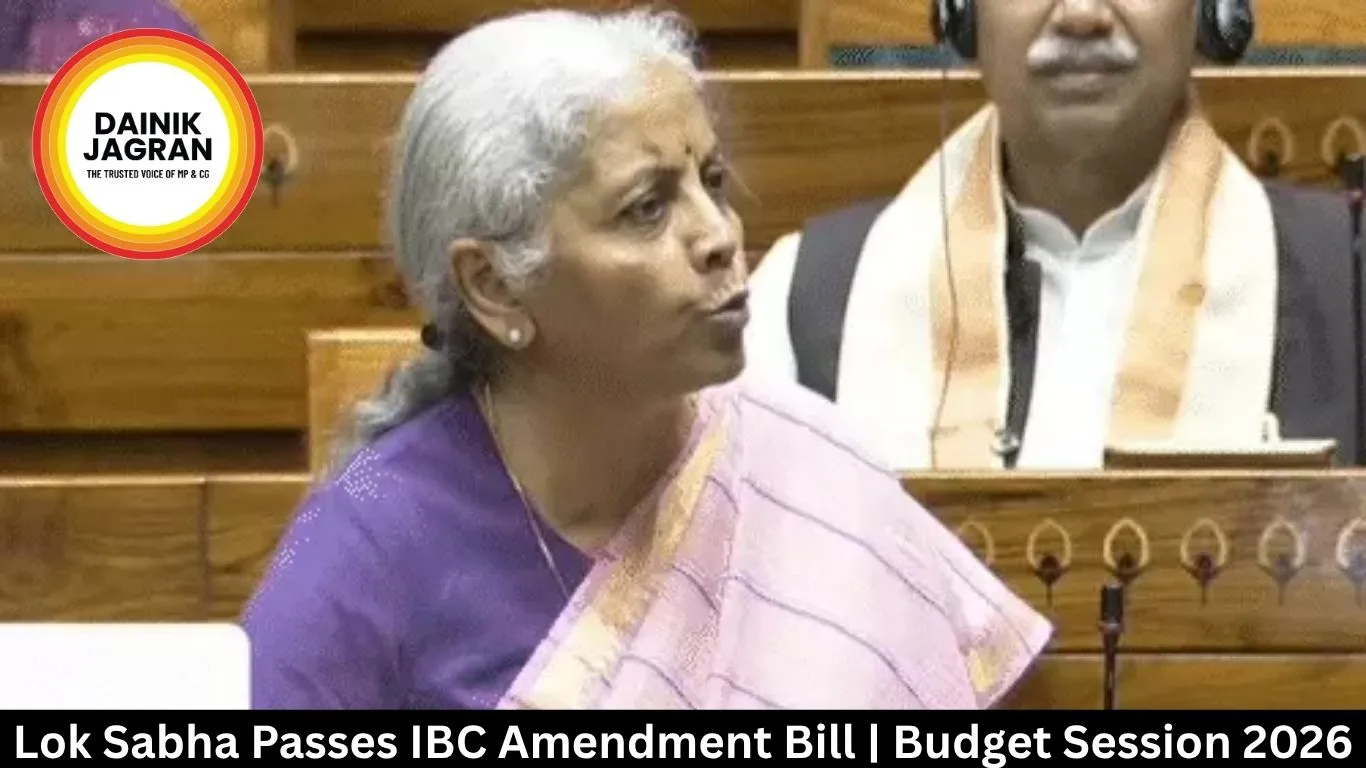
The Lok Sabha on Monday passed the Insolvency and Bankruptcy Code (Amendment) Bill, 2025, marking a significant legislative step aimed at streamlining India's debt resolution framework. Finance Minister Nirmala Sitharaman, who introduced the bill on March 27, told the House that 40 members contributed to its discussion and that lessons drawn from nearly a decade of IBC implementation had shaped the amendments. The bill, earlier referred to a Select Committee, seeks to reduce procedural delays and improve outcomes for creditors, debtors, and the broader economy.

Rupee Row Stalls House

Before the bill sailed through, the opposition triggered an uproar over the depreciation of the Indian rupee against the US dollar — a flashpoint sharpened by the ongoing West Asia conflict and its disruptions to global trade. Sitharaman stood her ground, asserting that the rupee's performance compared favourably to other emerging market currencies. "The economy is strong, our fiscal deficit is under control, and foreign exchange reserves are healthy," she said, deflecting opposition charges of economic mismanagement.

IBC Was Never a Debt Tool

Responding to criticism that the IBC had effectively functioned as a recovery mechanism for banks rather than a resolution framework, Sitharaman was emphatic. "IBC never intended to be a debt recovery tool," she told the House, adding that the legislation had, over time, contributed to stronger credit ratings for companies that underwent resolution. She also highlighted special provisions under Sections 240A and 29AC of the amended code, which offer protections and exemptions specifically designed for micro, small, and medium enterprises.

Naxal-Free India Debate Begins

The day's second major discussion centred on left-wing extremism, with Shiv Sena MP Shrikant Shinde opening the floor debate. Union Home Minister Amit Shah — who has repeatedly set March 31, 2026, as the deadline for eliminating Naxalism — was expected to address the House around 5 pm. Shinde noted that Maharashtra is actively working to make Gadchiroli, one of the last strongholds of Maoist activity, completely free of extremist influence. BJP MP Kamaljeet Sehrawat underlined that Naxalism had long denied entire districts access to development and public welfare programmes.

BJP, Opposition Trade Barbs

The debate turned sharply partisan. BJP MP Sambit Patra charged that Congress had "romanticised Maoism" during its years in power. Party colleague Sudhanshu Trivedi went further, alleging that the National Advisory Council under the UPA government had openly sympathised with Maoists while criticising Central Armed Police Forces operations. He also claimed that former Home Minister P. Chidambaram had once urged Maoists to engage in peace talks without abandoning their ideology — contrasting that era with what he called the Modi government's unambiguous demand for ideological surrender before reintegration.

RJD MP Abhay Kumar Sinha countered that Maoism was a product of systemic exploitation of Dalits and other marginalised communities, and held the BJP responsible for job losses in Bihar linked to halted mining activity.

Modi Tops Global Leader Poll

Amid the political skirmishes, Sitharaman offered an unusual defence of Prime Minister Narendra Modi, citing what she described as a recent international survey of presidents and prime ministers in which Modi ranked as the world's most popular leader. The claim, made in response to opposition questions about the PM's credibility, drew cheers from the treasury benches and scepticism from across the aisle.

Session May End Early

As the Budget Session approaches its final days, sources indicated that the government may adjourn proceedings before April 2, potentially cutting short the session ahead of upcoming state elections. The government is also not planning to introduce a constitutional amendment bill to advance women's reservation — a proposal to expand Lok Sabha seats from 543 to 816 while reserving 273 for women will not move forward in the current session, according to sources.

As Parliament readies to conclude the Budget Session 2026, the passage of the IBC Amendment Bill stands as one of its substantive legislative outcomes — even as debates on economic management, internal security, and political accountability continue to define the floor's character.


--------

🚨 Beat the News Rush – Join Now!

Get breaking alerts, hot exclusives, and game-changing stories instantly on your phone. No delays, no fluff – just the edge you need. ⚡

Tap to join: 

🟢 WhatsApp Channel: Dainik Jagran MP CG

Crave more?

🅕 Facebook: Dainik Jagran MP CG English

🅧 Twitter (X): Dainik Jagran MP CG

🅘 Instagram: Dainik Jagran MP CG

Share the fire – keep your crew ahead! 🗞️🔥

english.dainikjagranmpcg.com
30 Mar 2026 By Abhishek Joshi

Lok Sabha Passes IBC Amendment Bill | Budget Session 2026

Digital Desk

Lok Sabha Passes IBC Amendment Bill as Parliament Debates Maoism, Rupee, and Budget Session's Close

The Insolvency and Bankruptcy Code Amendment Bill clears Lok Sabha amid heated exchanges over the falling rupee, left-wing extremism, and the looming end of the Budget Session 2026.

Parliament Passes Key Reform Bill

The Lok Sabha on Monday passed the Insolvency and Bankruptcy Code (Amendment) Bill, 2025, marking a significant legislative step aimed at streamlining India's debt resolution framework. Finance Minister Nirmala Sitharaman, who introduced the bill on March 27, told the House that 40 members contributed to its discussion and that lessons drawn from nearly a decade of IBC implementation had shaped the amendments. The bill, earlier referred to a Select Committee, seeks to reduce procedural delays and improve outcomes for creditors, debtors, and the broader economy.

Rupee Row Stalls House

Before the bill sailed through, the opposition triggered an uproar over the depreciation of the Indian rupee against the US dollar — a flashpoint sharpened by the ongoing West Asia conflict and its disruptions to global trade. Sitharaman stood her ground, asserting that the rupee's performance compared favourably to other emerging market currencies. "The economy is strong, our fiscal deficit is under control, and foreign exchange reserves are healthy," she said, deflecting opposition charges of economic mismanagement.

IBC Was Never a Debt Tool

Responding to criticism that the IBC had effectively functioned as a recovery mechanism for banks rather than a resolution framework, Sitharaman was emphatic. "IBC never intended to be a debt recovery tool," she told the House, adding that the legislation had, over time, contributed to stronger credit ratings for companies that underwent resolution. She also highlighted special provisions under Sections 240A and 29AC of the amended code, which offer protections and exemptions specifically designed for micro, small, and medium enterprises.

Naxal-Free India Debate Begins

The day's second major discussion centred on left-wing extremism, with Shiv Sena MP Shrikant Shinde opening the floor debate. Union Home Minister Amit Shah — who has repeatedly set March 31, 2026, as the deadline for eliminating Naxalism — was expected to address the House around 5 pm. Shinde noted that Maharashtra is actively working to make Gadchiroli, one of the last strongholds of Maoist activity, completely free of extremist influence. BJP MP Kamaljeet Sehrawat underlined that Naxalism had long denied entire districts access to development and public welfare programmes.

BJP, Opposition Trade Barbs

The debate turned sharply partisan. BJP MP Sambit Patra charged that Congress had "romanticised Maoism" during its years in power. Party colleague Sudhanshu Trivedi went further, alleging that the National Advisory Council under the UPA government had openly sympathised with Maoists while criticising Central Armed Police Forces operations. He also claimed that former Home Minister P. Chidambaram had once urged Maoists to engage in peace talks without abandoning their ideology — contrasting that era with what he called the Modi government's unambiguous demand for ideological surrender before reintegration.

RJD MP Abhay Kumar Sinha countered that Maoism was a product of systemic exploitation of Dalits and other marginalised communities, and held the BJP responsible for job losses in Bihar linked to halted mining activity.

Modi Tops Global Leader Poll

Amid the political skirmishes, Sitharaman offered an unusual defence of Prime Minister Narendra Modi, citing what she described as a recent international survey of presidents and prime ministers in which Modi ranked as the world's most popular leader. The claim, made in response to opposition questions about the PM's credibility, drew cheers from the treasury benches and scepticism from across the aisle.

Session May End Early

As the Budget Session approaches its final days, sources indicated that the government may adjourn proceedings before April 2, potentially cutting short the session ahead of upcoming state elections. The government is also not planning to introduce a constitutional amendment bill to advance women's reservation — a proposal to expand Lok Sabha seats from 543 to 816 while reserving 273 for women will not move forward in the current session, according to sources.

As Parliament readies to conclude the Budget Session 2026, the passage of the IBC Amendment Bill stands as one of its substantive legislative outcomes — even as debates on economic management, internal security, and political accountability continue to define the floor's character.


https://english.dainikjagranmpcg.com/national/lok-sabha-passes-ibc-amendment-bill-budget-session-2026/article-16291

Advertisement

Latest News