


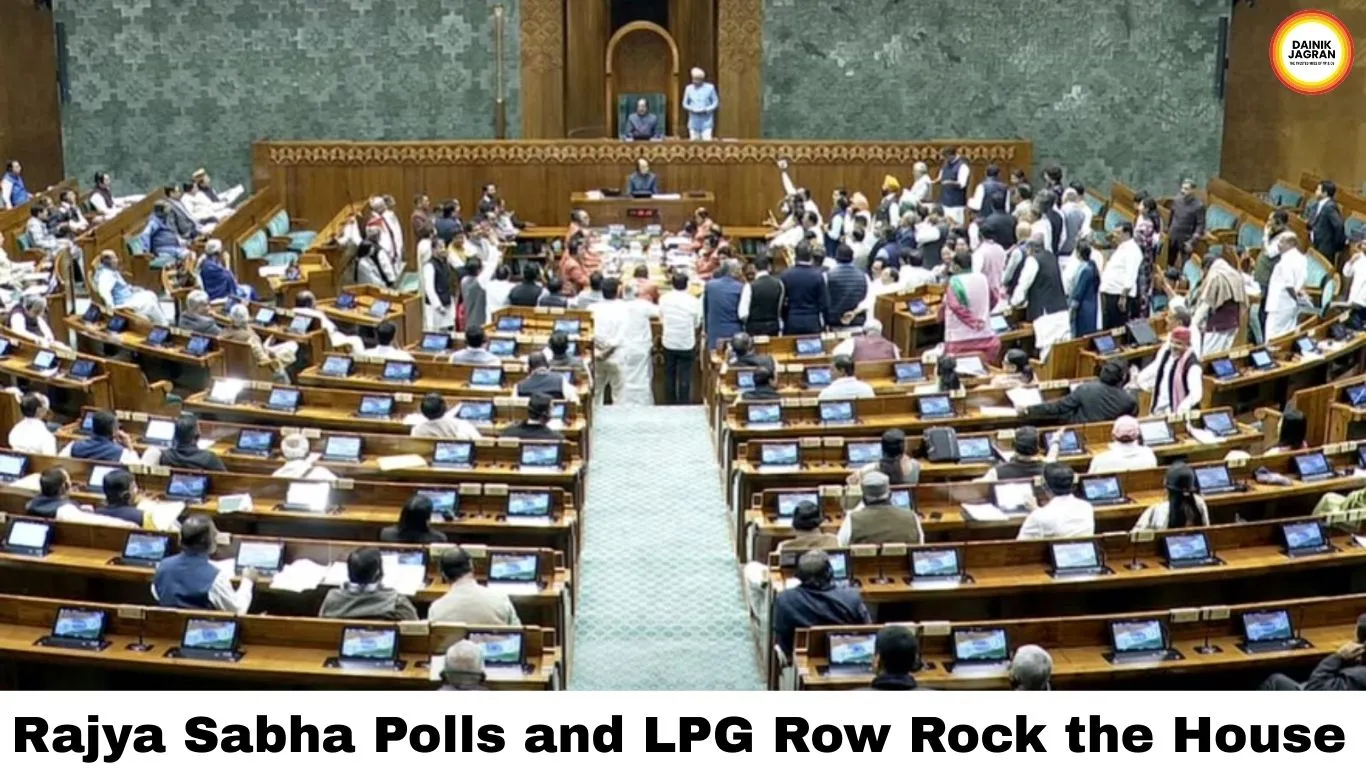
Parliament Budget Session Day 6 : Appropriation Bill Moved, Railways Grants Voted, Rajya Sabha Polls and LPG Row Rock the House — March 16, 2026
Digital Desk
Today's parliamentary session was one of the most action-packed days of the Budget Session 2026 — with major financial business, charged political confrontations, a crucial election, and a deepening LPG crisis all colliding inside the walls of Parliament at the same time.
Appropriation Bill 2026 Moves in Rajya Sabha — The Key Financial Business of the Day
The most significant legislative development of the day came when Finance Minister Nirmala Sitharaman formally moved the Appropriation Bill 2026 in the Rajya Sabha. The Bill authorises the payment and appropriation of further sums from the Consolidated Fund of India for the services of the financial year 2025–26, and its passage in the Upper House marks a critical step in completing India's budget cycle.
The Appropriation Bill had already been moved in the Lok Sabha on March 13, alongside the Supplementary Demands for Grants for 2025–26. Today's Rajya Sabha proceedings brought it one step closer to becoming law.
In the Lok Sabha, discussions and voting on the Demands for Grants under the Ministry of Railways for the financial year 2026–27 were taken up today — with Railway Minister Ashwini Vaishnaw and his ministry under scrutiny over infrastructure allocations, train safety, and the pace of modernisation projects.
Railways and Agriculture Grants: What Parliament Approved
Today's voting on Railway Demands for Grants 2026–27 took centre stage in the Lok Sabha. Railways received one of the largest allocations in this year's Union Budget — a figure that reflects the government's continued push to expand freight corridors, modernise stations, and accelerate the Vande Bharat and Amrit Bharat train networks.
The Agriculture Ministry Demands for Grants were also slated for discussion — a politically sensitive allocation given that farmer distress, MSP guarantees, and rural income have remained flashpoints throughout this entire budget session.
Law Minister Arjun Ram Meghwal also made a statement on the floor outlining the government's legislative agenda for the week beginning March 16, signalling more heavy-duty parliamentary business ahead before the session closes on April 2.
Rajya Sabha Elections 2026: BJP-NDA Plays Strategy in Bihar, Haryana and Odisha
Off the floor but all over Parliament's corridors today was the Rajya Sabha by-election drama. Polling was held today for Rajya Sabha seats in Bihar, Haryana, and Odisha — and the BJP-led NDA made a calculated move by backing independent candidates linked to the saffron party, including RLM chief Upendra Kushwaha, to maximise its seat count in the Upper House.
The opposition INDIA bloc pushed back hard, fielding its own candidates and attempting to consolidate its strength in the Rajya Sabha ahead of what promises to be a combative second half of the Budget Session. Results are expected later today.
LPG Crisis: Opposition Turns Up the Heat
If there is one issue dominating the political atmosphere outside the formal budget business, it is the LPG shortage. Opposition MPs across the INDIA bloc, led by Rahul Gandhi, have submitted notices in both Houses demanding an urgent discussion on nationwide reports of LPG cylinder shortages and price pressures linked directly to the escalating West Asia war.
The opposition's argument is blunt: common Indian households — particularly in smaller cities and rural India — are struggling to get cooking gas cylinders, and the government must answer for it in Parliament, not deflect with procedural objections.
The government has pushed back sharply. Finance Minister Nirmala Sitharaman was involved in direct exchanges with MPs over grant discussions, stating that crude oil supplies remain secure. The government insists the shortage reports are exaggerated and that supply chains are intact. The Opposition remains unconvinced — and is likely to intensify this campaign on the floor of both Houses in the coming days.
CEC Gyanesh Kumar Removal Notice: A Constitutional Confrontation
Adding another layer of political tension to today's session, the INDIA bloc had already filed notices in both Lok Sabha and Rajya Sabha on March 13 seeking the removal of Chief Election Commissioner Gyanesh Kumar — with 180 opposition MPs reportedly signing the notice, comprising 120 Lok Sabha members and 60 Rajya Sabha members.
The Trinamool Congress has been at the forefront of this move, alleging misuse of constitutional authority and questioning the independence of the Election Commission. The BJP and NDA have dismissed the move as political theatre. Speaker Om Birla's handling of these notices — and whether they will be admitted for debate — is being watched closely as a test of parliamentary procedure.
This confrontation follows directly on the heels of the failed Opposition resolution last week seeking the removal of Om Birla as Lok Sabha Speaker, which was defeated by a voice vote. That defeat has not dampened the INDIA bloc's appetite for constitutional confrontation — if anything, it has sharpened it.
Private Members' Bills: A Packed Agenda With Significant Proposals
Later in the day, the Lok Sabha was scheduled to take up Private Members' Business — and the list of proposed Bills makes for significant reading. MPs were expected to introduce legislative proposals on a wide range of issues including a guaranteed minimum support price for farmers, prevention of mob lynching, welfare of fishermen, regulation of tour operators, rehabilitation of Kashmiri Pandits, and reservation for Scheduled Castes and Scheduled Tribes in the private sector.
These are not government bills and most will not progress to become law in this session. But they serve as important signals of what is on the minds of Members of Parliament — and what the public wants debated at the national level.
What Is Left Before April 2: The Road Ahead
The Budget Session 2026 runs until April 2 and includes 30 sittings spread across 65 days. The second phase, which resumed on March 9 after a recess, has already produced enormous political drama — the Om Birla no-confidence vote, the CEC removal notices, and the LPG crisis confrontation — alongside significant financial legislation.
What remains on the agenda includes the Finance Bill 2026 — the most consequential piece of legislation of the session, which formally implements the budget tax proposals — along with departmental Demands for Grants across all major ministries and further legislative business that the government has outlined for the coming weeks.
If today's intensity is any guide, the final two weeks of the Budget Session promise to be some of the most turbulent — and consequential — days in India's parliamentary calendar this year.

.jpg)




