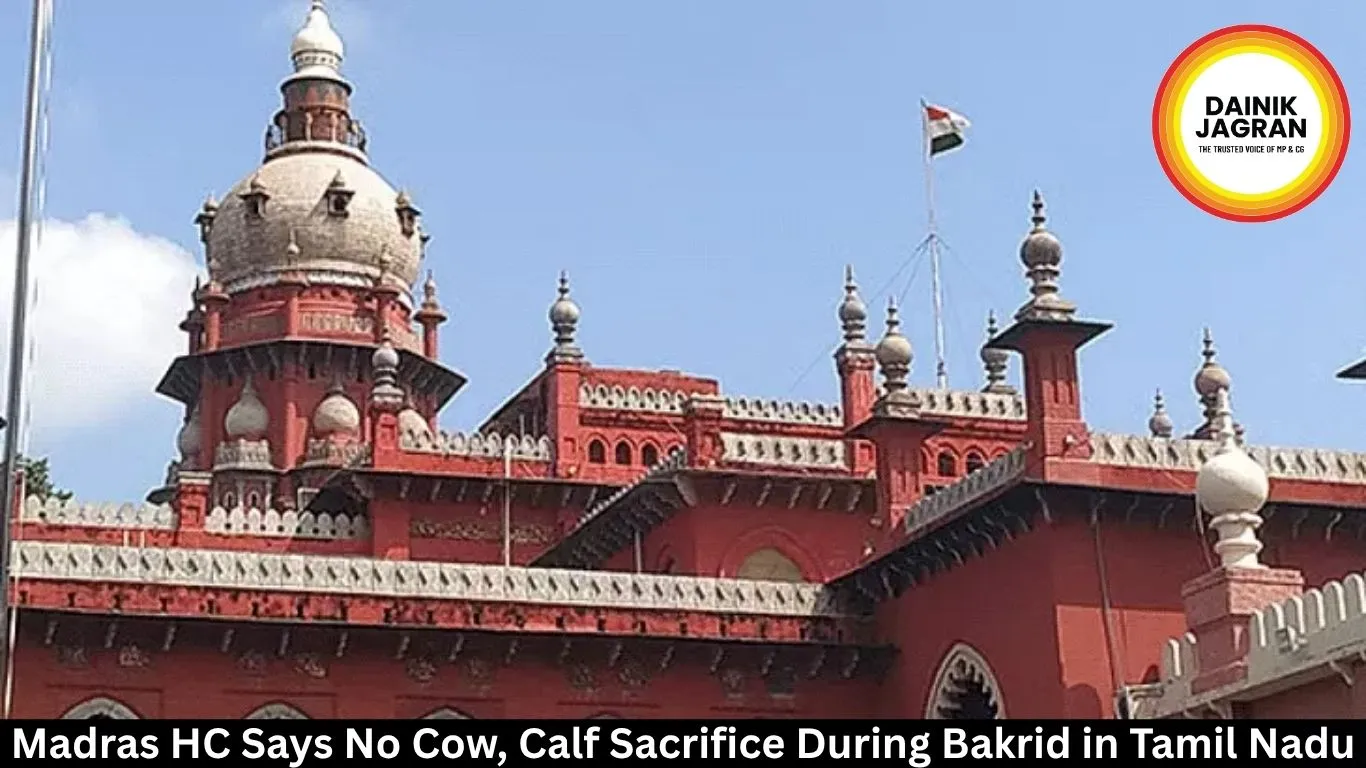
Madras HC Bars Cow Sacrifice During Bakrid in Tamil Nadu

Digital Desk

Madras HC Bars Cow Sacrifice During Bakrid in Tamil Nadu

Madras High Court directs Tamil Nadu government to prevent cow and calf sacrifice during Bakrid, citing constitutional and legal provisions.

Court says cow sacrifice not an essential Islamic practice

The Madras High Court has directed the Tamil Nadu government to ensure that cows and calves are not sacrificed anywhere in the state during Bakrid or on any other occasion, while stressing that existing animal preservation laws must be enforced strictly.

The observation came from a division bench comprising Justice GR Swaminathan and Justice V Lakshminarayanan during the hearing of a petition filed by Hindu Makkal Katchi (HMK) state general secretary Surya. The petitioner alleged that illegal slaughter of cows was taking place in public spaces ahead of Eid-ul-Adha and sought immediate intervention from the administration.

The bench noted that the protection of cows has deep constitutional and cultural roots in India. Referring to debates in the Constituent Assembly, the court observed that the cow has long been regarded as sacred in Indian society and said several Muslim rulers in history had also imposed restrictions on cow slaughter.

Petition Over Illegal Slaughter

According to the plea, representations had already been submitted to district authorities on May 18 seeking preventive action against public slaughter and transportation of cattle for sacrifice. The petitioner argued that no effective steps were taken despite repeated complaints.

During the hearing, the court examined provisions of the Tamil Nadu Animal Preservation Act, 1958, particularly Section 4, which permits slaughter only under limited conditions. Under the law, cattle above 10 years of age and deemed permanently unfit for breeding or agricultural work may be slaughtered only after certification by competent authorities.

The bench said these provisions should be interpreted “strictly and meaningfully” by the state machinery.

Article 48 Mentioned

The court also referred to Article 48 of the Constitution, which directs the state to organise agriculture and animal husbandry on modern lines while taking steps for preserving cows, calves and milch cattle.

The judges observed that sacrifices, where legally permissible, cannot take place in open public spaces, roadsides or residential areas. Authorities were asked to ensure that slaughter activities, if allowed under law, are restricted to designated facilities and licensed locations.

Officials familiar with the matter said local administrations across districts are likely to increase surveillance around slaughterhouses and cattle transport routes in the days leading up to Bakrid.

Supreme Court Declines Urgent Hearing

The development comes days after the Supreme Court declined an urgent hearing on a separate petition seeking a nationwide ban on cow slaughter and stricter implementation of cattle preservation laws ahead of Eid-ul-Adha.

The petitioner had argued that the matter required immediate attention because the festival was approaching. However, the bench headed by Chief Justice Suryakant questioned the timing of the plea and remarked that such petitions should not be filed at the last minute merely before festivals.

The apex court did not pass any interim order and indicated that the issue did not warrant urgent listing at this stage.

Earlier Calcutta HC Order

The Madras High Court’s observations are similar to remarks made recently by the Calcutta High Court while hearing petitions related to animal slaughter guidelines issued by the West Bengal government.

On May 20, a bench led by Chief Justice TS Sivagnanam and Justice Chaitali Chatterjee had refused to interfere with the state’s restrictions and said no cow, calf, bull or buffalo could be slaughtered without mandatory certification under existing law.

The court had also observed that sacrifice of cows during Eid-ul-Adha was not an essential religious practice under Islam.

Political Reactions Continue

The issue has triggered political reactions in parts of the country. In West Bengal, former Trinamool Congress leader and MLA Humayun Kabir had publicly opposed restrictions linked to cattle sacrifice, drawing criticism from BJP leaders who demanded stricter enforcement against illegal slaughterhouses.

In Tamil Nadu, officials have so far not issued a detailed public response following the Madras High Court order. Sources in the state administration said district collectors and police officials are expected to receive compliance instructions before Bakrid celebrations begin.

The latest ruling is likely to add to the wider national debate around cattle protection laws, religious practices and enforcement during festival periods.


 

--------

๐Ÿšจ Beat the News Rush โ€“ Join Now!

Get breaking alerts, hot exclusives, and game-changing stories instantly on your phone. No delays, no fluff โ€“ just the edge you need. โšก

Tap to join:ย 

๐ŸŸข WhatsApp Channel: Dainik Jagran MP CG

Crave more?

๐Ÿ…• Facebook: Dainik Jagran MP CG English

๐Ÿ…ง Twitter (X): Dainik Jagran MP CG

๐Ÿ…˜ Instagram: Dainik Jagran MP CG

Share the fire โ€“ keep your crew ahead! ๐Ÿ—ž๏ธ๐Ÿ”ฅ

english.dainikjagranmpcg.com
28 May 2026 By Abhishek Joshi

Madras HC Bars Cow Sacrifice During Bakrid in Tamil Nadu

Digital Desk

Court says cow sacrifice not an essential Islamic practice

The Madras High Court has directed the Tamil Nadu government to ensure that cows and calves are not sacrificed anywhere in the state during Bakrid or on any other occasion, while stressing that existing animal preservation laws must be enforced strictly.

The observation came from a division bench comprising Justice GR Swaminathan and Justice V Lakshminarayanan during the hearing of a petition filed by Hindu Makkal Katchi (HMK) state general secretary Surya. The petitioner alleged that illegal slaughter of cows was taking place in public spaces ahead of Eid-ul-Adha and sought immediate intervention from the administration.

The bench noted that the protection of cows has deep constitutional and cultural roots in India. Referring to debates in the Constituent Assembly, the court observed that the cow has long been regarded as sacred in Indian society and said several Muslim rulers in history had also imposed restrictions on cow slaughter.

Petition Over Illegal Slaughter

According to the plea, representations had already been submitted to district authorities on May 18 seeking preventive action against public slaughter and transportation of cattle for sacrifice. The petitioner argued that no effective steps were taken despite repeated complaints.

During the hearing, the court examined provisions of the Tamil Nadu Animal Preservation Act, 1958, particularly Section 4, which permits slaughter only under limited conditions. Under the law, cattle above 10 years of age and deemed permanently unfit for breeding or agricultural work may be slaughtered only after certification by competent authorities.

The bench said these provisions should be interpreted “strictly and meaningfully” by the state machinery.

Article 48 Mentioned

The court also referred to Article 48 of the Constitution, which directs the state to organise agriculture and animal husbandry on modern lines while taking steps for preserving cows, calves and milch cattle.

The judges observed that sacrifices, where legally permissible, cannot take place in open public spaces, roadsides or residential areas. Authorities were asked to ensure that slaughter activities, if allowed under law, are restricted to designated facilities and licensed locations.

Officials familiar with the matter said local administrations across districts are likely to increase surveillance around slaughterhouses and cattle transport routes in the days leading up to Bakrid.

Supreme Court Declines Urgent Hearing

The development comes days after the Supreme Court declined an urgent hearing on a separate petition seeking a nationwide ban on cow slaughter and stricter implementation of cattle preservation laws ahead of Eid-ul-Adha.

The petitioner had argued that the matter required immediate attention because the festival was approaching. However, the bench headed by Chief Justice Suryakant questioned the timing of the plea and remarked that such petitions should not be filed at the last minute merely before festivals.

The apex court did not pass any interim order and indicated that the issue did not warrant urgent listing at this stage.

Earlier Calcutta HC Order

The Madras High Court’s observations are similar to remarks made recently by the Calcutta High Court while hearing petitions related to animal slaughter guidelines issued by the West Bengal government.

On May 20, a bench led by Chief Justice TS Sivagnanam and Justice Chaitali Chatterjee had refused to interfere with the state’s restrictions and said no cow, calf, bull or buffalo could be slaughtered without mandatory certification under existing law.

The court had also observed that sacrifice of cows during Eid-ul-Adha was not an essential religious practice under Islam.

Political Reactions Continue

The issue has triggered political reactions in parts of the country. In West Bengal, former Trinamool Congress leader and MLA Humayun Kabir had publicly opposed restrictions linked to cattle sacrifice, drawing criticism from BJP leaders who demanded stricter enforcement against illegal slaughterhouses.

In Tamil Nadu, officials have so far not issued a detailed public response following the Madras High Court order. Sources in the state administration said district collectors and police officials are expected to receive compliance instructions before Bakrid celebrations begin.

The latest ruling is likely to add to the wider national debate around cattle protection laws, religious practices and enforcement during festival periods.


https://english.dainikjagranmpcg.com/special-news/madras-hc-bars-cow-sacrifice-during-bakrid-in-tamil-nadu/article-19361

Related Posts

Latest News