


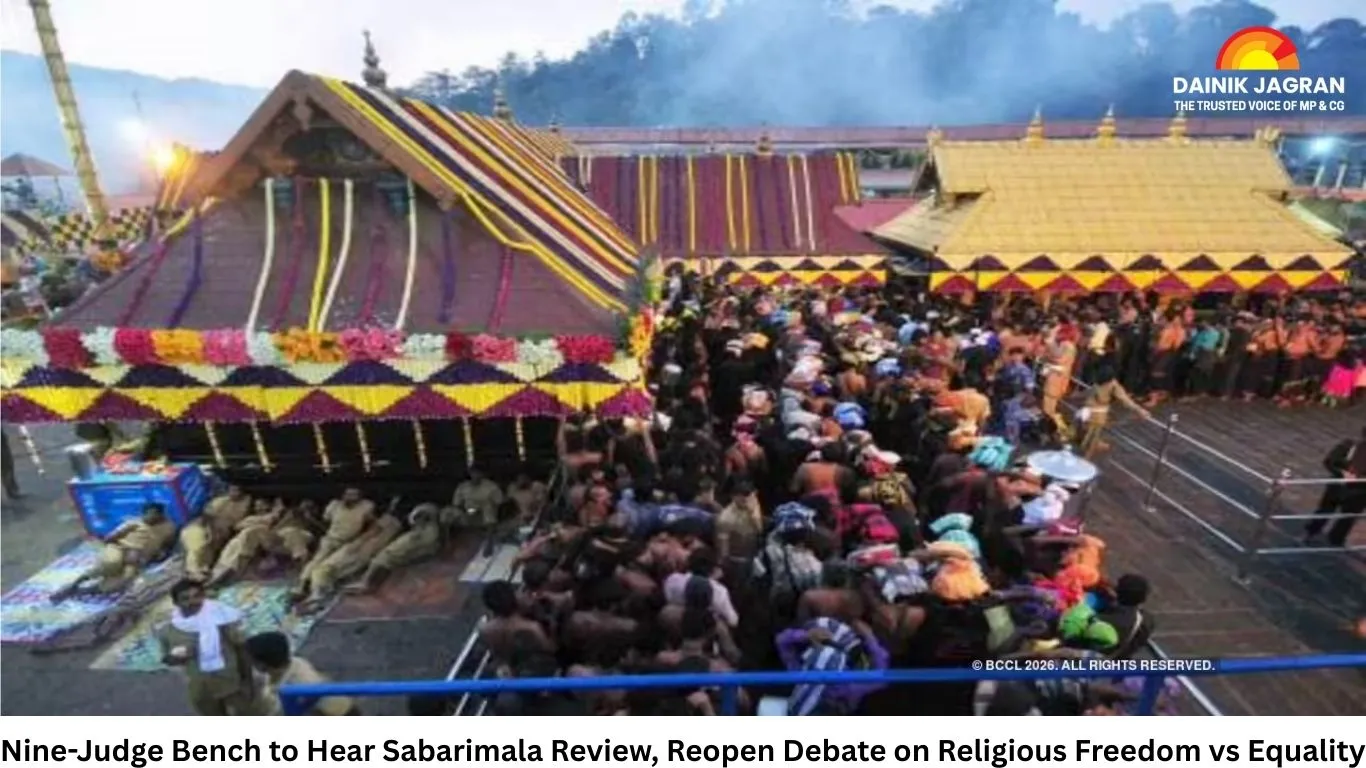
Nine-Judge Bench to Hear Sabarimala Review, Reopen Debate on Religious Freedom vs Equality
Digital Desk
The bench, also comprising Justices Joymalya Bagchi and Vipul M. Pancholi, said the composition of the nine-judge Constitution Bench that will deliver the final verdict will be notified separately through administrative orders. The matter concerns review petitions challenging the court’s landmark 2018 ruling that allowed women of all ages to enter the Sabarimala Temple, overturning a long-standing custom that barred women of menstruating age.
The case raises broader constitutional questions about the balance between religious freedom and fundamental rights. The larger bench will examine seven legal issues framed in 2020, including the scope of Articles 25 and 26, the doctrine of essential religious practices, and the meaning of “constitutional morality.” It will also consider how far courts may scrutinize faith-based traditions and the limits of public interest litigation challenging denominational customs.
Solicitor General Tushar Mehta informed the court that the Union government supports the review petitions, effectively opposing the 2018 judgment. Written submissions from all parties must be filed by March 14, the bench directed.
The dispute has been under judicial consideration for years. Although review petitions were filed soon after the 2018 verdict, substantive hearings stalled after the court in 2019 referred wider constitutional questions to a nine-judge bench. In February 2020, the court affirmed its authority to make such a reference even while review petitions remained pending, removing procedural hurdles and allowing the matter to proceed toward final adjudication.
Legal observers say the forthcoming hearings could reshape constitutional jurisprudence on the relationship between faith, equality, and judicial oversight. The ruling is expected to influence similar disputes involving religious customs and individual rights across communities.
In a separate but significant development, the court also announced that another nine-judge bench will hear arguments on March 17 and 18 in a long-pending labour law reference concerning the definition of “industry.” That case will revisit a 1978 precedent that expanded the term’s scope to include universities and charitable institutions, an interpretation critics say blurred distinctions between sovereign and commercial functions.
Both constitutional benches are expected to deliver judgments with wide institutional and legal consequences, potentially redefining the limits of judicial intervention in religious and labour matters.
.jpg)




