PM Modi Says Naxalism Nears End, Targets Congress Over Past Handling of Insurgency
Digital Desk
Prime Minister Narendra Modi claimed Maoist violence is in its final phase, while accusing Congress of remaining silent during the peak years of Left-Wing Extremism.
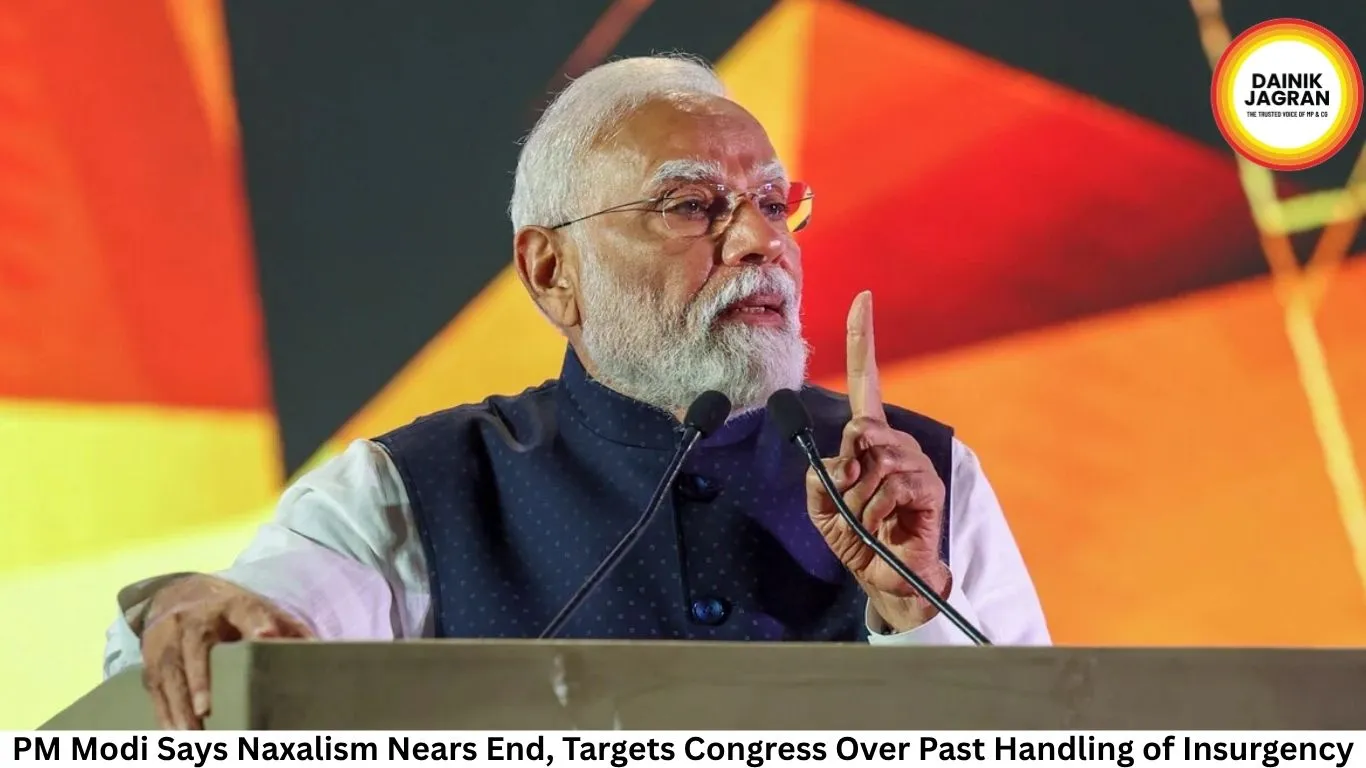
The debate over India's long-running Maoist insurgency resurfaced on Monday after Prime Minister Narendra Modi said that Naxalism is "counting its last breaths" and credited the NDA government's development-driven approach for weakening the insurgency. Speaking at a media event in New Delhi, Modi sharply criticized the Congress, alleging that leaders who now frequently invoke the Constitution had remained silent when large parts of the country were grappling with Maoist violence. His remarks come amid continued political sparring over governance, internal security and development in tribal regions. The Prime Minister said the government's "Nation First" approach has combined security operations with welfare initiatives, infrastructure development and improved governance to reduce the influence of Left-Wing Extremism. The comments have once again brought national attention to a movement that was once considered India's biggest internal security challenge.
According to the Prime Minister, previous governments largely treated Naxal-affected regions as permanently backward areas, while the NDA focused on integrating them into the mainstream through roads, education, healthcare, digital connectivity and employment opportunities.
Modi did not directly name Congress leader Rahul Gandhi, but his remarks were widely seen as a reference to Gandhi's practice of carrying a copy of the Constitution during public events and political campaigns.
Focus on Development
During his address, Modi highlighted several flagship initiatives, including the Swachh Bharat Mission, Make in India and the promotion of local products. He said these programs were designed around the principle of putting national interests first.
The Prime Minister also pointed to the Aspirational Districts and Aspirational Blocks programmes, claiming that more than 100 districts and over 500 blocks previously categorized as backward regions have witnessed measurable improvements in governance and development indicators.
Officials have frequently argued that better infrastructure and public services in tribal and remote areas have reduced the appeal of extremist groups and strengthened state presence.
Security and Governance
The Prime Minister's comments echoed earlier statements made by Union Home Minister Amit Shah. During the Budget Session of Parliament in March, Shah stated that India had effectively become free from Naxal influence and reiterated the government's commitment to eliminating the remaining pockets of Left-Wing Extremism.
According to government data and security assessments, the geographical spread of Maoist activity has declined significantly over the past decade. Areas once considered strongholds of insurgent groups have seen increased security deployment alongside development projects.
However, security experts note that while violence has reduced substantially, isolated incidents and operational challenges remain in some forested regions of central India.
Background of the Naxalite Movement
The Naxalite movement began in 1967 in Naxalbari, a village in West Bengal's Darjeeling district. Over time, it expanded across several states, creating what became known as the "Red Corridor."
At its peak during the early 2000s, the insurgency affected large parts of central and eastern India and posed a significant challenge to internal security. Successive governments adopted a mix of security operations and welfare measures to address the issue.
Analysts say the current political debate reflects broader questions about how development, governance and security policies should be balanced in historically marginalized tribal regions.
As the government continues to emphasize both development and counter-insurgency measures, the future trajectory of Left-Wing Extremism remains an important issue in India's national security and governance agenda. The latest remarks by the Prime Minister are likely to keep the discussion at the center of political and policy debates in the coming months.
--------
🚨 Beat the News Rush – Join Now!
Get breaking alerts, hot exclusives, and game-changing stories instantly on your phone. No delays, no fluff – just the edge you need. ⚡
Tap to join:
🟢 WhatsApp Channel: Dainik Jagran MP CG
Crave more?
🅕 Facebook: Dainik Jagran MP CG English
🅧 Twitter (X): Dainik Jagran MP CG
🅘 Instagram: Dainik Jagran MP CG
Share the fire – keep your crew ahead! 🗞️🔥
PM Modi Says Naxalism Nears End, Targets Congress Over Past Handling of Insurgency
Digital Desk
The debate over India's long-running Maoist insurgency resurfaced on Monday after Prime Minister Narendra Modi said that Naxalism is "counting its last breaths" and credited the NDA government's development-driven approach for weakening the insurgency. Speaking at a media event in New Delhi, Modi sharply criticized the Congress, alleging that leaders who now frequently invoke the Constitution had remained silent when large parts of the country were grappling with Maoist violence. His remarks come amid continued political sparring over governance, internal security and development in tribal regions. The Prime Minister said the government's "Nation First" approach has combined security operations with welfare initiatives, infrastructure development and improved governance to reduce the influence of Left-Wing Extremism. The comments have once again brought national attention to a movement that was once considered India's biggest internal security challenge.
According to the Prime Minister, previous governments largely treated Naxal-affected regions as permanently backward areas, while the NDA focused on integrating them into the mainstream through roads, education, healthcare, digital connectivity and employment opportunities.
Modi did not directly name Congress leader Rahul Gandhi, but his remarks were widely seen as a reference to Gandhi's practice of carrying a copy of the Constitution during public events and political campaigns.
Focus on Development
During his address, Modi highlighted several flagship initiatives, including the Swachh Bharat Mission, Make in India and the promotion of local products. He said these programs were designed around the principle of putting national interests first.
The Prime Minister also pointed to the Aspirational Districts and Aspirational Blocks programmes, claiming that more than 100 districts and over 500 blocks previously categorized as backward regions have witnessed measurable improvements in governance and development indicators.
Officials have frequently argued that better infrastructure and public services in tribal and remote areas have reduced the appeal of extremist groups and strengthened state presence.
Security and Governance
The Prime Minister's comments echoed earlier statements made by Union Home Minister Amit Shah. During the Budget Session of Parliament in March, Shah stated that India had effectively become free from Naxal influence and reiterated the government's commitment to eliminating the remaining pockets of Left-Wing Extremism.
According to government data and security assessments, the geographical spread of Maoist activity has declined significantly over the past decade. Areas once considered strongholds of insurgent groups have seen increased security deployment alongside development projects.
However, security experts note that while violence has reduced substantially, isolated incidents and operational challenges remain in some forested regions of central India.
Background of the Naxalite Movement
The Naxalite movement began in 1967 in Naxalbari, a village in West Bengal's Darjeeling district. Over time, it expanded across several states, creating what became known as the "Red Corridor."
At its peak during the early 2000s, the insurgency affected large parts of central and eastern India and posed a significant challenge to internal security. Successive governments adopted a mix of security operations and welfare measures to address the issue.
Analysts say the current political debate reflects broader questions about how development, governance and security policies should be balanced in historically marginalized tribal regions.
As the government continues to emphasize both development and counter-insurgency measures, the future trajectory of Left-Wing Extremism remains an important issue in India's national security and governance agenda. The latest remarks by the Prime Minister are likely to keep the discussion at the center of political and policy debates in the coming months.