SC Flags ‘Total Failure’ of Delhi Pollution Curbs as Severe AQI Triggers 50% Work-From-Home Rule
Digital Desk
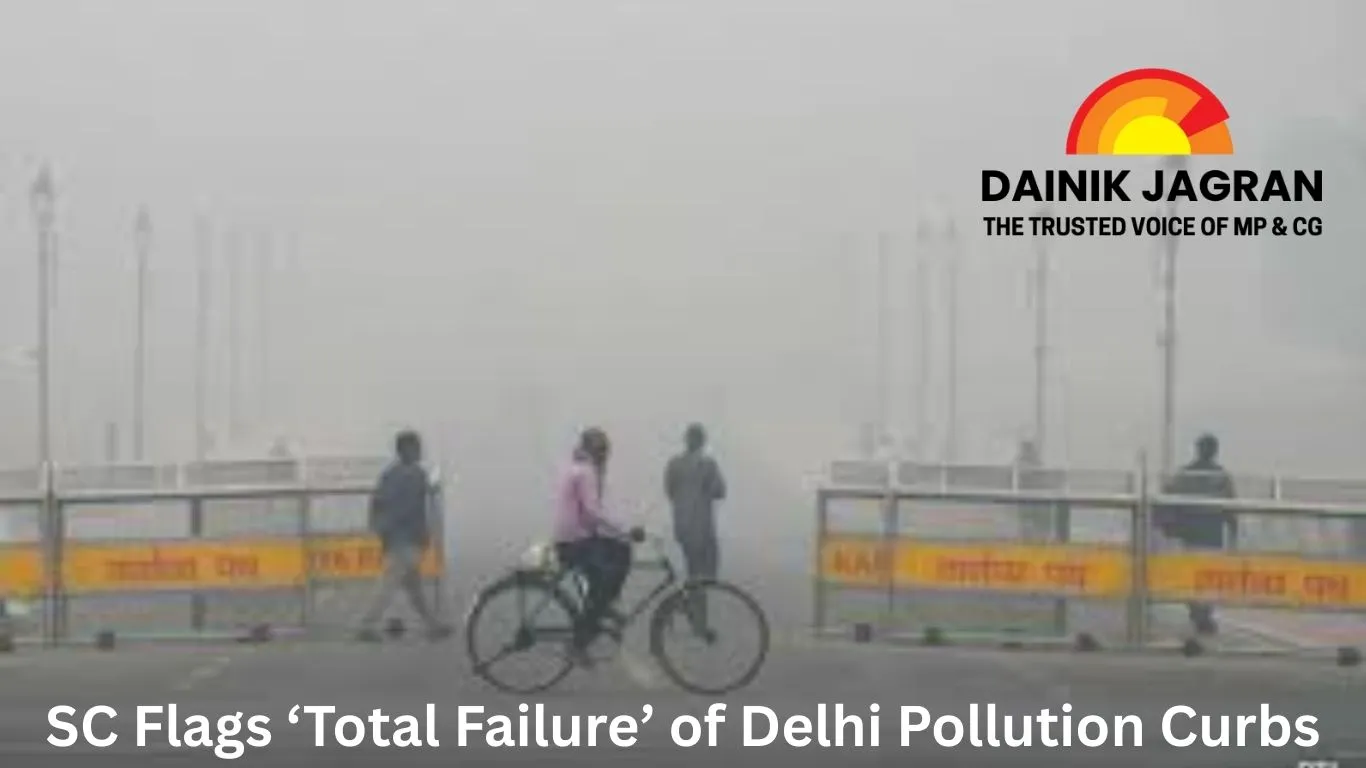
The Supreme Court on Wednesday sharply criticised authorities over worsening air pollution in Delhi–NCR, observing that measures taken so far to curb toxic air have been a “total failure,” as the national capital continued to record severe and very poor air quality levels.
A bench led by Chief Justice of India Surya Kant made the remarks while hearing petitions related to pollution’s impact on public health, particularly children. The court stressed that piecemeal and short-term responses would not yield lasting results and underlined the need for comprehensive, long-term planning to address the crisis.
The observations came as the Delhi government announced stricter emergency measures under the Graded Response Action Plan (GRAP). From Thursday, 50% of employees in government and private offices will work from home to reduce vehicular load. Essential services, including healthcare, emergency services, public transport and prisons, have been exempted.
The Supreme Court, however, declined to interfere with policy decisions such as school closures or hybrid classes, noting that these steps were interim in nature. “Short-term measures are only to provide temporary protection to children and elderly persons,” the bench said, adding that such actions could at best be viewed as extensions of winter vacations.
Separately, the court issued a notice to the National Highways Authority of India (NHAI) over frequent traffic congestion at Delhi’s border toll plazas. It suggested relocating Municipal Corporation of Delhi toll booths to NHAI-managed points to ease bottlenecks, with possible revenue-sharing arrangements.
Delhi’s air quality remained alarmingly poor on Wednesday, with the Air Quality Index recorded at 328 in the morning. Several monitoring stations reported “very poor” readings, while smog reduced visibility across large parts of the city. On Tuesday, Delhi ranked among the world’s most polluted cities, according to global air quality trackers.
Environment Minister Manjinder Singh Sirsa apologised for the failure to rein in pollution and announced tougher enforcement. From Thursday, vehicles without valid pollution certificates will be denied fuel, non-BS VI vehicles from outside Delhi will be barred, and restrictions on construction material transport will continue. The government has also announced ₹10,000 compensation for affected construction workers during GRAP enforcement.
With GRAP-IV set to take effect from December 18, authorities remain under pressure to deliver tangible improvements as winter pollution peaks.
--------
🚨 Beat the News Rush – Join Now!
Get breaking alerts, hot exclusives, and game-changing stories instantly on your phone. No delays, no fluff – just the edge you need. ⚡
Tap to join:
🟢 WhatsApp Channel: Dainik Jagran MP CG
Crave more?
🅕 Facebook: Dainik Jagran MP CG English
🅧 Twitter (X): Dainik Jagran MP CG
🅘 Instagram: Dainik Jagran MP CG
Share the fire – keep your crew ahead! 🗞️🔥
SC Flags ‘Total Failure’ of Delhi Pollution Curbs as Severe AQI Triggers 50% Work-From-Home Rule
Digital Desk
A bench led by Chief Justice of India Surya Kant made the remarks while hearing petitions related to pollution’s impact on public health, particularly children. The court stressed that piecemeal and short-term responses would not yield lasting results and underlined the need for comprehensive, long-term planning to address the crisis.
The observations came as the Delhi government announced stricter emergency measures under the Graded Response Action Plan (GRAP). From Thursday, 50% of employees in government and private offices will work from home to reduce vehicular load. Essential services, including healthcare, emergency services, public transport and prisons, have been exempted.
The Supreme Court, however, declined to interfere with policy decisions such as school closures or hybrid classes, noting that these steps were interim in nature. “Short-term measures are only to provide temporary protection to children and elderly persons,” the bench said, adding that such actions could at best be viewed as extensions of winter vacations.
Separately, the court issued a notice to the National Highways Authority of India (NHAI) over frequent traffic congestion at Delhi’s border toll plazas. It suggested relocating Municipal Corporation of Delhi toll booths to NHAI-managed points to ease bottlenecks, with possible revenue-sharing arrangements.
Delhi’s air quality remained alarmingly poor on Wednesday, with the Air Quality Index recorded at 328 in the morning. Several monitoring stations reported “very poor” readings, while smog reduced visibility across large parts of the city. On Tuesday, Delhi ranked among the world’s most polluted cities, according to global air quality trackers.
Environment Minister Manjinder Singh Sirsa apologised for the failure to rein in pollution and announced tougher enforcement. From Thursday, vehicles without valid pollution certificates will be denied fuel, non-BS VI vehicles from outside Delhi will be barred, and restrictions on construction material transport will continue. The government has also announced ₹10,000 compensation for affected construction workers during GRAP enforcement.
With GRAP-IV set to take effect from December 18, authorities remain under pressure to deliver tangible improvements as winter pollution peaks.