

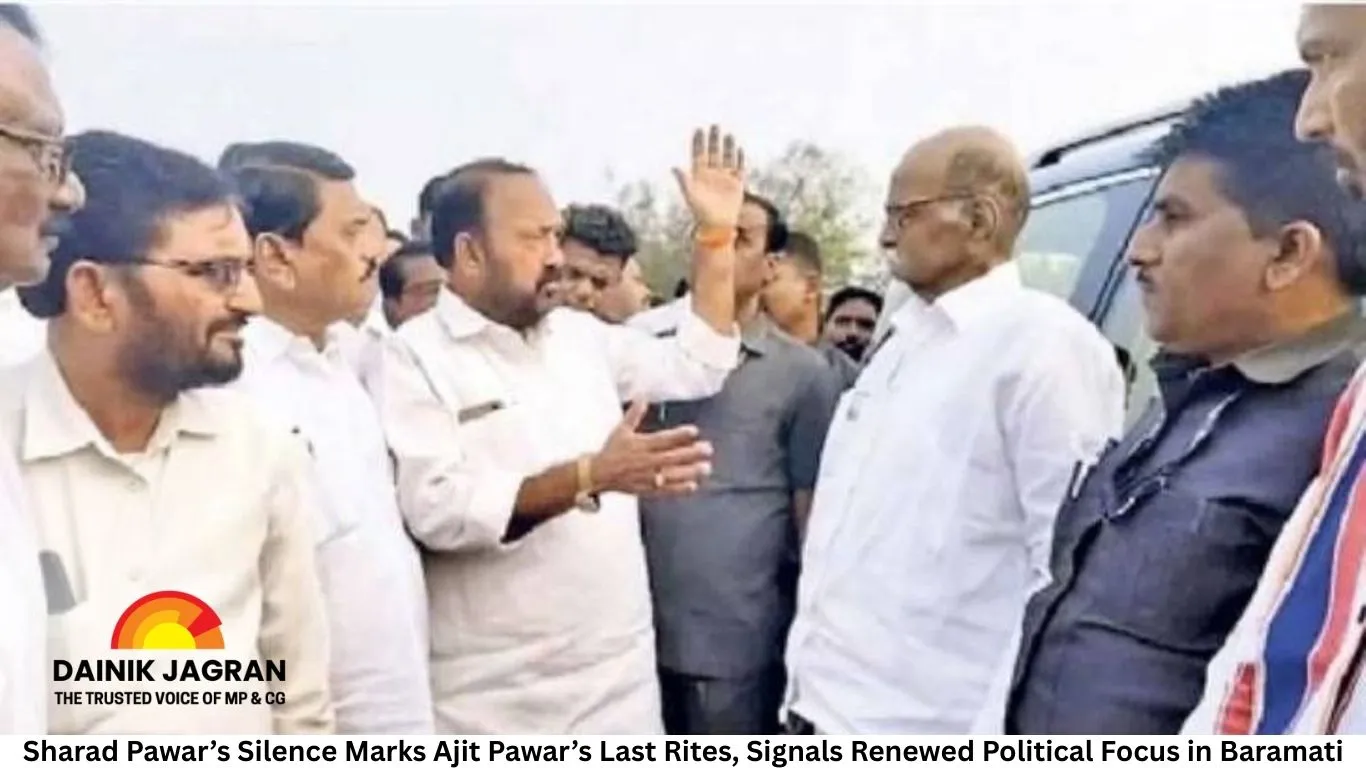
Sharad Pawar’s Silence Marks Ajit Pawar’s Last Rites, Signals Renewed Political Focus in Baramati
Digital Desk
Maharashtra plunged into mourning following the sudden demise of Deputy Chief Minister Ajit Pawar, a prominent political figure and nephew of Nationalist Congress Party (NCP) chief Sharad Pawar. At the ashes immersion ceremony, Sharad Pawar’s silence stood out, reflecting profound grief and the weight of a personal and political loss.
The former Union Agriculture Minister and seasoned politician remained speechless while placing Ajit Pawar’s ashes into the urn, his expressions revealing sorrow that words could not convey. Observers noted that the silence conveyed a deep sense of incompleteness, signaling both the familial and political void left by Ajit Pawar’s sudden passing.
Despite mourning, Sharad Pawar maintained focus on Baramati’s civic concerns. On the third day after his nephew’s passing, he inspected the polluted Neera River, assessing local issues firsthand. Analysts suggest this move reflects a continuation of his political engagement and a possible renewed focus on constituency development, even amid personal loss.
Five urns containing Ajit Pawar’s ashes have been prepared for immersion at sacred confluences across India. The first urn was immersed at the Karha-Neera confluence in Baramati taluka. The remaining urns will be placed at:
-
Prayagraj (Uttar Pradesh) – Ganga-Yamuna-Saraswati Triveni Sangam
-
Devprayag (Uttarakhand) – Alaknanda-Bhagirathi Sangam
-
Karad (Maharashtra) – Krishna-Koyna (Pritisangam)
-
Pravarasangam (Ahilyanagar, Maharashtra) – Godavari-Pravara Sangam
-
Narsinghwadi (Kolhapur, Maharashtra) – Krishna-Panchganga Sangam
Ajit Pawar, known for his decisive work style, administrative efficiency, and rapid decision-making, was regarded as a key pillar of Maharashtra’s governance and NCP’s political machinery. Just days before his death, he was actively managing state administration, overseeing development projects, and addressing public concerns. His sudden passing has left a profound impact on both the political landscape and the general public, who expressed admiration for his discipline, humanity, and vision during the memorial ceremonies.
Public sentiment reflects recognition of Ajit Pawar as a leader who balanced authority with compassion. His legacy of governance, assertive administration, and development-oriented initiatives remains central to Maharashtra’s political narrative. Sharad Pawar’s visible grief and continued engagement in Baramati underscore the intersection of personal loss and political responsibility, signaling potential shifts in focus for the region in the coming months.
--------
🚨 Beat the News Rush – Join Now!
Get breaking alerts, hot exclusives, and game-changing stories instantly on your phone. No delays, no fluff – just the edge you need. ⚡
Tap to join:
🟢 WhatsApp Channel: Dainik Jagran MP CG
Crave more?
🅕 Facebook: Dainik Jagran MP CG English
🅧 Twitter (X): Dainik Jagran MP CG
🅘 Instagram: Dainik Jagran MP CG
Share the fire – keep your crew ahead! 🗞️🔥
Sharad Pawar’s Silence Marks Ajit Pawar’s Last Rites, Signals Renewed Political Focus in Baramati
Digital Desk
The former Union Agriculture Minister and seasoned politician remained speechless while placing Ajit Pawar’s ashes into the urn, his expressions revealing sorrow that words could not convey. Observers noted that the silence conveyed a deep sense of incompleteness, signaling both the familial and political void left by Ajit Pawar’s sudden passing.
Despite mourning, Sharad Pawar maintained focus on Baramati’s civic concerns. On the third day after his nephew’s passing, he inspected the polluted Neera River, assessing local issues firsthand. Analysts suggest this move reflects a continuation of his political engagement and a possible renewed focus on constituency development, even amid personal loss.
Five urns containing Ajit Pawar’s ashes have been prepared for immersion at sacred confluences across India. The first urn was immersed at the Karha-Neera confluence in Baramati taluka. The remaining urns will be placed at:
-
Prayagraj (Uttar Pradesh) – Ganga-Yamuna-Saraswati Triveni Sangam
-
Devprayag (Uttarakhand) – Alaknanda-Bhagirathi Sangam
-
Karad (Maharashtra) – Krishna-Koyna (Pritisangam)
-
Pravarasangam (Ahilyanagar, Maharashtra) – Godavari-Pravara Sangam
-
Narsinghwadi (Kolhapur, Maharashtra) – Krishna-Panchganga Sangam
Ajit Pawar, known for his decisive work style, administrative efficiency, and rapid decision-making, was regarded as a key pillar of Maharashtra’s governance and NCP’s political machinery. Just days before his death, he was actively managing state administration, overseeing development projects, and addressing public concerns. His sudden passing has left a profound impact on both the political landscape and the general public, who expressed admiration for his discipline, humanity, and vision during the memorial ceremonies.
Public sentiment reflects recognition of Ajit Pawar as a leader who balanced authority with compassion. His legacy of governance, assertive administration, and development-oriented initiatives remains central to Maharashtra’s political narrative. Sharad Pawar’s visible grief and continued engagement in Baramati underscore the intersection of personal loss and political responsibility, signaling potential shifts in focus for the region in the coming months.


