


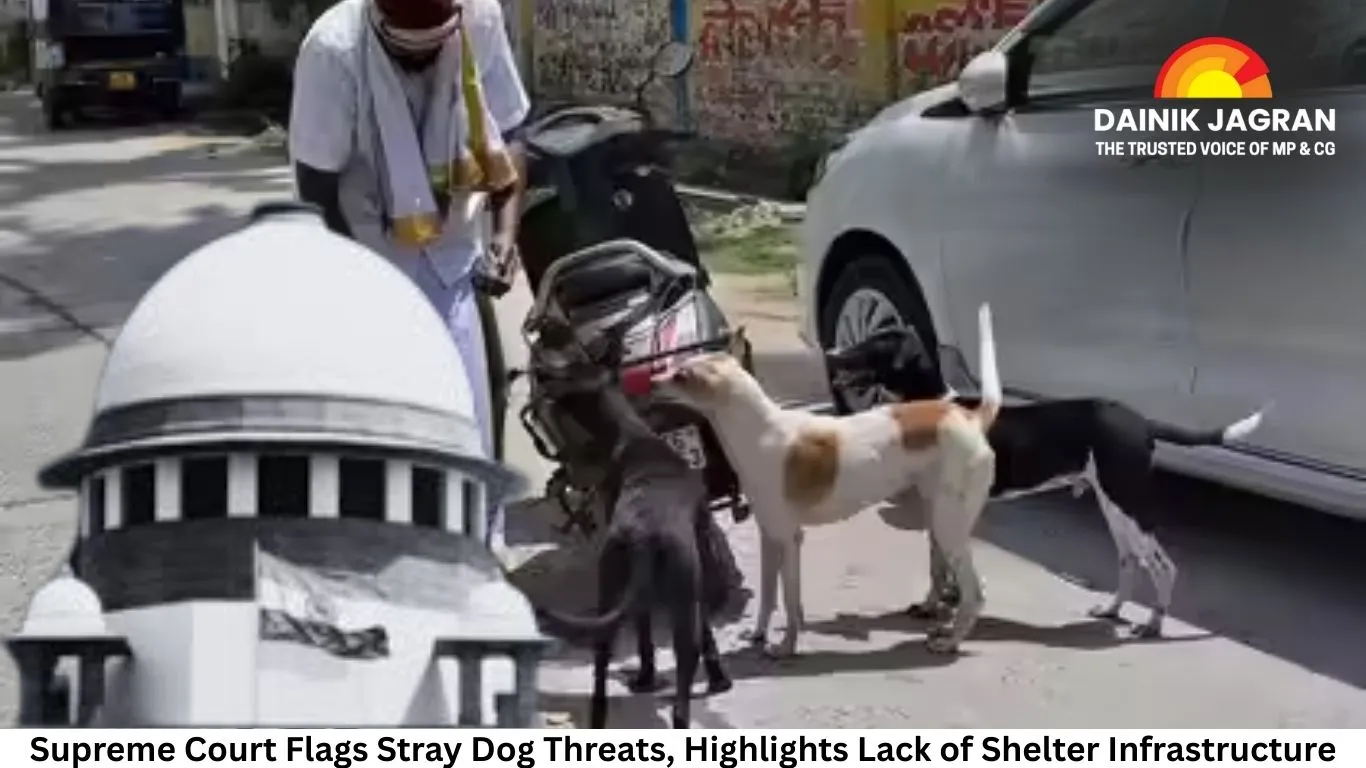
Supreme Court Flags Stray Dog Threats, Highlights Lack of Shelter Infrastructure
Digital Desk
Justice Nath observed that dogs can sense human fear and are more likely to attack if they detect it. “A dog can always recognise a person who is afraid of dogs. When it senses fear, it often attacks,” he said, citing personal experience. The remark underscored the unpredictable nature of interactions between humans and stray dogs.
Petitioners’ lawyers highlighted critical gaps in the data provided by state governments. Counsel reported that India has only five government-run shelters for sick and injured dogs, each with a capacity of about 100 animals, emphasizing that the existing infrastructure is insufficient to comply with the Supreme Court’s earlier directions.
Advocate Nakul Diwan, representing animal welfare concerns, recommended the Trap-Neuter-Release (TNR) approach, along with micro-chipping to monitor and identify stray dogs effectively. “Given their territorial nature, dogs should be released back to the same area after sterilisation,” he said, adding that micro-chipping initiatives in Bengaluru have been both affordable and effective.
Senior advocate Krishnan Venugopal noted that the Animal Birth Control (ABC) rules, introduced in 2018, are not being followed properly in several states, despite a Supreme Court order mandating strict compliance. Venugopal also raised concerns over a proposed Rs 26,800 crore budget for dog shelters, suggesting that the funds could be better allocated to human welfare projects.
Animal welfare counsel CU Singh warned against overcrowding dogs in shelters, which could lead to disease spread, and cautioned that removing stray dogs entirely could result in a surge in rat populations, affecting public health. The bench noted the difficulty in predicting which dogs may be aggressive, highlighting the risk to children and vulnerable citizens.
The court has consistently stressed preventive management over reactive measures, directing authorities to ensure public areas, including schools, hospitals, and residential zones, are safe while adhering to animal welfare norms. The Supreme Court has heard the matter five times in the past seven months and is expected to pass further orders on the implementation of ABC rules and infrastructure development.
.jpg)




