


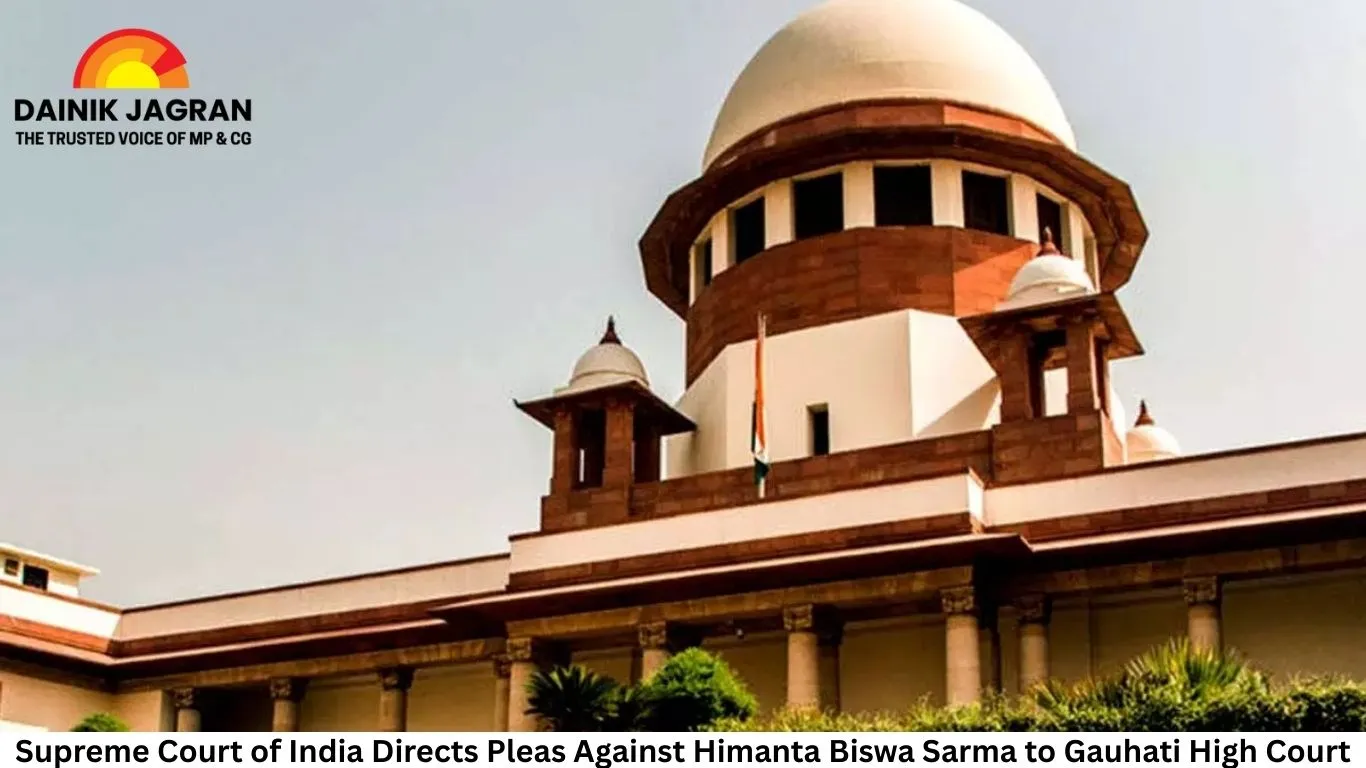
Supreme Court of India Directs Pleas Against Himanta Biswa Sarma to Gauhati High Court, Declines Immediate Hearing
Digital Desk
A three-judge bench headed by Chief Justice Surya Kant, and comprising Justices Joymalya Bagchi and Vipul M. Pancholi, said the issues raised required proper adjudication at the High Court level. The bench stressed that litigants should not bypass constitutional forums designed to examine such disputes in detail.
“Petitioners are at liberty to approach the High Court. If dissatisfied with the relief granted, they may approach this Court,” the bench observed, underscoring that High Courts already handle complex environmental, commercial and constitutional matters. It cautioned parties to exercise restraint, particularly during the pre-election period, and warned against undermining the authority of lower courts.
The petitions were filed by leaders of the Communist Party of India (Marxist) and CPI, including Annie Raja, seeking registration of FIRs against Sarma for alleged hate speech and communal polarisation. They also requested a court-monitored Special Investigation Team to probe the matter. A separate plea by 12 individuals sought directions to prevent holders of constitutional office from making divisive statements.
The controversy stems from a video posted on Feb. 7 by the Assam BJP on the social media platform X. The clip purportedly showed Sarma aiming and firing a rifle toward two men, one wearing a skull cap and the other sporting a beard. The video was later deleted after opposition parties alleged it could incite communal tension in Assam.
Senior advocate Abhishek Singhvi, appearing for the petitioners, argued before the court that the Chief Minister was a repeat offender and urged the bench to take cognisance of the allegations directly. The court, however, declined to comment on the merits of the accusations, maintaining that factual determination should be undertaken by the High Court.
The order reinforces the Supreme Court’s consistent position that litigants must ordinarily exhaust remedies before High Courts before seeking intervention from the apex court. Legal observers say the matter could now move swiftly if petitioners file fresh proceedings in the Gauhati High Court, which the bench urged to hear the case expeditiously.
.jpg)




