Supreme Court Questions Sabarimala Ban, Asks How Touching Deity Causes Impurity
National Desk
Supreme Court questions Sabarimala women entry ban, examines religious practices and constitutional rights in a major India News Update.
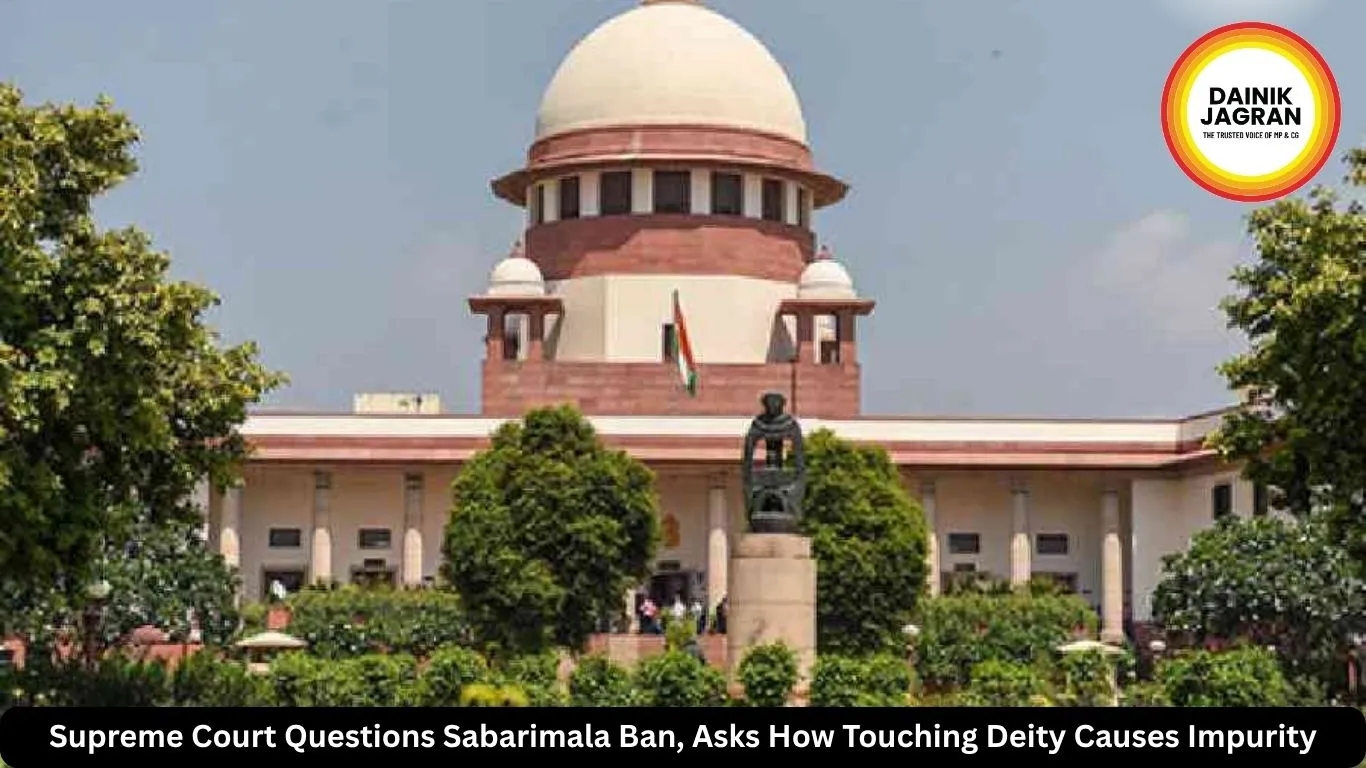
The Supreme Court on Tuesday raised critical questions over religious restrictions at the Sabarimala temple, particularly the rationale behind barring women of a certain age group. During the ongoing hearing, the court asked how the mere act of touching a deity could render it impure, highlighting concerns over exclusion based on birth and gender.
A nine-judge Constitution bench is currently examining the broader legal and constitutional principles tied to the Sabarimala dispute, making it one of the most closely watched cases in recent India News Update cycles.
Bench Questions Traditions
The bench questioned whether constitutional morality should override practices that deny individuals the right to worship. It asked whether the Constitution should intervene when devotees are prevented from offering prayers solely due to their gender or biological factors.
The judges also sought clarity on how religious customs align with fundamental rights, particularly equality and non-discrimination.
Temple’s Legal Stand
Representing the Sabarimala temple, advocate V. Giri defended the restriction, stating that temple rituals are deeply rooted in the character of the presiding deity. He argued that Lord Ayyappa is considered a ‘Naishtika Brahmachari’ (eternal celibate), and therefore, the temple’s practices are designed to preserve that religious belief.
According to the counsel, any deviation from established customs would contradict the core tenets of the faith.
Background of Dispute
The Sabarimala issue has remained a significant public interest story for decades. In 1991, the Kerala High Court upheld a ban on women aged 10 to 50 entering the temple, citing tradition.
However, in a landmark 2018 judgment, the Supreme Court lifted the ban, allowing women of all age groups to enter. The ruling triggered widespread protests and multiple review petitions, leading to the current constitutional bench hearing.
Multiple Cases Clubbed
The court is not only examining the Sabarimala case but also hearing around 66 related matters concerning religious freedoms and practices across faiths. These include issues where entry restrictions exist in various temples and places of worship.
Sources indicated that the outcome may set a broader precedent for how courts interpret the balance between religious autonomy and fundamental rights.
Government’s Position
During earlier hearings that began on April 7, the Centre opposed unrestricted entry, arguing that similar gender-based restrictions exist in several religious institutions. It maintained that courts should respect long-standing traditions unless they clearly violate constitutional principles.
Officials suggested that religious diversity in India requires a nuanced approach rather than uniform judicial intervention.
What Lies Ahead
The Constitution bench is expected to deliver its verdict soon, possibly as early as Wednesday. The judgment is likely to have far-reaching implications on religious practices, gender rights, and constitutional interpretation.
Legal experts believe the ruling could redefine how courts handle faith-based customs in the future, making it a key development in national and international news discourse.
As the hearing concludes, the Supreme Court’s observations on the Sabarimala issue remain central to debates on equality, religious freedom, and evolving social norms in India.
Supreme Court questions Sabarimala women entry ban, examines religious practices and constitutional rights in a major India News Update.

--------
๐จ Beat the News Rush โ Join Now!
Get breaking alerts, hot exclusives, and game-changing stories instantly on your phone. No delays, no fluff โ just the edge you need. โก
Tap to join:ย
๐ข WhatsApp Channel: Dainik Jagran MP CG
Crave more?
๐ Facebook: Dainik Jagran MP CG English
๐ ง Twitter (X): Dainik Jagran MP CG
๐ Instagram: Dainik Jagran MP CG
Share the fire โ keep your crew ahead! ๐๏ธ๐ฅ
Supreme Court Questions Sabarimala Ban, Asks How Touching Deity Causes Impurity
National Desk
The Supreme Court on Tuesday raised critical questions over religious restrictions at the Sabarimala temple, particularly the rationale behind barring women of a certain age group. During the ongoing hearing, the court asked how the mere act of touching a deity could render it impure, highlighting concerns over exclusion based on birth and gender.
A nine-judge Constitution bench is currently examining the broader legal and constitutional principles tied to the Sabarimala dispute, making it one of the most closely watched cases in recent India News Update cycles.
Bench Questions Traditions
The bench questioned whether constitutional morality should override practices that deny individuals the right to worship. It asked whether the Constitution should intervene when devotees are prevented from offering prayers solely due to their gender or biological factors.
The judges also sought clarity on how religious customs align with fundamental rights, particularly equality and non-discrimination.
Temple’s Legal Stand
Representing the Sabarimala temple, advocate V. Giri defended the restriction, stating that temple rituals are deeply rooted in the character of the presiding deity. He argued that Lord Ayyappa is considered a ‘Naishtika Brahmachari’ (eternal celibate), and therefore, the temple’s practices are designed to preserve that religious belief.
According to the counsel, any deviation from established customs would contradict the core tenets of the faith.
Background of Dispute
The Sabarimala issue has remained a significant public interest story for decades. In 1991, the Kerala High Court upheld a ban on women aged 10 to 50 entering the temple, citing tradition.
However, in a landmark 2018 judgment, the Supreme Court lifted the ban, allowing women of all age groups to enter. The ruling triggered widespread protests and multiple review petitions, leading to the current constitutional bench hearing.
Multiple Cases Clubbed
The court is not only examining the Sabarimala case but also hearing around 66 related matters concerning religious freedoms and practices across faiths. These include issues where entry restrictions exist in various temples and places of worship.
Sources indicated that the outcome may set a broader precedent for how courts interpret the balance between religious autonomy and fundamental rights.
Government’s Position
During earlier hearings that began on April 7, the Centre opposed unrestricted entry, arguing that similar gender-based restrictions exist in several religious institutions. It maintained that courts should respect long-standing traditions unless they clearly violate constitutional principles.
Officials suggested that religious diversity in India requires a nuanced approach rather than uniform judicial intervention.
What Lies Ahead
The Constitution bench is expected to deliver its verdict soon, possibly as early as Wednesday. The judgment is likely to have far-reaching implications on religious practices, gender rights, and constitutional interpretation.
Legal experts believe the ruling could redefine how courts handle faith-based customs in the future, making it a key development in national and international news discourse.
As the hearing concludes, the Supreme Court’s observations on the Sabarimala issue remain central to debates on equality, religious freedom, and evolving social norms in India.
Supreme Court questions Sabarimala women entry ban, examines religious practices and constitutional rights in a major India News Update.