The Night Democracy Went Silent,Democracy Under Emergency
New Delhi
Every nation has moments it remembers with pride. India remembers Independence, the adoption of the Constitution and the restoration of democracy in 1977 among them. But nations must also remember the moments they regret. The night of 25 June 1975 belongs in that category. India did not suffer an invasion, a constitutional breakdown or an external war. Yet on that night, the world's largest democracy witnessed the suspension of freedoms that millions had assumed were guaranteed forever.
The road to that fateful night began with a political and legal crisis. Prime Minister Indira Gandhi's 1971 election from Rae Bareli had been challenged by her defeated opponent, Raj Narain, who alleged electoral malpractice and misuse of government machinery. On 12 June 1975, Justice Jagmohan Lal Sinha of the Allahabad High Court found the Prime Minister guilty of electoral malpractices and disqualified her from holding elected office for six years. When the matter reached the Supreme Court, Justice V.R. Krishna Iyer granted only a conditional stay. Indira Gandhi could continue as Prime Minister, but her political authority stood diminished and opposition demands for her resignation intensified.
Within twenty-four hours of that legal and political crisis reaching its peak, India entered its darkest democratic chapter.
When Liberty Was Suspended
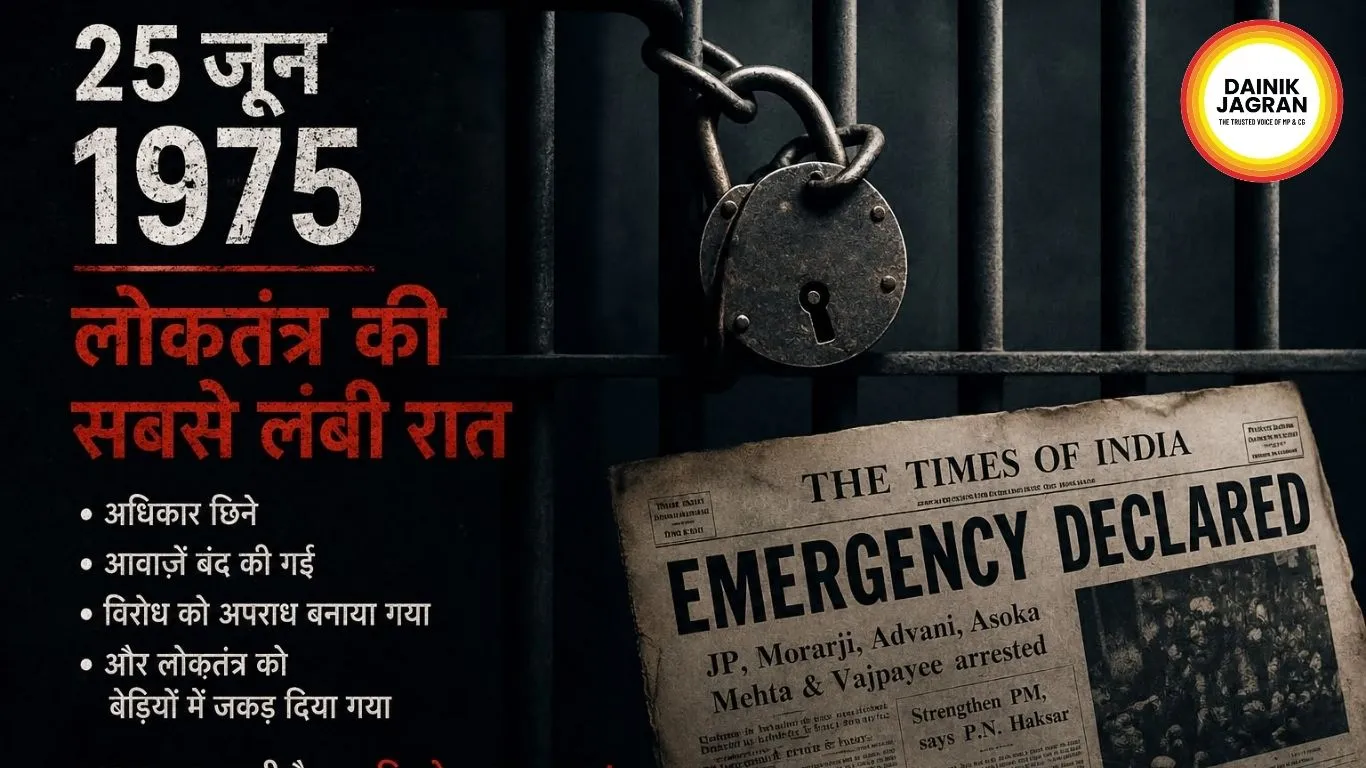
On the night of 25 June 1975, an Internal Emergency was proclaimed under Article 352 of the Constitution on the grounds of "internal disturbance." It would remain in force until March 1977, lasting twenty-one months. During this period, India did not cease to be a democracy in form. Elections, Parliament and constitutional offices continued to exist. Yet many of the freedoms that gave democracy its meaning were placed under suspension.
Fundamental Rights guaranteed under the Constitution were curtailed. More than 1.1 lakh political opponents, activists, journalists, trade union leaders and student leaders were arrested. Nearly 35,000 people were detained under the Maintenance of Internal Security Act, or MISA, a law that permitted imprisonment without trial. Many remained incarcerated for months without formal charges, while accounts from the period documented torture, intimidation and inhumane treatment.
Among those detained were some of the most prominent voices in public life, including Jayaprakash Narayan, Morarji Desai, Atal Bihari Vajpayee, Lal Krishna Advani, Maharani Gayatri Devi and countless others whose only offence was political dissent. The crackdown extended beyond political parties to organisations such as the Rashtriya Swayamsevak Sangh, which was banned and whose thousands of office-bearers and volunteers were arrested across the country.
Perhaps the most chilling aspect of the Emergency was not the arrests themselves but the collapse of constitutional safeguards against arbitrary power. The remedy of Habeas Corpus, one of the oldest protections of personal liberty, effectively became unavailable after the suspension of Fundamental Rights. In the infamous ADM Jabalpur judgment of 1976, the Supreme Court held that citizens could not seek judicial enforcement of these rights during the Emergency. For perhaps the first time since Independence, an ordinary citizen could be deprived of liberty and find that the courts were unable to intervene.
Silencing a Nation
The assault on freedom extended beyond prisons and courtrooms. It entered newsrooms, radio stations and cultural spaces.
Press censorship was imposed almost immediately. Newspapers were required to submit material for scrutiny before publication. On the very night the Emergency was declared, electricity supply to several newspaper offices in Delhi was disconnected, delaying publication of reports concerning the proclamation. The Press Council of India was dissolved. All India Radio and Doordarshan functioned under strict government control, becoming channels for officially approved information while dissenting voices disappeared from public view
Journalists, artists and cultural figures also became targets. Senior journalist Kuldip Nayar was arrested under MISA. Actress and activist Snehalata Reddy was imprisoned, subjected to custodial mistreatment and denied adequate medical care before dying shortly after her release. The satirical political film Kissa Kursi Ka was effectively erased when its prints were seized and burnt. Even popular playback singer Kishore Kumar found himself unofficially blacklisted after refusing to participate in a government campaign, with his songs removed from state-controlled broadcasts.
The message was unmistakable: dissent would not merely be challenged; it would be silenced.
The Machinery of Fear
The Emergency was not only a story of censorship and arrests. It was also a story of the unchecked exercise of administrative power.
The family planning campaign undertaken during this period resulted in more than 83 lakh sterilisation procedures across the country. Subsequent inquiries and historical studies documented widespread coercion, pressure and abuse in achieving sterilisation targets. Government records indicate that at least 1,774 people died due to complications arising from these procedures.
Elsewhere, the Turkman Gate demolition drive in Delhi became one of the most controversial episodes of the period. Entire settlements were demolished in the name of urban beautification. Police firing during protests resulted in civilian deaths, while thousands lost homes, livelihoods and communities built over generations.
For many ordinary Indians, the Emergency was experienced not through constitutional debates but through fear, coercion and the sudden realisation that the state had become far more powerful than the citizen.
When Institutions Bent
The Emergency was not sustained through arrests alone. It was reinforced through changes to the constitutional and institutional framework itself.
The 38th Constitutional Amendment substantially insulated Emergency proclamations from judicial review. The 39th Amendment placed the elections of the Prime Minister, President, Vice-President and Speaker of the Lok Sabha beyond judicial scrutiny, limiting the ability of courts to examine the validity of these elections. The 42nd Amendment further expanded governmental authority, curtailed judicial review and significantly altered the balance between institutions in favour of the executive.
Together, these measures concentrated power in unprecedented ways. The Emergency was no longer merely a political response to a crisis. It became a systematic weakening of the checks and balances designed to protect democratic governance.
When the Emergency was finally revoked in March 1977 and elections were held, the people of India delivered their verdict. The Congress government was defeated and the first non-Congress government assumed office at the Union level. The Shah Commission, established thereafter, documented widespread misuse of authority, arbitrary arrests, abuse of preventive detention laws, censorship, political interference in administration and violations of civil liberties.
The Lesson of June 25
Nearly five decades later, the Emergency remains more than a historical episode. It remains a warning.
Democracy does not survive merely because elections are held. It survives because citizens enjoy rights that governments cannot casually suspend, because courts remain independent, because the press remains free and because dissent is treated as a democratic necessity rather than a threat.
The Emergency lasted twenty-one months. Its consequences lasted far longer. It remains a reminder that freedoms are not self-sustaining, institutions are not indestructible and constitutional safeguards are meaningful only when those entrusted with power respect their limits.
For on that night in June 1975, India learned how fragile liberty can be when democracy is deprived of its restraints.
--------
🚨 Beat the News Rush – Join Now!
Get breaking alerts, hot exclusives, and game-changing stories instantly on your phone. No delays, no fluff – just the edge you need. ⚡
Tap to join:
🟢 WhatsApp Channel: Dainik Jagran MP CG
Crave more?
🅕 Facebook: Dainik Jagran MP CG English
🅧 Twitter (X): Dainik Jagran MP CG
🅘 Instagram: Dainik Jagran MP CG
Share the fire – keep your crew ahead! 🗞️🔥
The Night Democracy Went Silent,Democracy Under Emergency
New Delhi
The road to that fateful night began with a political and legal crisis. Prime Minister Indira Gandhi's 1971 election from Rae Bareli had been challenged by her defeated opponent, Raj Narain, who alleged electoral malpractice and misuse of government machinery. On 12 June 1975, Justice Jagmohan Lal Sinha of the Allahabad High Court found the Prime Minister guilty of electoral malpractices and disqualified her from holding elected office for six years. When the matter reached the Supreme Court, Justice V.R. Krishna Iyer granted only a conditional stay. Indira Gandhi could continue as Prime Minister, but her political authority stood diminished and opposition demands for her resignation intensified.
Within twenty-four hours of that legal and political crisis reaching its peak, India entered its darkest democratic chapter.
When Liberty Was Suspended
On the night of 25 June 1975, an Internal Emergency was proclaimed under Article 352 of the Constitution on the grounds of "internal disturbance." It would remain in force until March 1977, lasting twenty-one months. During this period, India did not cease to be a democracy in form. Elections, Parliament and constitutional offices continued to exist. Yet many of the freedoms that gave democracy its meaning were placed under suspension.
Fundamental Rights guaranteed under the Constitution were curtailed. More than 1.1 lakh political opponents, activists, journalists, trade union leaders and student leaders were arrested. Nearly 35,000 people were detained under the Maintenance of Internal Security Act, or MISA, a law that permitted imprisonment without trial. Many remained incarcerated for months without formal charges, while accounts from the period documented torture, intimidation and inhumane treatment.
Among those detained were some of the most prominent voices in public life, including Jayaprakash Narayan, Morarji Desai, Atal Bihari Vajpayee, Lal Krishna Advani, Maharani Gayatri Devi and countless others whose only offence was political dissent. The crackdown extended beyond political parties to organisations such as the Rashtriya Swayamsevak Sangh, which was banned and whose thousands of office-bearers and volunteers were arrested across the country.
Perhaps the most chilling aspect of the Emergency was not the arrests themselves but the collapse of constitutional safeguards against arbitrary power. The remedy of Habeas Corpus, one of the oldest protections of personal liberty, effectively became unavailable after the suspension of Fundamental Rights. In the infamous ADM Jabalpur judgment of 1976, the Supreme Court held that citizens could not seek judicial enforcement of these rights during the Emergency. For perhaps the first time since Independence, an ordinary citizen could be deprived of liberty and find that the courts were unable to intervene.
Silencing a Nation
The assault on freedom extended beyond prisons and courtrooms. It entered newsrooms, radio stations and cultural spaces.
Press censorship was imposed almost immediately. Newspapers were required to submit material for scrutiny before publication. On the very night the Emergency was declared, electricity supply to several newspaper offices in Delhi was disconnected, delaying publication of reports concerning the proclamation. The Press Council of India was dissolved. All India Radio and Doordarshan functioned under strict government control, becoming channels for officially approved information while dissenting voices disappeared from public view
Journalists, artists and cultural figures also became targets. Senior journalist Kuldip Nayar was arrested under MISA. Actress and activist Snehalata Reddy was imprisoned, subjected to custodial mistreatment and denied adequate medical care before dying shortly after her release. The satirical political film Kissa Kursi Ka was effectively erased when its prints were seized and burnt. Even popular playback singer Kishore Kumar found himself unofficially blacklisted after refusing to participate in a government campaign, with his songs removed from state-controlled broadcasts.
The message was unmistakable: dissent would not merely be challenged; it would be silenced.
The Machinery of Fear
The Emergency was not only a story of censorship and arrests. It was also a story of the unchecked exercise of administrative power.
The family planning campaign undertaken during this period resulted in more than 83 lakh sterilisation procedures across the country. Subsequent inquiries and historical studies documented widespread coercion, pressure and abuse in achieving sterilisation targets. Government records indicate that at least 1,774 people died due to complications arising from these procedures.
Elsewhere, the Turkman Gate demolition drive in Delhi became one of the most controversial episodes of the period. Entire settlements were demolished in the name of urban beautification. Police firing during protests resulted in civilian deaths, while thousands lost homes, livelihoods and communities built over generations.
For many ordinary Indians, the Emergency was experienced not through constitutional debates but through fear, coercion and the sudden realisation that the state had become far more powerful than the citizen.
When Institutions Bent
The Emergency was not sustained through arrests alone. It was reinforced through changes to the constitutional and institutional framework itself.
The 38th Constitutional Amendment substantially insulated Emergency proclamations from judicial review. The 39th Amendment placed the elections of the Prime Minister, President, Vice-President and Speaker of the Lok Sabha beyond judicial scrutiny, limiting the ability of courts to examine the validity of these elections. The 42nd Amendment further expanded governmental authority, curtailed judicial review and significantly altered the balance between institutions in favour of the executive.
Together, these measures concentrated power in unprecedented ways. The Emergency was no longer merely a political response to a crisis. It became a systematic weakening of the checks and balances designed to protect democratic governance.
When the Emergency was finally revoked in March 1977 and elections were held, the people of India delivered their verdict. The Congress government was defeated and the first non-Congress government assumed office at the Union level. The Shah Commission, established thereafter, documented widespread misuse of authority, arbitrary arrests, abuse of preventive detention laws, censorship, political interference in administration and violations of civil liberties.
The Lesson of June 25
Nearly five decades later, the Emergency remains more than a historical episode. It remains a warning.
Democracy does not survive merely because elections are held. It survives because citizens enjoy rights that governments cannot casually suspend, because courts remain independent, because the press remains free and because dissent is treated as a democratic necessity rather than a threat.
The Emergency lasted twenty-one months. Its consequences lasted far longer. It remains a reminder that freedoms are not self-sustaining, institutions are not indestructible and constitutional safeguards are meaningful only when those entrusted with power respect their limits.
For on that night in June 1975, India learned how fragile liberty can be when democracy is deprived of its restraints.