

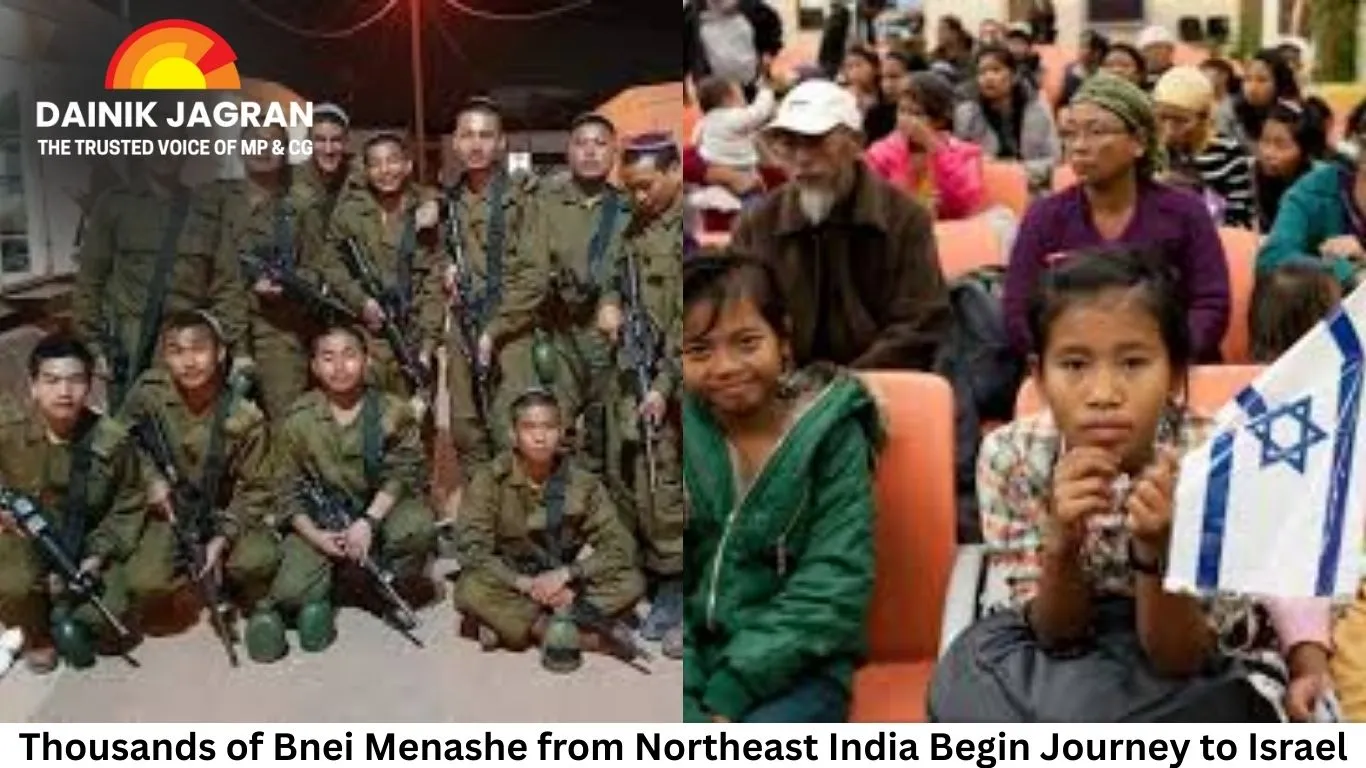
Thousands of Bnei Menashe from Northeast India Begin Journey to Israel

Digital Desk

Thousands of Bnei Menashe from Northeast India Begin Journey to Israel

The long-awaited repatriation of the Bnei Menashe community from India to Israel is set in motion, with approximately 5,800 members preparing to leave the northeastern states of Manipur and Mizoram. Under a recently approved plan by the Israeli cabinet, valued at ₹250 crore, 1,200 people from the community are expected to make the journey to Israel this year, with complete relocation targeted by 2030.

The Bnei Menashe, primarily residing in Churachandpur (Manipur) and Aizawl (Mizoram), consider themselves descendants of the ancient Israelite tribe of Manasseh, one of the 'Ten Lost Tribes' exiled by the Assyrian Empire some 2,700 years ago. Over centuries, they migrated eastward, eventually settling in India, where they maintained Jewish traditions.

“The Manipur violence forced us to leave, but this is also the call of our roots. We are returning to the ‘Promised Land’,” said Mizoram community leader Jeremiah L. Hnamte. Many young members of the community currently serve in combat units of the Israeli army. Those preparing to move cite hopes for family reunions, job opportunities, housing, and Hebrew education in Israel.

The accelerated repatriation comes against the backdrop of ethnic violence in Manipur between the Meitei and Kuki-Zo communities, which began in May 2023 and continued into early 2025. The conflict led to arson, looting, killings, and the displacement of thousands, leaving many in relief camps.

Israel’s interest in the Bnei Menashe stems not only from religious recognition but also from strategic considerations. In 2005, Israel’s Chief Rabbi Shlomo Amar formally recognized the community as Jewish, facilitating their migration under the Law of Return. The Israeli government plans to settle them in the Galilee region, strengthening northern border security while supporting a religious reunion. Prime Minister Benjamin Netanyahu has described the move as a key Zionist initiative.

Historically, Jews arrived in India over centuries due to exile, persecution, and forced migrations, with settlements dating back to 722 BCE following the Assyrian conquest of Israel. Other Jewish groups, including the Baghdadi Jews, arrived in the 18th and 19th centuries, settling in cities like Mumbai, Kolkata, and Pune. The Bnei Menashe community, however, has lived in the remote hills of Northeast India for centuries, preserving their unique religious and cultural identity.

The repatriation program is being coordinated by the Jewish Agency for Israel, which recently sent a team of nine rabbis to Aizawl to screen community members for eligibility. This phased relocation marks a historic chapter in the story of the Bnei Menashe, uniting faith, heritage, and geopolitics.

--------

🚨 Beat the News Rush – Join Now!

Get breaking alerts, hot exclusives, and game-changing stories instantly on your phone. No delays, no fluff – just the edge you need. ⚡

Tap to join: 

🟢 WhatsApp Channel: Dainik Jagran MP CG

Crave more?

🅕 Facebook: Dainik Jagran MP CG English

🅧 Twitter (X): Dainik Jagran MP CG

🅘 Instagram: Dainik Jagran MP CG

Share the fire – keep your crew ahead! 🗞️🔥

english.dainikjagranmpcg.com
01 Jan 2026 By Nitin Trivedi

Thousands of Bnei Menashe from Northeast India Begin Journey to Israel

Digital Desk

The Bnei Menashe, primarily residing in Churachandpur (Manipur) and Aizawl (Mizoram), consider themselves descendants of the ancient Israelite tribe of Manasseh, one of the 'Ten Lost Tribes' exiled by the Assyrian Empire some 2,700 years ago. Over centuries, they migrated eastward, eventually settling in India, where they maintained Jewish traditions.

“The Manipur violence forced us to leave, but this is also the call of our roots. We are returning to the ‘Promised Land’,” said Mizoram community leader Jeremiah L. Hnamte. Many young members of the community currently serve in combat units of the Israeli army. Those preparing to move cite hopes for family reunions, job opportunities, housing, and Hebrew education in Israel.

The accelerated repatriation comes against the backdrop of ethnic violence in Manipur between the Meitei and Kuki-Zo communities, which began in May 2023 and continued into early 2025. The conflict led to arson, looting, killings, and the displacement of thousands, leaving many in relief camps.

Israel’s interest in the Bnei Menashe stems not only from religious recognition but also from strategic considerations. In 2005, Israel’s Chief Rabbi Shlomo Amar formally recognized the community as Jewish, facilitating their migration under the Law of Return. The Israeli government plans to settle them in the Galilee region, strengthening northern border security while supporting a religious reunion. Prime Minister Benjamin Netanyahu has described the move as a key Zionist initiative.

Historically, Jews arrived in India over centuries due to exile, persecution, and forced migrations, with settlements dating back to 722 BCE following the Assyrian conquest of Israel. Other Jewish groups, including the Baghdadi Jews, arrived in the 18th and 19th centuries, settling in cities like Mumbai, Kolkata, and Pune. The Bnei Menashe community, however, has lived in the remote hills of Northeast India for centuries, preserving their unique religious and cultural identity.

The repatriation program is being coordinated by the Jewish Agency for Israel, which recently sent a team of nine rabbis to Aizawl to screen community members for eligibility. This phased relocation marks a historic chapter in the story of the Bnei Menashe, uniting faith, heritage, and geopolitics.

https://english.dainikjagranmpcg.com/national/thousands-of-bnei-menashe-from-northeast-india-begin-journey-to/article-11625

Related Posts

Trending News


