Shyok Tunnel Inauguration: Why This Strategic Project Is a Game Changer for India’s Border Security
Digital Desk
Introduction: A Silent but Strategic Milestone
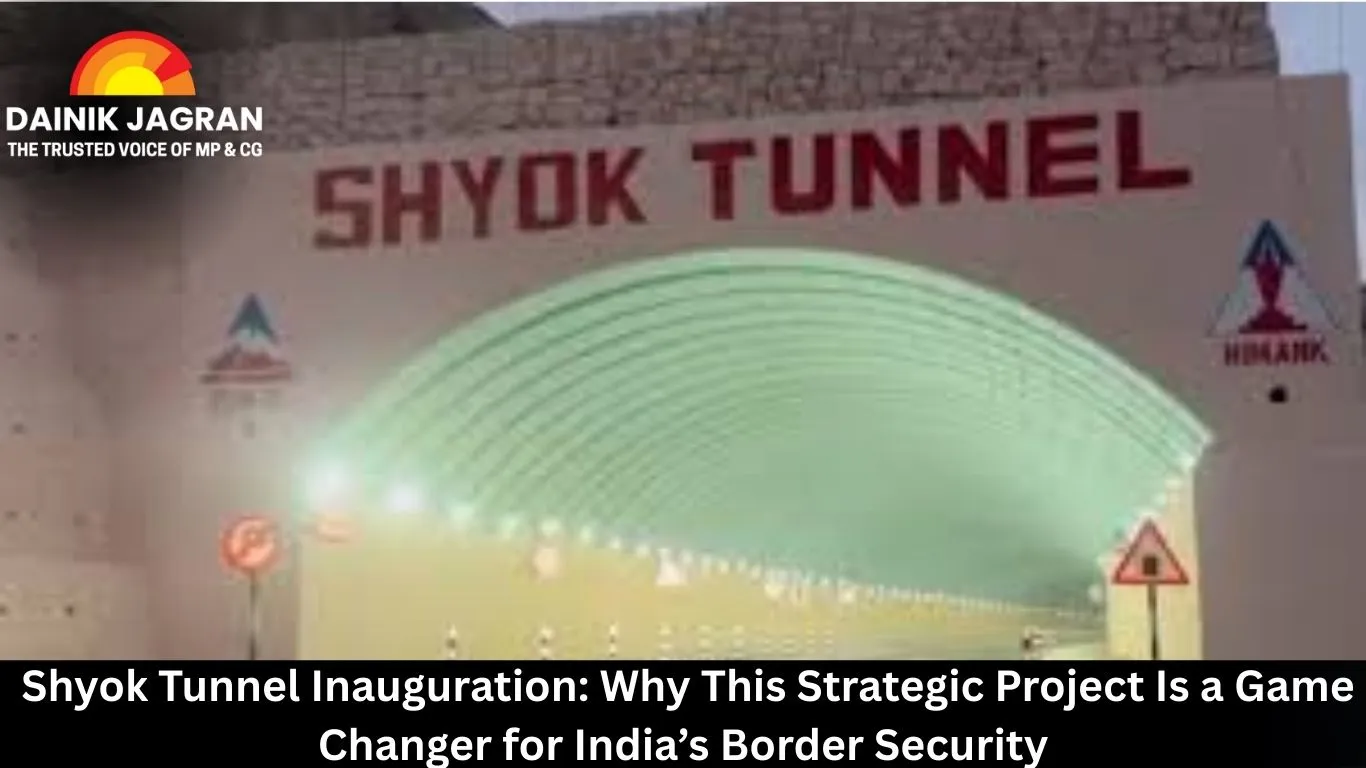
India recently inaugurated the Shyok Tunnel in Eastern Ladakh, a development that may not have grabbed headlines but carries immense strategic weight. Opened virtually by Defence Minister Rajnath Singh, the tunnel is part of a larger push to strengthen India’s border infrastructure near the Line of Actual Control (LAC). At a time when India-China relations remain tense, this project signals a decisive shift in India’s border security approach.
Where Is the Shyok Tunnel and Why Does It Matter?
The Shyok Tunnel, around 920 metres long, is located on the Darbuk–Shyok–Daulat Beg Oldie (DS-DBO) Road, a crucial axis running parallel to the LAC in Eastern Ladakh. Built using the cut-and-cover technique by the Border Roads Organisation (BRO), the tunnel ensures uninterrupted connectivity between Leh and Daulat Beg Oldie (DBO)—India’s northernmost military post.
This route lies close to the strategically vital Karakoram Pass, making the tunnel far more than just an infrastructure upgrade.
Military Significance: From Reaction to Deterrence
From a defence perspective, the Shyok Tunnel is a force multiplier. Earlier, this route was frequently blocked due to:
Avalanches
Landslides
Flash floods
Extreme winter conditions
With the tunnel now operational, India gains all-weather connectivity, enabling:
Faster troop deployment
Smooth rotation of forces
Reliable logistics even during peak winters
Experts point out that this significantly reduces India’s dependence on expensive air logistics and allows heavy military equipment, artillery, fuel, and ammunition to be transported by road.
Countering China’s Infrastructure Edge
China has heavily invested in high-quality roads, railways, and logistics hubs in Aksai Chin, Tibet, and Xinjiang. For years, this created an infrastructure asymmetry along the LAC. The Shyok Tunnel helps bridge this gap, reflecting India’s transition from a reactive border posture to a deterrence-based strategy.
As one defence analyst notes, “Infrastructure today is not development alone—it is national security.”
Beyond Defence: Civilian and Economic Benefits
While strategically critical, the Shyok Tunnel also delivers civilian benefits:
Improved year-round connectivity for local communities
Faster access to healthcare and essential supplies
Boost to adventure and eco-tourism
Employment opportunities in remote border regions
Additionally, the tunnel will play a vital role in disaster management, medical evacuations, and emergency relief during natural calamities.
A Broader Vision of National Security
The Shyok Tunnel was inaugurated alongside 124 other strategic border projects, including roads, bridges, and memorials such as the Galwan War Memorial. Together, they underline India’s evolving doctrine—infrastructure as a symbol of sovereignty and resolve.
Conclusion: Small Tunnel, Big Message
The Shyok Tunnel may be modest in length, but its impact is massive. It strengthens India’s military readiness, supports local development, and sends a clear geopolitical message: India is committed to securing its borders, permanently and decisively. In the high-altitude chessboard of Ladakh, this tunnel is a strategic move worth noting.