


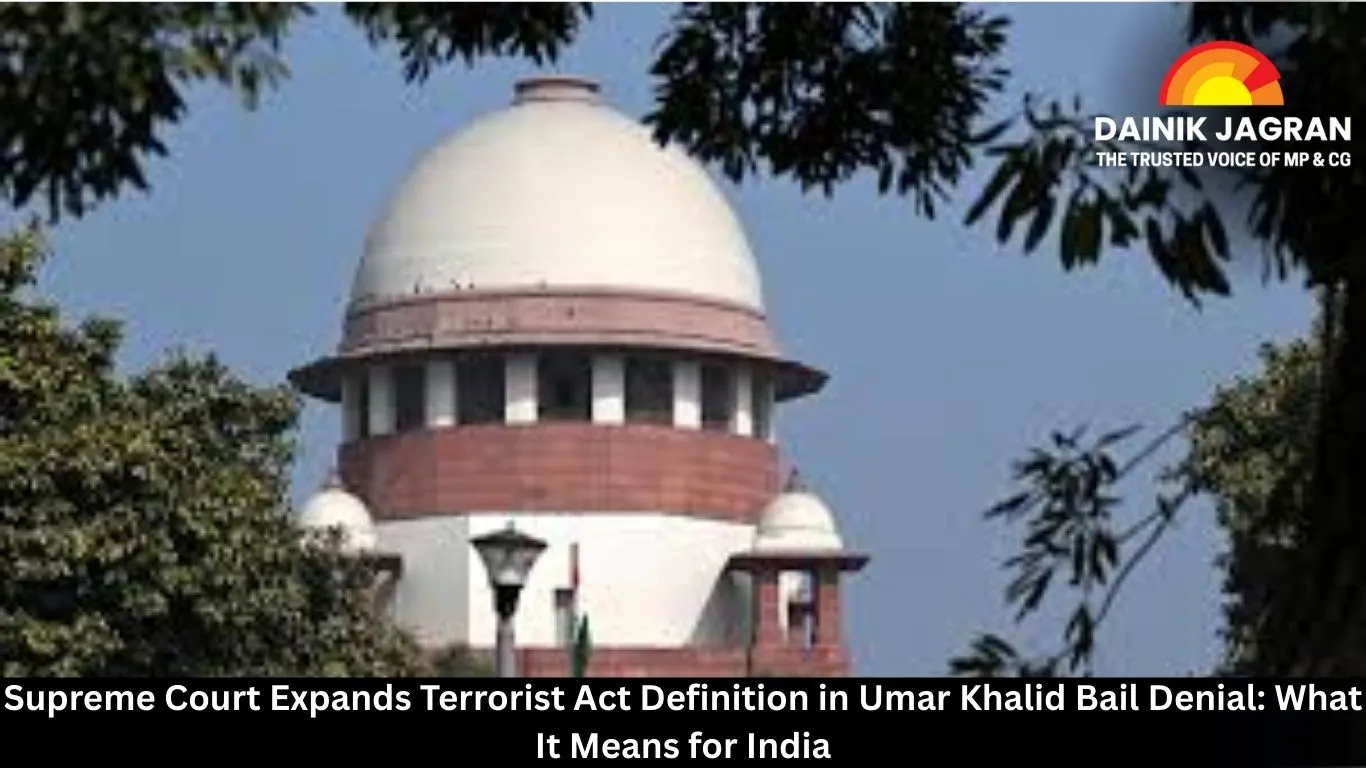
Supreme Court Expands Terrorist Act Definition in Umar Khalid Bail Denial: What It Means for India
Digital Desk
The Supreme Court of India has delivered a landmark ruling by denying bail to Umar Khalid and Sharjeel Imam in the 2020 Delhi riots case, while granting it to five others. This decision, handed down on January 7, 2026, goes beyond bail—it fundamentally expands the Supreme Court Terrorist Act definition under UAPA. As protests against the Citizenship Amendment Act (CAA) spiral into discussions on free speech versus security, this verdict arrives at a critical juncture, reshaping how India combats hybrid threats in an era of coordinated unrest.
Background of the Delhi Riots Case
The 2020 North-East Delhi riots erupted amid CAA protests, coinciding with then-US President Donald Trump's visit. Over 50 people died, mostly minorities, amid large-scale arson, stone-pelting, road blockades, and attacks on religious sites. Public order collapsed for days.
Prosecution alleges a larger conspiracy, not spontaneous violence. Umar Khalid and Sharjeel Imam face charges under the Unlawful Activities (Prevention) Act (UAPA), India's strictest anti-terror law. While Delhi High Court rejected their bail earlier, the Supreme Court upheld the denial, distinguishing their roles as "ideological drivers, organizers, and mobilizers" from the five others in peripheral logistical roles.
Umar Khalid reportedly reacted via a shared chat: "This is life now," highlighting the personal toll after five years in detention.
Why UAPA Charges? Bail Denied Under Section 43D(5)
UAPA trumps IPC (now replaced by new criminal laws) in stringency—jail is the rule, bail the exception. Section 43D(5) bars bail if the court finds "reasonable grounds" to believe accusations are prima facie true, even without full trial or cross-examination.
Unlike regular cases where trial delays mandate bail, UAPA presumes threat over liberty. The Court ruled continued detention isn't unconstitutional under Article 21, echoing the 2019 Watali case. Delays alone don't justify bail in terror probes.
Supreme Court's Game-Changing Expansion of Terrorist Act
Under UAPA Section 15, a Supreme Court Terrorist Act threatens India's unity, integrity, security, or sovereignty—or strikes terror in a population segment. It involves intent, means (explosives, firearms, or "any other means"), and impact (death, injury, disruption of public order).
Traditionally, this meant bombs or guns. No more. The Court broadened "any other means" to include non-violent acts if they destabilize society. Prosecution argued coordinated roadblocks, strategic protests, and inflammatory speeches paralyzed Delhi, creating fear and undermining order—qualifying as terror.
Defense countered: Protests are constitutional rights; no direct violence by accused. The Court disagreed at bail stage, finding allegations credible on record.
Broader Implications: Turning Point or Slippery Slope?
This Umar Khalid bail denial sets a precedent, making UAPA easier to invoke in conspiracy cases. Supporters hail it for addressing modern, hybrid threats—no bombs needed to paralyze cities via mobilization.
Critics warn of elastic definitions criminalizing dissent. Protests could become "terror," turning UAPA into pre-trial punishment. Civil liberties groups fear misuse against activists.
Key Takeaways for Citizens and Aspirants:
-
UPSC/MPPSC Prep: Understand UAPA's intent-impact focus; contrasts with IPC's bail norms.
-
National Security: Validates proactive detention amid rising unrest.
-
Watch For: Full trial outcomes; potential appeals.
This ruling balances security and rights amid evolving threats. As India navigates polarization, it signals zero tolerance for orchestrated chaos disguised as protest.
.jpg)




