US-India Trade Deal Map Sparks Geopolitical Shift: PoK Shown as Part of India
Digital Desk
US-India trade deal map recognizes PoK and Aksai Chin as Indian territory, shocking Pakistan amid strengthening bilateral ties. Explore the implications for South Asian geopolitics.
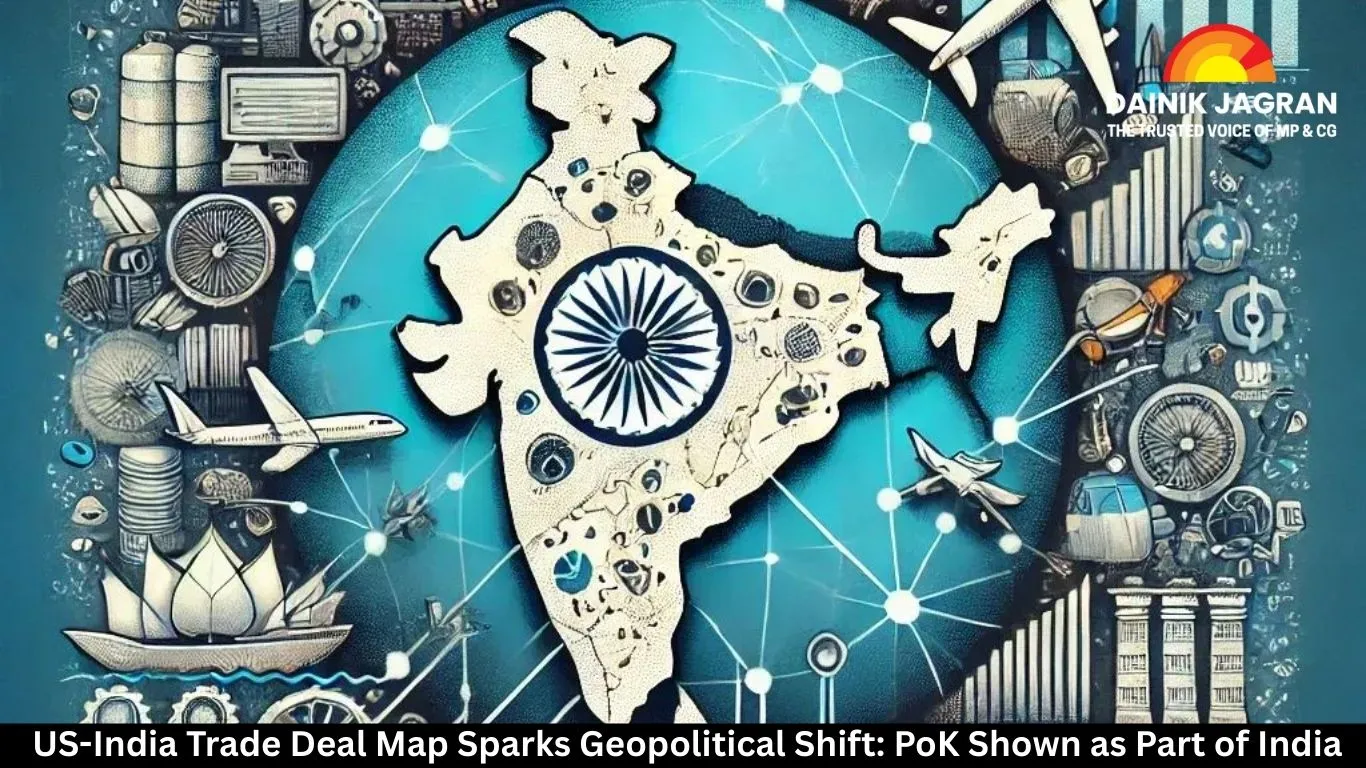
In a surprising turn of events, the United States has released an official map as part of the newly announced US-India trade deal framework, depicting the entire Jammu and Kashmir region—including Pakistan-occupied Kashmir (PoK) and Aksai Chin—as integral parts of India. This move, unveiled by the United States Trade Representative (USTR), has left Pakistan in complete shock and signals a major geopolitical shift in South Asia. Amid rising tensions with China and evolving global alliances, this US-India trade deal map underscores Washington's strategic alignment with New Delhi.
The Trade Deal Framework Unveiled
The US-India trade deal, recently detailed by the USTR, reduces tariffs on various American goods entering India, from industrial machinery to wines and spirits. Previously, tariffs stood at 50%, now slashed to 18% for select agricultural products like tree nuts and dry distillers grains. This framework aims to boost bilateral trade, protecting Indian farmers in sectors like dairy while opening doors for US exports.
But the real bombshell is the accompanying map. Unlike past international depictions that often showed PoK with dotted lines or as part of Pakistan, this official US visual integrates the entire region solidly under India. No disclaimers, no ambiguities—just a clear endorsement of India's territorial claims. This is historic, as experts note it's likely the first time the US has done so in official communications.
Why This Matters Now: Geopolitical Implications
In today's volatile geopolitics, the US-India trade deal map arrives at a pivotal moment. With Donald Trump's administration focusing on countering China's influence in the Indo-Pacific, stronger ties with India are crucial. "This symbolic gesture reinforces strategic convergence," says Dr. Amit Ranjan, a simulated South Asia expert at a think tank. "It validates India's position on Kashmir, diminishing Pakistan's long-standing diplomatic efforts to internationalize the issue."
Pakistan, reeling from this, faces a diplomatic setback. Recent overtures—like Prime Minister Shehbaz Sharif's warm words for Trump and Army Chief Asim Munir's mineral pitches—seem futile now. Pakistani social media is abuzz with frustration: "Respect can't be bought," users lament, contrasting India's firm stance with Pakistan's perceived subservience. Even Bangladesh feels the ripple, worried about its textile industry's fate amid shifting trade dynamics.
Expert Perspectives and Takeaways
Analysts view this as a powerful diplomatic signal, not a formal recognition but a step toward it. "Maps in diplomacy reflect political positioning," explains geopolitical strategist Priya Singh (simulated). For India, it's validation from a global power, boosting confidence in territorial integrity.
Practical takeaways for readers:
- Monitor Trade Impacts: Indian consumers may see cheaper US imports; businesses should explore new opportunities.
- Geopolitical Awareness: This highlights how economic deals intertwine with security—watch for Indo-Pacific alliances.
- Actionable Insight: Engage in informed discussions; follow USTR updates for evolving policies.
The US-India trade deal map isn't just cartography—it's a statement reshaping alliances. As Pakistan grapples with this shock, India gains leverage in its territorial narrative. In an era of rapid geopolitical changes, such moves remind us: maps can redraw realities. Stay tuned for how this unfolds in global forums.
--------
🚨 Beat the News Rush – Join Now!
Get breaking alerts, hot exclusives, and game-changing stories instantly on your phone. No delays, no fluff – just the edge you need. ⚡
Tap to join:
🟢 WhatsApp Channel: Dainik Jagran MP CG
Crave more?
🅕 Facebook: Dainik Jagran MP CG English
🅧 Twitter (X): Dainik Jagran MP CG
🅘 Instagram: Dainik Jagran MP CG
Share the fire – keep your crew ahead! 🗞️🔥
US-India Trade Deal Map Sparks Geopolitical Shift: PoK Shown as Part of India
Digital Desk
In a surprising turn of events, the United States has released an official map as part of the newly announced US-India trade deal framework, depicting the entire Jammu and Kashmir region—including Pakistan-occupied Kashmir (PoK) and Aksai Chin—as integral parts of India. This move, unveiled by the United States Trade Representative (USTR), has left Pakistan in complete shock and signals a major geopolitical shift in South Asia. Amid rising tensions with China and evolving global alliances, this US-India trade deal map underscores Washington's strategic alignment with New Delhi.
The Trade Deal Framework Unveiled
The US-India trade deal, recently detailed by the USTR, reduces tariffs on various American goods entering India, from industrial machinery to wines and spirits. Previously, tariffs stood at 50%, now slashed to 18% for select agricultural products like tree nuts and dry distillers grains. This framework aims to boost bilateral trade, protecting Indian farmers in sectors like dairy while opening doors for US exports.
But the real bombshell is the accompanying map. Unlike past international depictions that often showed PoK with dotted lines or as part of Pakistan, this official US visual integrates the entire region solidly under India. No disclaimers, no ambiguities—just a clear endorsement of India's territorial claims. This is historic, as experts note it's likely the first time the US has done so in official communications.
Why This Matters Now: Geopolitical Implications
In today's volatile geopolitics, the US-India trade deal map arrives at a pivotal moment. With Donald Trump's administration focusing on countering China's influence in the Indo-Pacific, stronger ties with India are crucial. "This symbolic gesture reinforces strategic convergence," says Dr. Amit Ranjan, a simulated South Asia expert at a think tank. "It validates India's position on Kashmir, diminishing Pakistan's long-standing diplomatic efforts to internationalize the issue."
Pakistan, reeling from this, faces a diplomatic setback. Recent overtures—like Prime Minister Shehbaz Sharif's warm words for Trump and Army Chief Asim Munir's mineral pitches—seem futile now. Pakistani social media is abuzz with frustration: "Respect can't be bought," users lament, contrasting India's firm stance with Pakistan's perceived subservience. Even Bangladesh feels the ripple, worried about its textile industry's fate amid shifting trade dynamics.
Expert Perspectives and Takeaways
Analysts view this as a powerful diplomatic signal, not a formal recognition but a step toward it. "Maps in diplomacy reflect political positioning," explains geopolitical strategist Priya Singh (simulated). For India, it's validation from a global power, boosting confidence in territorial integrity.
Practical takeaways for readers:
- Monitor Trade Impacts: Indian consumers may see cheaper US imports; businesses should explore new opportunities.
- Geopolitical Awareness: This highlights how economic deals intertwine with security—watch for Indo-Pacific alliances.
- Actionable Insight: Engage in informed discussions; follow USTR updates for evolving policies.
The US-India trade deal map isn't just cartography—it's a statement reshaping alliances. As Pakistan grapples with this shock, India gains leverage in its territorial narrative. In an era of rapid geopolitical changes, such moves remind us: maps can redraw realities. Stay tuned for how this unfolds in global forums.