


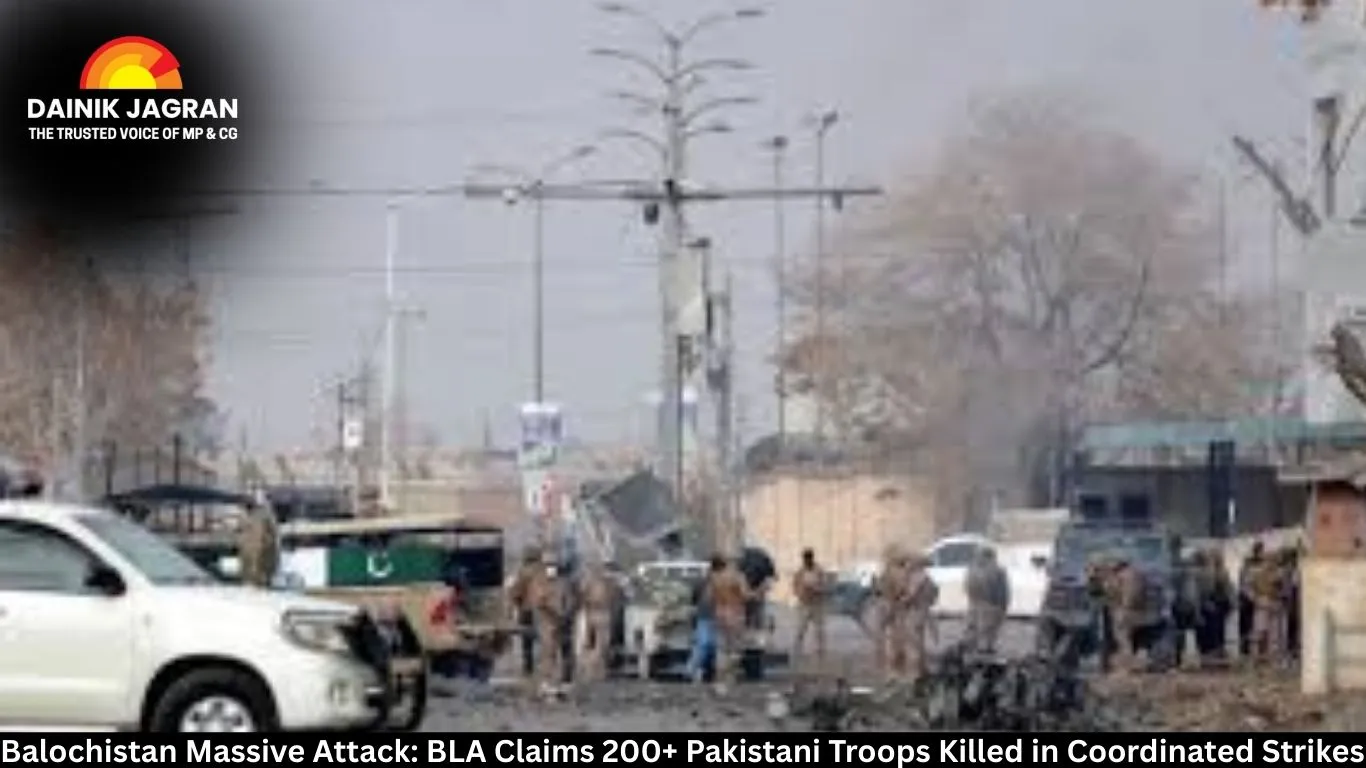
Balochistan Massive Attack: BLA Claims 200+ Pakistani Troops Killed in Coordinated Strikes
Digital Desk
Balochistan has erupted in violence with a massive coordinated assault claimed by the Balochistan Liberation Army (BLA), shaking Pakistan's stability. Reports suggest over 200 Pakistani security personnel killed in 40 hours of intense strikes across key areas like Gwadar and Naushehr. This Balochistan massive attack highlights deepening ethnic grievances and tactical shifts in the decades-old insurgency.
Roots of Balochistan Insurgency
Balochistan, Pakistan's largest province, holds vast natural resources like natural gas, copper, gold from Reko Diq mine, and a strategic coastline. Yet, it remains politically marginalized and economically underdeveloped. Local Baloch feel exploited by the central government, especially Punjab, with resources flowing out while repression—including forced disappearances—festers.
-
BLA, labeled a terrorist group by Pakistan, fights for autonomy.
-
Decades of armed separatism stem from unfulfilled project benefits for locals.
This Balochistan massive attack amplifies calls for rights amid military crackdowns.
Tactics in the BLA Attacks
BLA executed multi-site strikes using low-cost, high-impact methods over 40 hours, overwhelming Pakistan's army.
-
IEDs and Vehicle-Borne IEDs: Planted roadside or loaded in cars, detonated near military convoys—like recent Delhi incidents—for maximum casualties.
-
Coordinated Multi-Strikes: Simultaneous hits on intelligence facilities, checkposts, and convoys in rugged terrain.
-
Women Fidayeen Debut: First reported use of female suicide bombers, like Asifa Mangal, bypassing checkpoints, creating psychological shock and global attention.
BLA claims 200+ kills; Pakistan counters with 17 security deaths, 90-145 militants eliminated. Information warfare muddies exact tolls without neutral verification.
Pakistan's Response and India Blame Game
Pakistan launched "Operation Hair of Faz" with army, Frontier Corps, and intelligence sweeps. Officials push a narrative of foreign-sponsored terror from Afghanistan or India, with ISPR and ministers accusing Delhi of funding BLA.
India's Ministry of External Affairs dismissed these as "baseless and frivolous," urging Pakistan to confront homegrown issues like political elimination and economic neglect. Unlike Pakistan's unproven claims, India cites evidence in past cases like Pahalgam. This deflection tactic distracts from internal crises.
Strategic Implications
The Balochistan massive attack threatens CPEC, with Gwadar attacks hitting Chinese assets, hiking security costs and slowing investments. Pakistan grapples with economic woes, TTP in Khyber Pakhtunkhwa, and now intensified BLA tactics—from guerrilla to suicide bombings.
Takeaways for Readers:
-
Instability risks regional spillover, affecting India-Pakistan dynamics.
-
Watch CPEC: China's hesitation could cripple Pakistan's economy.
-
UPSC/MPPSC aspirants: Note Balochistan's resource politics for current affairs.
This surge demands Pakistan address root causes; deflection won't suffice. As tensions rise, South Asia eyes escalation.
.jpg)




