


Bangladesh Political Turmoil: Democracy at Crossroads as Interim Government Faces Unrest
Digital Desk
Bangladesh Political Crisis Deepens Amid Democratic Struggle
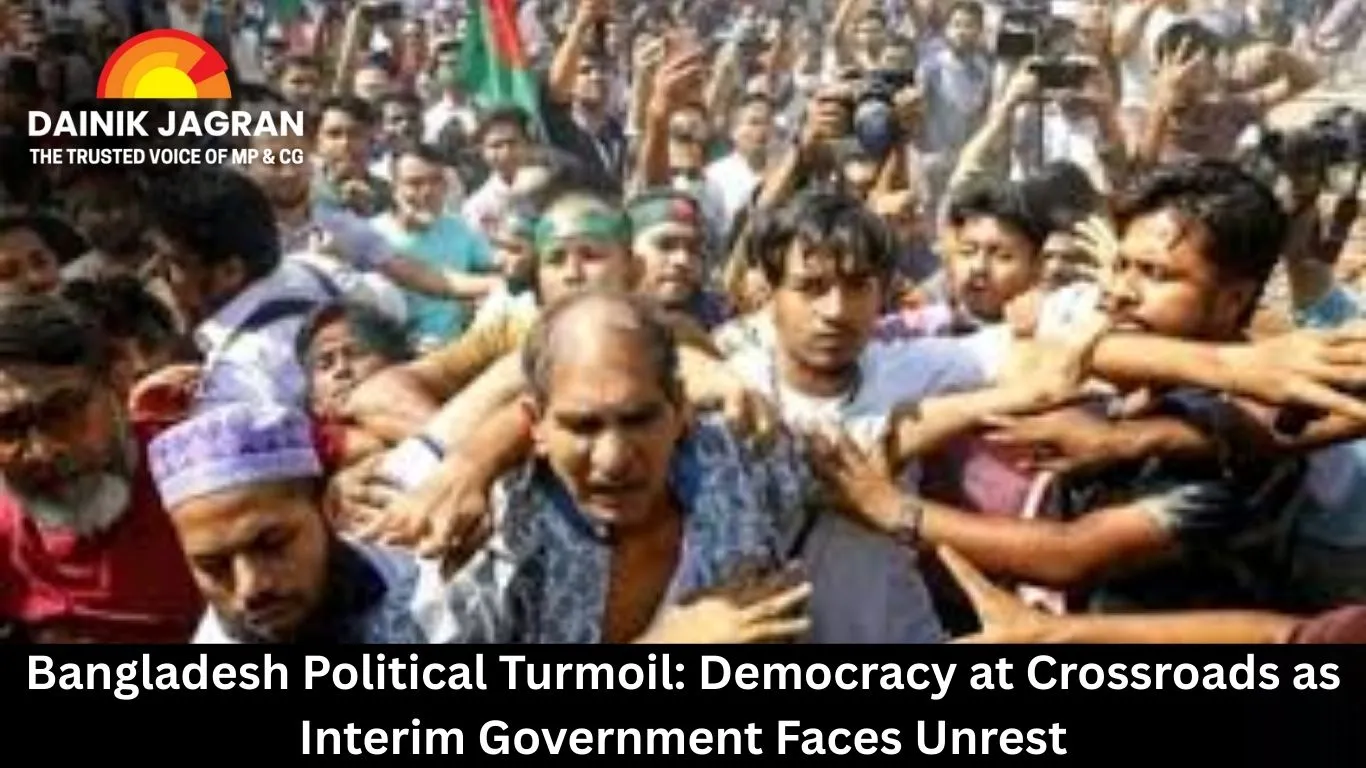
Dhaka is witnessing one of its most turbulent political phases in decades. Widespread protests, political assassinations, and a fragile interim government have created a volatile atmosphere. The assassination of youth leader Sharif Usman Hadi, co-founder of Inquilab Manch, has sparked national outrage and renewed debates about democratic suppression, foreign interference, and the direction of governance.
The Bangladesh political crisis has now turned into a struggle between democratic ideals and authoritarian tendencies—raising serious questions about the future of the nation’s institutions and electoral legitimacy.
The Interim Government Under Muhammad Yunus Under Fire
Interim Prime Minister Muhammad Yunus insists his administration is steering reforms, promising elections in early February 2026. Yet, his ban on the Awami League’s political activities has drawn domestic and international criticism. Journalists and civil society leaders question how elections can be “free and fair” when the largest party in the country remains politically restricted.
During a recent Al Jazeera interview, Yunus denied banning the Awami League outright but admitted that their political engagement “stands suspended.” This doublespeak has only deepened distrust among citizens and exposed the fragile nature of the interim setup.
Political analysts note that Yunus’s populist approach may have weakened institutional accountability, as rising unemployment, corruption, and disinformation dominate public life. Bangladesh, once hailed as South Asia’s economic miracle under Sheikh Hasina, now faces economic decline and social unrest.
India’s Balancing Act and Regional Implications
Amid this turmoil, India-Bangladesh relations are being tested. Some Bangladeshi commentators falsely blamed India for Hadi’s assassination, fueling anti-India narratives. However, India’s Ministry of External Affairs firmly denied any involvement, emphasizing its commitment to peace and stability in the neighborhood.
Experts believe India continues to support Bangladesh’s democratic process rather than any specific leader. New Delhi’s long-standing cooperation on security, energy, and development remains vital. Observers urge India to respond with diplomacy and humanitarian outreach—providing aid, food support, and cultural engagement rather than direct political interference.
Such actions, analysts say, could counter extremist propaganda, promote socio-economic stability, and protect India’s security interests by preventing refugee inflows across the border.
Cultural Identity and the Battle for Bangladesh’s Soul
The unrest has also become a cultural conflict. Radical groups targeting media offices and cultural centers have tried to erase Bangladesh’s Bengali identity—a heritage rooted in Rabindranath Tagore’s vision of harmony and inclusiveness. This ideological shift toward extremist nationalism threatens the tolerant foundations on which Bangladesh was born in 1971.
Defending cultural freedom, protecting journalists, and rebuilding damaged institutions have become crucial for Bangladesh to rediscover its democratic soul.
Conclusion: A Nation in Transition
As Bangladesh prepares for its delayed elections, one question looms large—can democracy survive when its core institutions are under attack? The Bangladesh political crisis is not only a leadership test but a moral one for both the government and its people.
India and the global community are watching closely. Whether Bangladesh reclaims its democratic promise or slides further toward authoritarianism will define South Asia’s political balance in the years ahead.

.jpg)




