

New Labour Codes 2026: Are Workers' Rights Being Stripped in the Name of Business Ease?

Digital Desk

New Labour Codes 2026: Are Workers' Rights Being Stripped in the Name of Business Ease?

 New Labour Codes 2026 redefine workers, limit unions & strikes, raise retrenchment threshold to 300. Salary over ₹18,000? No worker status. Impact on gig economy & safety explained.

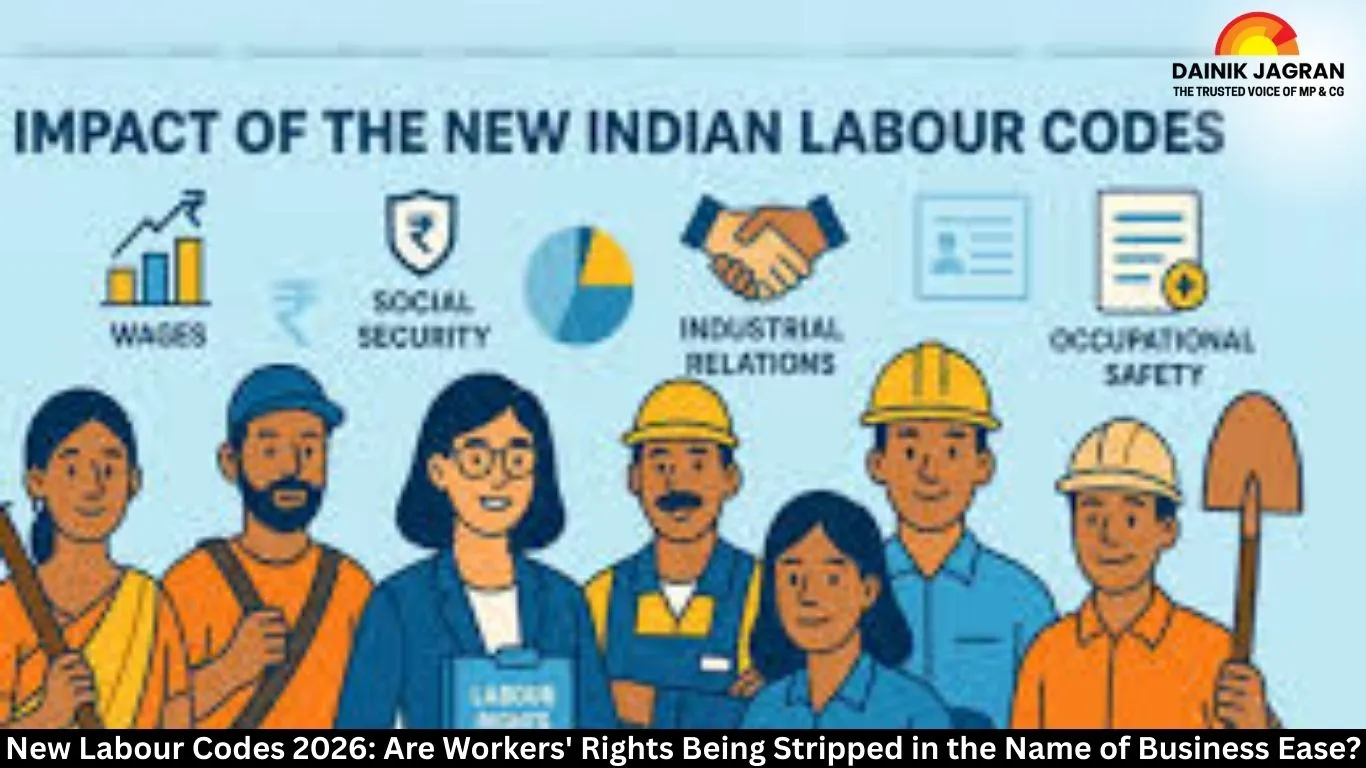
India's New Labour Codes, fully rolling out in 2026, promise business simplification by merging 29 old laws into four—Wages, Social Security, Industrial Relations, and Occupational Safety. But amid rising gig jobs and unemployment, critics argue they erode historic protections won since the 1947 Industrial Disputes Act. In March 2025, BJP leader and Parliamentary Standing Committee chair Mr. Bumbai slammed the government for skipping the Indian Labour Conference, weakening reforms' legitimacy. Even RSS-linked Bharatiya Mazdoor Sangh protests. Why now? With 50 crore workers in organized and unorganized sectors driving the economy, these codes could fuel a hire-fire culture just as youth seek stable jobs.

Narrowed Worker Definition Leaves Millions Vulnerable

Old laws clearly defined workers, mandating government nod for layoffs or closures. New codes shrink this: Salaries over ₹18,000 (below Delhi's minimum wage) in "supervisory" roles exclude worker status—who decides the label? Factory thresholds rise—power-connected from 10 to 20 workers, powerless from 20 to 40—dodging regulations. Contract labourers face diluted safeguards.

Unions and Strikes: From Right to Ritual

Constitution guarantees union freedom, but codes demand 20% membership to form one, 50% for bargaining power. Strikes? 14-day notice, stalled by mandatory conciliation (up to 60 days), arbitration, or jail/fines. Supreme Court once called strikes quasi-fundamental; now they're paperwork. Fixed-term employment surges—6-11 month contracts, no retrenchment notice or compensation. Retrenchment permission jumps from 100 to 300 workers, removable by government whim.

Hours, Safety, and Social Security: Flexibility Over Dignity

Standard 8-hour day flexible to 12 by government rule; overtime up to 125 hours/quarter at double pay. Inspectors become "facilitators" needing permission. Penalties lighten—1-year jail to 6 months, compoundable via fines. Gratuity ceiling doubles to ₹20 lakh, fixed-term eligible after 1 year, but gig workers' vague status overlaps unorganized sectors. Aadhaar mandatory for benefits, defying past Supreme Court limits. Women get night shifts with consent and safety.

Experts warn of "race-to-bottom" federalism—states competing on lax rules for investment. Parliamentary suggestions ignored; no worker-centric flexibility model.

Take Action Now


These codes prioritize Ease of Doing Business, but at what cost to dignity? Demand Labour Conference revival, clearer definitions. Track state rules by April 2026. Your job could be next—share, discuss, unionize.

--------

🚨 Beat the News Rush – Join Now!

Get breaking alerts, hot exclusives, and game-changing stories instantly on your phone. No delays, no fluff – just the edge you need. ⚡

Tap to join: 

🟢 WhatsApp Channel: Dainik Jagran MP CG

Crave more?

🅕 Facebook: Dainik Jagran MP CG English

🅧 Twitter (X): Dainik Jagran MP CG

🅘 Instagram: Dainik Jagran MP CG

Share the fire – keep your crew ahead! 🗞️🔥

english.dainikjagranmpcg.com
31 Jan 2026 By Abhishek Joshi

New Labour Codes 2026: Are Workers' Rights Being Stripped in the Name of Business Ease?

Digital Desk

India's New Labour Codes, fully rolling out in 2026, promise business simplification by merging 29 old laws into four—Wages, Social Security, Industrial Relations, and Occupational Safety. But amid rising gig jobs and unemployment, critics argue they erode historic protections won since the 1947 Industrial Disputes Act. In March 2025, BJP leader and Parliamentary Standing Committee chair Mr. Bumbai slammed the government for skipping the Indian Labour Conference, weakening reforms' legitimacy. Even RSS-linked Bharatiya Mazdoor Sangh protests. Why now? With 50 crore workers in organized and unorganized sectors driving the economy, these codes could fuel a hire-fire culture just as youth seek stable jobs.

Narrowed Worker Definition Leaves Millions Vulnerable

Old laws clearly defined workers, mandating government nod for layoffs or closures. New codes shrink this: Salaries over ₹18,000 (below Delhi's minimum wage) in "supervisory" roles exclude worker status—who decides the label? Factory thresholds rise—power-connected from 10 to 20 workers, powerless from 20 to 40—dodging regulations. Contract labourers face diluted safeguards.

Unions and Strikes: From Right to Ritual

Constitution guarantees union freedom, but codes demand 20% membership to form one, 50% for bargaining power. Strikes? 14-day notice, stalled by mandatory conciliation (up to 60 days), arbitration, or jail/fines. Supreme Court once called strikes quasi-fundamental; now they're paperwork. Fixed-term employment surges—6-11 month contracts, no retrenchment notice or compensation. Retrenchment permission jumps from 100 to 300 workers, removable by government whim.

Hours, Safety, and Social Security: Flexibility Over Dignity

Standard 8-hour day flexible to 12 by government rule; overtime up to 125 hours/quarter at double pay. Inspectors become "facilitators" needing permission. Penalties lighten—1-year jail to 6 months, compoundable via fines. Gratuity ceiling doubles to ₹20 lakh, fixed-term eligible after 1 year, but gig workers' vague status overlaps unorganized sectors. Aadhaar mandatory for benefits, defying past Supreme Court limits. Women get night shifts with consent and safety.

Experts warn of "race-to-bottom" federalism—states competing on lax rules for investment. Parliamentary suggestions ignored; no worker-centric flexibility model.

Take Action Now


These codes prioritize Ease of Doing Business, but at what cost to dignity? Demand Labour Conference revival, clearer definitions. Track state rules by April 2026. Your job could be next—share, discuss, unionize.

https://english.dainikjagranmpcg.com/opinion/new-labour-codes-2026-are-workers-rights-being-stripped-in/article-13465

Trending News


