


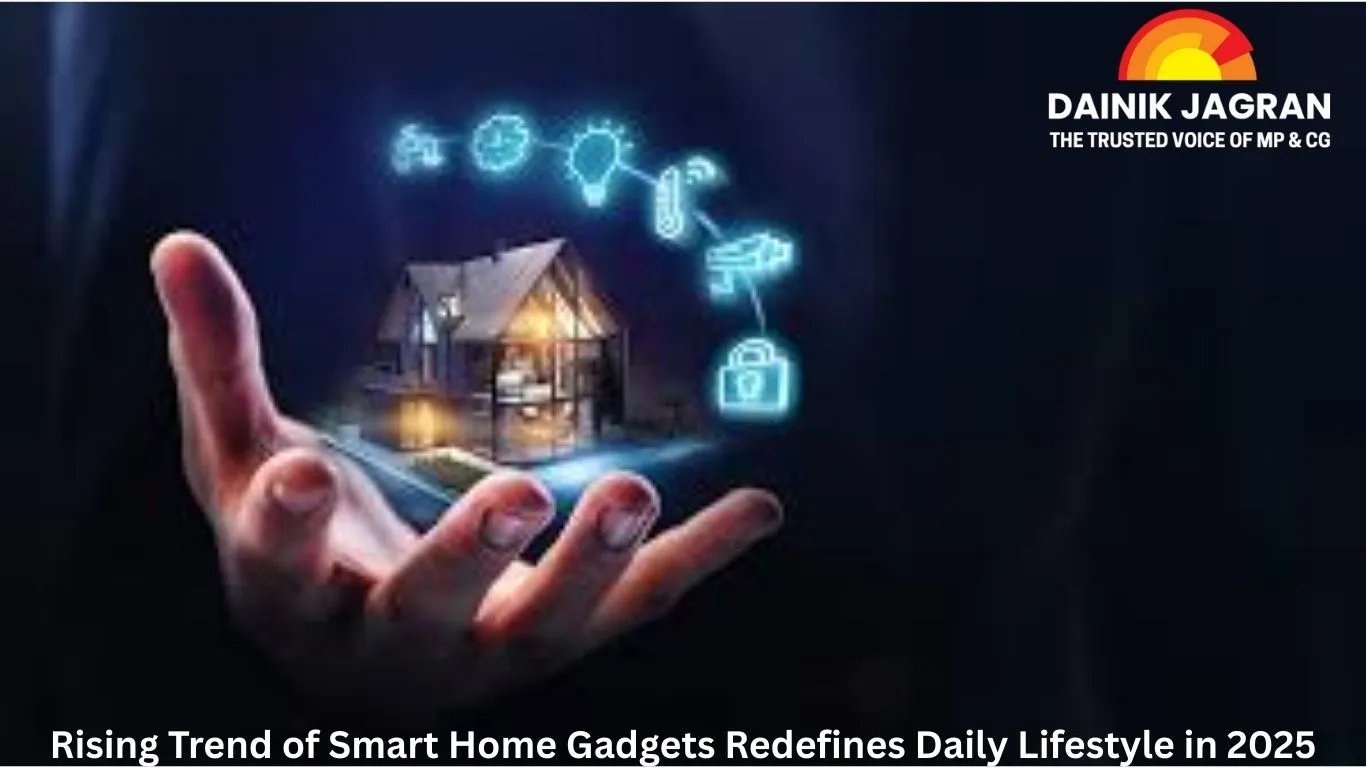
Rising Trend of Smart Home Gadgets Redefines Daily Lifestyle in 2025
Digital Desk
According to industry experts, the demand for smart home solutions has surged in the first half of 2025, driven by convenience, energy efficiency, and enhanced security features. Research firm TechInsight reported a 28% year-on-year growth in smart home device sales, with metropolitan cities such as Delhi, Mumbai, Bengaluru, and Hyderabad leading the adoption curve.
Smart lighting systems and voice-activated assistants have become common in urban homes, allowing residents to manage appliances remotely, set schedules, and reduce energy consumption. Similarly, smart kitchen appliances, including Wi-Fi-enabled ovens, automated coffee makers, and intelligent refrigerators, are simplifying meal preparation and inventory management for families.
“Smart devices are not just about convenience; they are transforming lifestyle habits,” said Rajiv Malhotra, CEO of HomeTech Solutions. “Users can monitor energy usage, track food expiry dates, and even receive alerts for routine maintenance, all from their smartphones. This integration is gradually changing the way people approach household management.”
Security remains a primary driver of adoption. IoT-based cameras, motion sensors, and smart locks provide real-time monitoring and alerts, giving homeowners greater peace of mind. Experts note that with rising urban crime rates, these systems are increasingly perceived as essential rather than luxury items.
While smart home technology is gaining traction, experts caution about privacy and cybersecurity concerns. Analysts urge consumers to select devices with strong encryption, regular software updates, and secure cloud storage to prevent data breaches.
The lifestyle impact extends beyond individual households. Smart homes contribute to energy conservation, reduce wastage, and enable better time management, reflecting a broader trend toward sustainable and efficient urban living. Manufacturers and service providers are now focusing on user-friendly interfaces and AI-driven personalization to further enhance daily life.
As technology continues to integrate seamlessly into homes, experts predict that by 2030, a majority of urban households will rely on smart systems for routine tasks, marking a fundamental shift in lifestyle patterns across India.
1.jpg)

1.jpg)
1.jpg)
1.jpg)
1.jpg)
