


Why EU's Presence at India's Republic Day Parade Alarms Khalistani Groups and ISI
Digital Desk
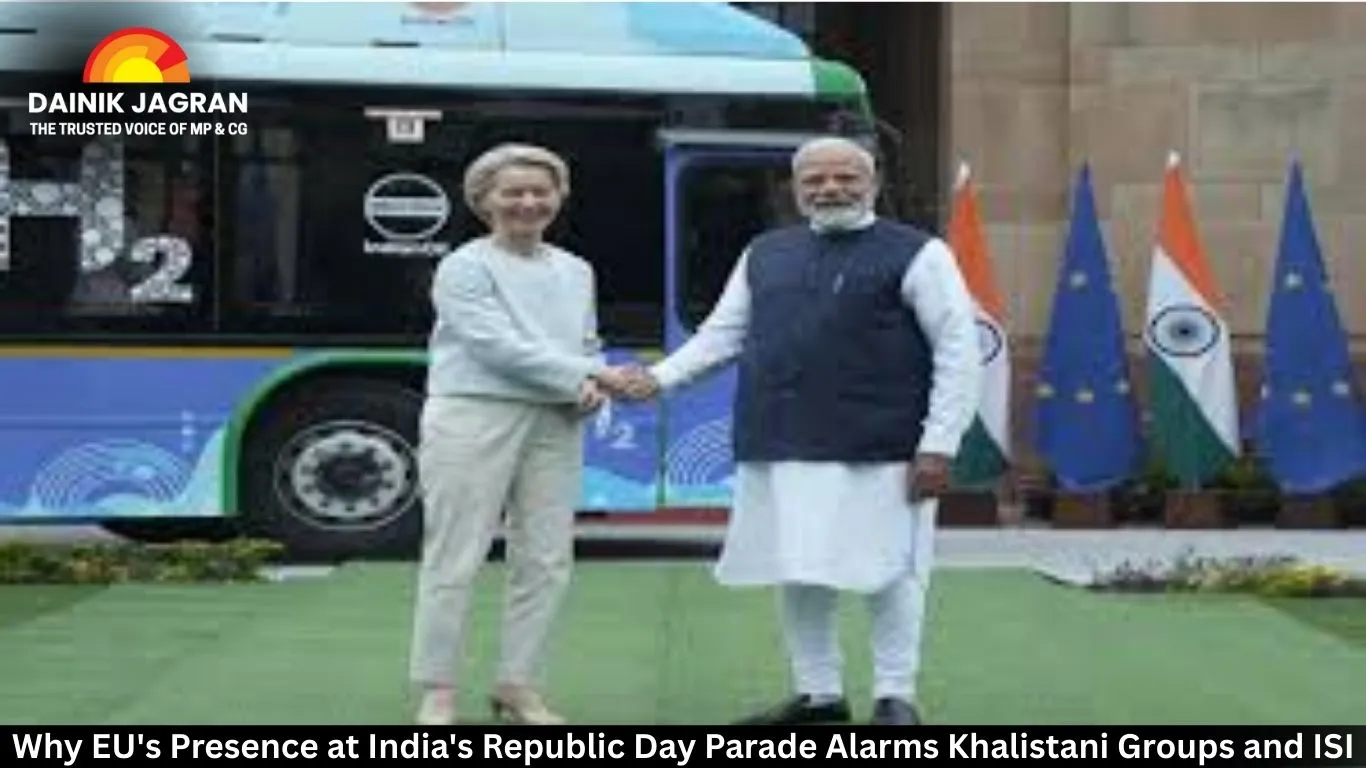
As India gears up for its 77th Republic Day celebrations on January 26, 2026, a groundbreaking diplomatic move is stealing the spotlight. The European Union (EU) is set to make history as the chief guest, with its contingent marching in the parade—a first for a bloc rather than a single nation. This EU Republic Day India participation not only signals stronger bilateral ties but also delivers a strategic blow to Khalistani groups and Pakistan's ISI, who see their separatist narratives crumbling under this high-profile alliance.
Breaking Tradition for Strategic Gains
Traditionally, India's Republic Day invites feature heads of state from countries like France or the US. This year, however, Prime Minister Narendra Modi and President Droupadi Murmu are hosting EU Commission President Ursula von der Leyen and EU Council President Antonio Costa. Their presence marks the 16th India-EU Summit on January 27, focusing on key areas like trade, defense, cybersecurity, maritime security, and counter-terrorism.
Why does this matter now? Amid global uncertainties, including US political shifts under leaders like Donald Trump, India is diversifying partnerships. The EU Republic Day India event underscores India's view of the EU as a strategic power center, not just a trade partner. Experts simulate that this "bloc-to-bloc" diplomacy elevates relations to new heights, representing over 2 billion people and 25% of global GDP if the ongoing free trade agreement (FTA) materializes.
Shattering Khalistani Narratives in the West
Khalistani groups have long relied on diaspora mobilization in Canada, the UK, and parts of Europe to internationalize their separatist cause. They exploit free speech laws to push anti-India propaganda, often with alleged backing from Pakistan's ISI through proxy warfare.
But the EU's visible embrace of India during Republic Day shatters this narrative. It prioritizes state sovereignty over separatist causes, undercutting the propaganda that Western nations sympathize with extremism. As one simulated diplomatic expert notes, "This move eliminates ambiguities; Europe won't tolerate violence under the guise of protests anymore." India has shared evidence of Khalistani-linked crimes—like targeted killings and grenade attacks—with EU agencies, prompting joint action against terrorism that could spill into Europe.
For Khalistani groups, this is a loss of "oxygen." Their space in Western countries shrinks as funding and influence dry up. Practical takeaway: Readers concerned about global security should watch how this alliance curbs non-state actors exploiting freedoms.
ISI's Setback and Broader Implications
Pakistan's ISI faces a major setback too. Historically, it uses separatist movements like Khalistan or Kashmir to pressure India. The EU Republic Day India partnership reduces foreign-sponsored separatism's credibility, limiting ISI's ability to influence Europe against India. In intelligence terms, it's a "loss of narrative space," weakening proxy efforts.
Overall, this diplomatic symbolism matters more than military might. India isn't deploying tanks but shaping global perceptions through soft power. With high-level delegations arriving, security is ramped up—red alerts issued against potential threats from Khalistani or Bangladeshi outfits in Delhi.
The EU's role in India's Republic Day isn't just ceremonial; it's a timely masterstroke in countering extremism amid 2026's geopolitical flux. As the India-EU trade agreement nears, expect deeper cooperation. For Indians, it's a win for sovereignty; for the world, a step toward stable alliances. Stay tuned as this unfolds—diplomacy, not bullets, is winning the day.

.jpg)




