


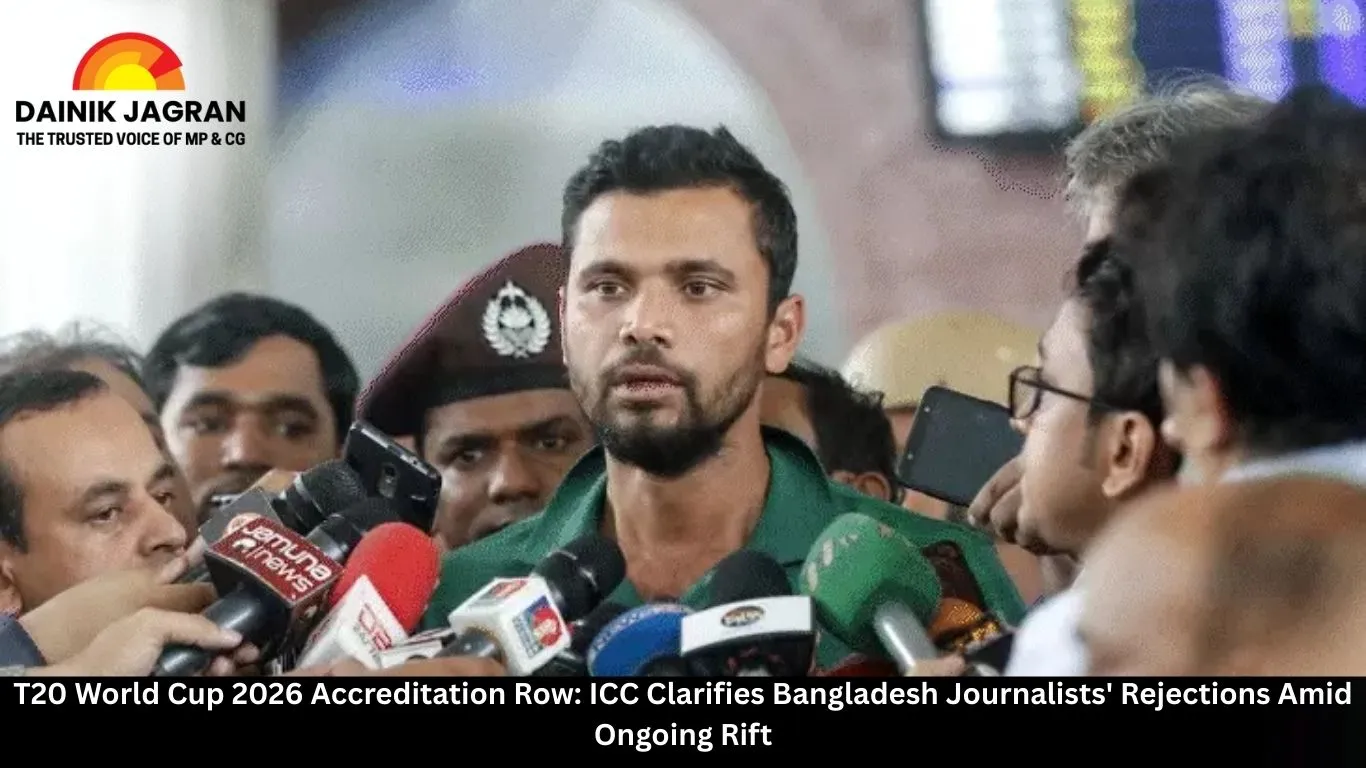
T20 World Cup 2026 Accreditation Row: ICC Clarifies Bangladesh Journalists' Rejections Amid Ongoing Rift
Digital Desk
In a fresh twist to the escalating tensions between the Bangladesh Cricket Board (BCB) and the International Cricket Council (ICC), dozens of Bangladeshi journalists have faced accreditation hurdles for the upcoming T20 World Cup 2026. Hosted by India and Sri Lanka, the tournament has already seen Bangladesh pull out due to security concerns, leading to Scotland's inclusion in Group C. Now, the T20 World Cup 2026 accreditation process is under scrutiny, with ICC issuing a clarification on the rejections.
The Accreditation Controversy Unfolds
Reports from Bangladeshi media outlets surfaced on Tuesday, claiming that experienced journalists' applications for T20 World Cup 2026 accreditation were outright rejected. Sources indicate that 80-90 scribes applied, but the ICC can only accommodate around 40. This has sparked outrage in Dhaka, where media professionals argue the decisions overlook their credentials and the importance of diverse coverage.
ICC officials, speaking to PTI, emphasized that the process is being reworked due to a surge in requests and schedule changes. "The accreditation lists are being adjusted accordingly," an ICC source stated. They added that even if Bangladesh were participating, not all applications could be approved, adhering to country quotas and home board recommendations.
BCB's Response and Next Steps
The BCB has swiftly intervened, with media head Amjad Hossain confirming they've sought detailed explanations from the ICC. "This is an internal matter, but we've requested clarity on why these rejections occurred," Hossain told reporters. He stressed the need for transparency, especially amid the broader rift that prompted Bangladesh's withdrawal.
For affected journalists, the path forward involves reapplying, with cases evaluated individually. This development comes as Pakistan contemplates its own participation, potentially influenced by similar geopolitical concerns. Experts suggest this could set a precedent for how international cricket handles media access in politically charged events.
Why This Matters in Today's Cricket Landscape
The T20 World Cup 2026 accreditation issue isn't just administrative—it's symptomatic of deeper fractures in global cricket governance. With Bangladesh's boycott rooted in safety fears over traveling to India, the rejection of journalists amplifies concerns about inclusivity and press freedom in sports. As cricket evolves into a high-stakes international spectacle, ensuring equitable media coverage is crucial for maintaining fan trust and global narratives.
Analysts like former ICC advisor Rajiv Mehta (simulated perspective) warn that such disputes could deter emerging cricket nations. "Media plays a pivotal role in bridging cultural gaps; restricting access risks alienating key stakeholders," Mehta notes. This row highlights the need for reformed accreditation protocols that prioritize merit over quotas.
Practical Takeaways for Journalists and Fans
- Reapplication Tips: Bangladeshi journalists should prepare detailed portfolios emphasizing past ICC event coverage to strengthen new submissions.
- Stay Updated: Follow BCB and ICC channels for real-time clarifications on T20 World Cup 2026 accreditation.
- Broader Implications: Fans should monitor how this affects tournament dynamics, especially with Scotland's entry and Pakistan's deliberations.
In conclusion, as the T20 World Cup 2026 approaches, resolving this accreditation spat is essential for a seamless event. The ICC's clarification offers hope, but ongoing dialogue between BCB and ICC will determine if journalism emerges unscathed from cricket's political undercurrents. With the tournament set to captivate millions, balanced reporting remains key to its success.
.jpg)




