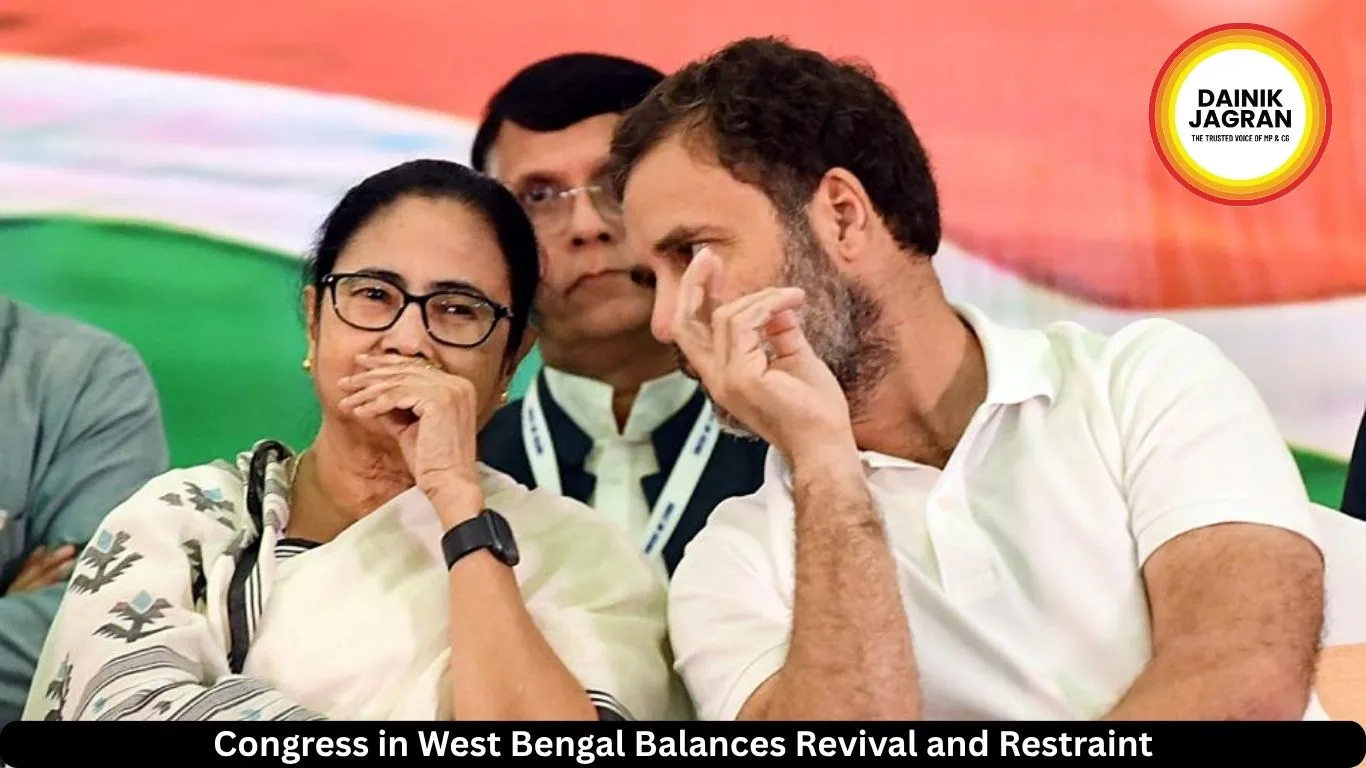
Congress in West Bengal Balances Revival and Restraint

Politics Desk

Congress in West Bengal Balances Revival and Restraint

Congress in West Bengal is pursuing a cautious poll strategy, focusing on key districts to rebuild its base while avoiding direct conflict with TMC.

Congress in West Bengal has entered the Assembly election battle with a cautious but calculated strategy, seeking to revive its shrinking political base while avoiding a direct confrontation with Chief Minister Mamata Banerjee’s Trinamool Congress (TMC). The party’s approach reflects a delicate balancing act as it attempts to regain organisational relevance in the state without damaging broader opposition equations.

Limited Seat Focus

Congress is contesting 292 seats in West Bengal, but party leaders have made it clear that the campaign is not spread evenly across the state. Instead, the focus remains on a limited set of constituencies where the party believes it still has organisational presence, identifiable voter support and realistic electoral prospects.

According to party sources, Congress expects that even a modest seat tally, combined with an improved vote share, would help re-establish its political relevance in the state. The party has concentrated resources on select districts rather than pursuing an expansive state-wide campaign.

Core Congress Pockets

The party’s campaign has largely centred around Malda, Murshidabad, Kolkata, Hooghly, Raiganj, North Dinajpur and Birbhum. These regions have historically formed the backbone of Congress support in West Bengal and continue to offer some residual social and political capital.

Congress is particularly attempting to consolidate its traditional voter base among minorities and rural communities in these districts. Party strategists believe these constituencies offer the best chance to rebuild grassroots structures and recover lost political space, as per reports from state leaders.

Rahul’s Measured Messaging

Congress leader Rahul Gandhi’s campaign stops in West Bengal reflected this selective strategy. He addressed rallies in Srirampur, represented by state Congress president Subhankar Sarkar, and in Murshidabad, the home district of senior leader Adhir Ranjan Chowdhury.

His messaging remained measured. While Rahul Gandhi mentioned Mamata Banerjee only briefly, his speeches were largely directed at Prime Minister Narendra Modi and the Bharatiya Janata Party (BJP). The calibrated tone suggested Congress was attempting to protect its own leadership space in Bengal without escalating tensions with the TMC.

Avoiding Direct Clash

Congress has been notably restrained in constituencies where the principal contest is between the TMC and BJP. Party leaders appear reluctant to adopt an aggressive posture in these seats, mindful of the larger opposition landscape beyond West Bengal.

Sources indicated that Congress does not want its state-level campaign to undermine the possibility of future cooperation with the TMC at the national level. This explains the party’s selective aggression assertive where it sees room for revival, cautious where direct attacks could complicate national opposition politics.

Identity Crisis Persists

The strategy, however, carries clear risks. Congress faces a persistent identity challenge in West Bengal, where its political space has been squeezed by both the TMC and BJP over the past decade. By avoiding a sharper line against the ruling party, Congress risks appearing politically ambiguous to voters.

The central question before the electorate remains whether Congress is positioning itself as an independent challenger or as a tacit ally in the state’s larger anti-BJP framework. That lack of clarity could weaken the party’s attempt to rebuild an independent political identity, according to political observers.

What Lies Ahead

For Congress, the immediate objective in West Bengal is less about sweeping gains and more about organisational survival. The party is using this election to test whether its old support base can still be mobilised and whether selective interventions can translate into electoral relevance.

Its performance in these targeted pockets will determine whether Congress can rebuild a durable state unit or remain a marginal player in Bengal politics. For now, Congress in West Bengal is betting on restraint, regional strength and careful messaging to stay politically afloat in a complex electoral contest.

--------

🚨 Beat the News Rush – Join Now!

Get breaking alerts, hot exclusives, and game-changing stories instantly on your phone. No delays, no fluff – just the edge you need. ⚡

Tap to join: 

🟢 WhatsApp Channel: Dainik Jagran MP CG

Crave more?

🅕 Facebook: Dainik Jagran MP CG English

🅧 Twitter (X): Dainik Jagran MP CG

🅘 Instagram: Dainik Jagran MP CG

Share the fire – keep your crew ahead! 🗞️🔥

english.dainikjagranmpcg.com
27 Apr 2026 By ROHIT

Congress in West Bengal Balances Revival and Restraint

Politics Desk

Congress in West Bengal has entered the Assembly election battle with a cautious but calculated strategy, seeking to revive its shrinking political base while avoiding a direct confrontation with Chief Minister Mamata Banerjee’s Trinamool Congress (TMC). The party’s approach reflects a delicate balancing act as it attempts to regain organisational relevance in the state without damaging broader opposition equations.

Limited Seat Focus

Congress is contesting 292 seats in West Bengal, but party leaders have made it clear that the campaign is not spread evenly across the state. Instead, the focus remains on a limited set of constituencies where the party believes it still has organisational presence, identifiable voter support and realistic electoral prospects.

According to party sources, Congress expects that even a modest seat tally, combined with an improved vote share, would help re-establish its political relevance in the state. The party has concentrated resources on select districts rather than pursuing an expansive state-wide campaign.

Core Congress Pockets

The party’s campaign has largely centred around Malda, Murshidabad, Kolkata, Hooghly, Raiganj, North Dinajpur and Birbhum. These regions have historically formed the backbone of Congress support in West Bengal and continue to offer some residual social and political capital.

Congress is particularly attempting to consolidate its traditional voter base among minorities and rural communities in these districts. Party strategists believe these constituencies offer the best chance to rebuild grassroots structures and recover lost political space, as per reports from state leaders.

Rahul’s Measured Messaging

Congress leader Rahul Gandhi’s campaign stops in West Bengal reflected this selective strategy. He addressed rallies in Srirampur, represented by state Congress president Subhankar Sarkar, and in Murshidabad, the home district of senior leader Adhir Ranjan Chowdhury.

His messaging remained measured. While Rahul Gandhi mentioned Mamata Banerjee only briefly, his speeches were largely directed at Prime Minister Narendra Modi and the Bharatiya Janata Party (BJP). The calibrated tone suggested Congress was attempting to protect its own leadership space in Bengal without escalating tensions with the TMC.

Avoiding Direct Clash

Congress has been notably restrained in constituencies where the principal contest is between the TMC and BJP. Party leaders appear reluctant to adopt an aggressive posture in these seats, mindful of the larger opposition landscape beyond West Bengal.

Sources indicated that Congress does not want its state-level campaign to undermine the possibility of future cooperation with the TMC at the national level. This explains the party’s selective aggression assertive where it sees room for revival, cautious where direct attacks could complicate national opposition politics.

Identity Crisis Persists

The strategy, however, carries clear risks. Congress faces a persistent identity challenge in West Bengal, where its political space has been squeezed by both the TMC and BJP over the past decade. By avoiding a sharper line against the ruling party, Congress risks appearing politically ambiguous to voters.

The central question before the electorate remains whether Congress is positioning itself as an independent challenger or as a tacit ally in the state’s larger anti-BJP framework. That lack of clarity could weaken the party’s attempt to rebuild an independent political identity, according to political observers.

What Lies Ahead

For Congress, the immediate objective in West Bengal is less about sweeping gains and more about organisational survival. The party is using this election to test whether its old support base can still be mobilised and whether selective interventions can translate into electoral relevance.

Its performance in these targeted pockets will determine whether Congress can rebuild a durable state unit or remain a marginal player in Bengal politics. For now, Congress in West Bengal is betting on restraint, regional strength and careful messaging to stay politically afloat in a complex electoral contest.

https://english.dainikjagranmpcg.com/politics/congress-in-west-bengal-balances-revival-and-restraint/article-17455

Latest News