


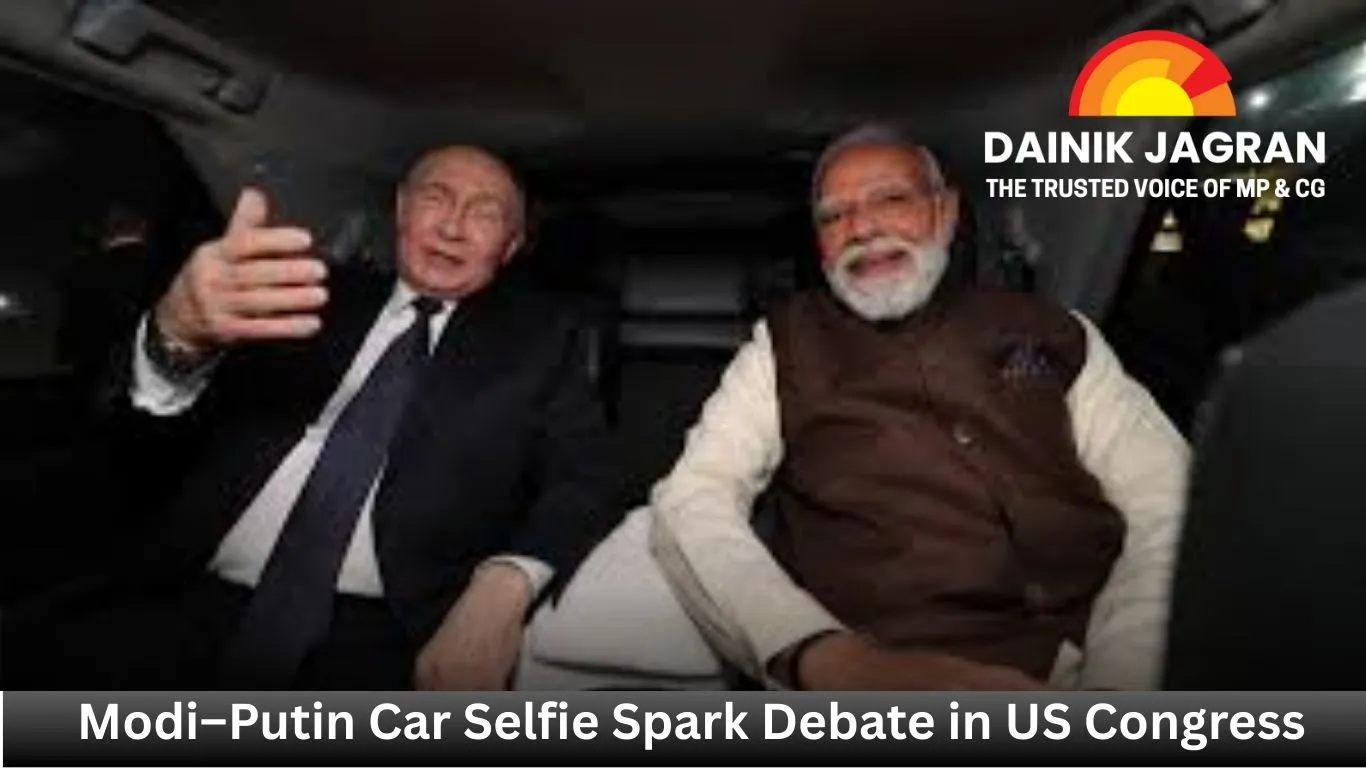
Modi–Putin Car Selfie Spark Debate in US Congress as Lawmaker Slams Trump’s India Policy
Digital Desk
During a hearing of the House Foreign Affairs Subcommittee on South and Central Asia, Democratic Representative Sydney Kamlager-Dove held up the Modi–Putin photo and argued that the image “says a thousand words” about how Washington’s pressure tactics have strained ties with New Delhi. She said former President Donald Trump’s approach toward India was “self-defeating” and had pushed a key partner closer to Moscow.
“America’s pressure-driven partnerships come at a cost,” Dove said. “This poster is proof that our actions have driven India toward Russia. We must move quickly to repair the damage.” She also ridiculed Trump’s repeated claim that he deserved the Nobel Peace Prize for preventing global conflicts, including one between India and Pakistan.
The criticism came as lawmakers assessed the current trajectory of US–India relations and the wider objective of maintaining a free and open Indo-Pacific. Putin’s December 4 visit to India — during which he left his own vehicle to ride with Modi — has been closely watched in Washington amid shifting geopolitical alignments.
In a sharp counterpoint, Republican Congressman Bill Huizenga underscored the strategic value of the US–India partnership and backed New Delhi’s stance on cross-border terrorism. He reiterated that Lashkar-e-Taiba and its proxy, The Resistance Front (TRF), orchestrated the April 22 Pahalgam attack, calling the incident a reminder of the shared security challenges.
Huizenga noted that the Trump administration had designated TRF a Foreign Terrorist Organization in July, a move India welcomed as strengthening joint counter-terrorism efforts.
As both parties sparred over past policies, lawmakers agreed on one point: rebuilding trust with India remains crucial for US security interests and regional stability.


.jpg)




