
PMC Polls See New Campaign Approach as Aishwarya Pathare Adopts Corporate-Style Manifesto

Digital Desk

PMC Polls See New Campaign Approach as Aishwarya Pathare Adopts Corporate-Style Manifesto

As the Pune Municipal Corporation (PMC) elections approach, parts of the city are witnessing a noticeable departure from conventional political campaigning.

In rapidly developing and upscale areas such as Viman Nagar, Lohegaon and Wagholi, traditional slogans, banners and street-corner speeches are gradually giving way to presentations, structured discussions and data-driven plans.

This shift is being led by BJP candidates Aishwarya Pathare and Surendra Pathare, who have introduced what they describe as a corporate-style manifesto, reflecting a growing emphasis on professionalised and outcome-oriented governance in Pune’s urban political landscape.

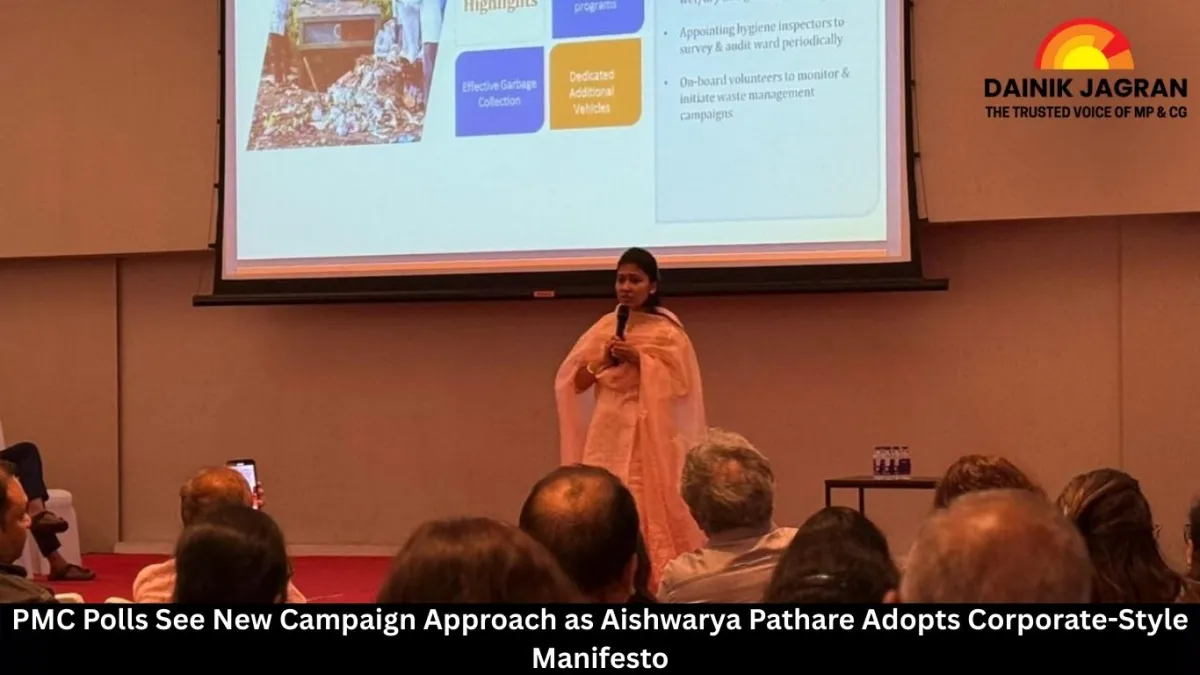
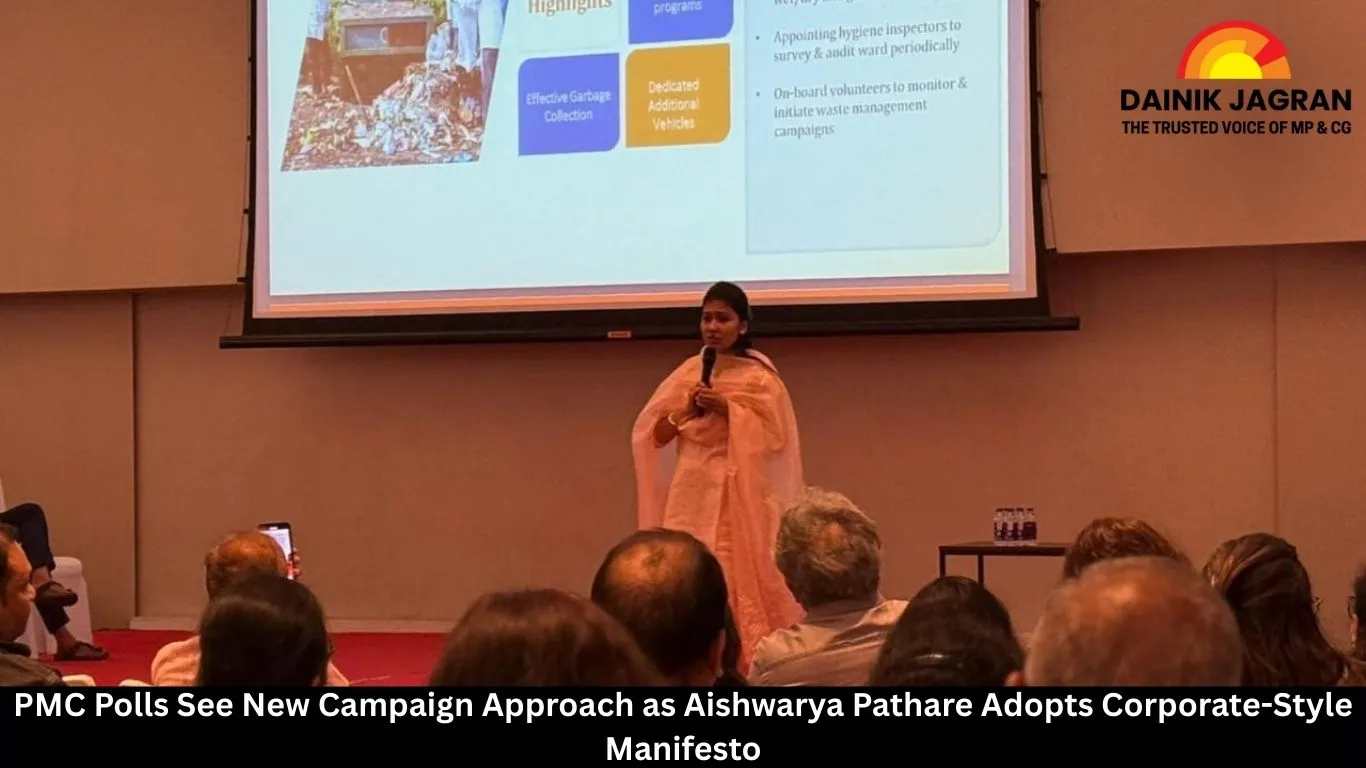
The manifesto, presented through structured documents and PPT-based briefings, outlines time-bound objectives, defined deliverables and measurable benchmarks. Rather than broad political assurances, it focuses on execution models aimed at resolving long-pending civic issues across Lohegaon, Wagholi and Viman Nagar.

Key focus areas include infrastructure deficits, traffic congestion, unplanned urban expansion and inconsistent delivery of basic civic amenities. Proposed measures range from road widening to ease traffic bottlenecks and improving public transport connectivity to regulating unauthorised construction and encouraging planned urban development.

The Pathare campaign also aligns with the broader political narrative being shaped by Team Devendra Fadnavis, which has been pushing forward a new generation of leadership - young, educated and professionally experienced particularly in urban constituencies. Party sources say the emphasis is on governance frameworks that mirror professional management practices rather than personality-centric politics.

Aishwarya Pathare, a professional engineer and entrepreneur, has highlighted during interactions with residents that modern governance must move beyond rhetoric. According to her, urban voters increasingly expect clarity on execution, timelines and accountability rather than symbolic promises.

A notable feature of the campaign is its focus on transparency. The candidates have committed to sharing progress updates with residents every six months, a practice more commonly associated with corporate project reviews. Campaign meetings have featured data-backed presentations, project timelines and performance indicators, offering voters insight into how proposed initiatives would be implemented.

Political observers say this approach resonates strongly in urban centres like Pune, where a large segment of voters consists of IT professionals, entrepreneurs and young working professionals. These voters, analysts note, are increasingly drawn to governance narratives centred on efficiency, planning and measurable outcomes.

Surendra Pathare, also an engineer and BJP candidate, has echoed this sentiment during public interactions, stating that politics must evolve with changing citizen expectations and focus squarely on delivery.

The campaign’s unconventional format has also sparked conversations on social media, where the concept of a “corporate manifesto” is being viewed as a marker of a new-era political approach aligned with the BJP’s emphasis on performance-driven governance under the broader Team Fadnavis framework.

As PMC heads into elections, this evolving campaign style suggests that Pune’s civic politics may be entering a phase where data, planning and professional execution play a more central role in shaping electoral discourse.
--------

🚨 Beat the News Rush – Join Now!

Get breaking alerts, hot exclusives, and game-changing stories instantly on your phone. No delays, no fluff – just the edge you need. ⚡

Tap to join: 

🟢 WhatsApp Channel: Dainik Jagran MP CG

Crave more?

🅕 Facebook: Dainik Jagran MP CG English

🅧 Twitter (X): Dainik Jagran MP CG

🅘 Instagram: Dainik Jagran MP CG

Share the fire – keep your crew ahead! 🗞️🔥

english.dainikjagranmpcg.com
06 Jan 2026 By Abhishek Joshi

PMC Polls See New Campaign Approach as Aishwarya Pathare Adopts Corporate-Style Manifesto

Digital Desk

In rapidly developing and upscale areas such as Viman Nagar, Lohegaon and Wagholi, traditional slogans, banners and street-corner speeches are gradually giving way to presentations, structured discussions and data-driven plans.

This shift is being led by BJP candidates Aishwarya Pathare and Surendra Pathare, who have introduced what they describe as a corporate-style manifesto, reflecting a growing emphasis on professionalised and outcome-oriented governance in Pune’s urban political landscape.

The manifesto, presented through structured documents and PPT-based briefings, outlines time-bound objectives, defined deliverables and measurable benchmarks. Rather than broad political assurances, it focuses on execution models aimed at resolving long-pending civic issues across Lohegaon, Wagholi and Viman Nagar.

Key focus areas include infrastructure deficits, traffic congestion, unplanned urban expansion and inconsistent delivery of basic civic amenities. Proposed measures range from road widening to ease traffic bottlenecks and improving public transport connectivity to regulating unauthorised construction and encouraging planned urban development.

The Pathare campaign also aligns with the broader political narrative being shaped by Team Devendra Fadnavis, which has been pushing forward a new generation of leadership - young, educated and professionally experienced particularly in urban constituencies. Party sources say the emphasis is on governance frameworks that mirror professional management practices rather than personality-centric politics.

Aishwarya Pathare, a professional engineer and entrepreneur, has highlighted during interactions with residents that modern governance must move beyond rhetoric. According to her, urban voters increasingly expect clarity on execution, timelines and accountability rather than symbolic promises.

A notable feature of the campaign is its focus on transparency. The candidates have committed to sharing progress updates with residents every six months, a practice more commonly associated with corporate project reviews. Campaign meetings have featured data-backed presentations, project timelines and performance indicators, offering voters insight into how proposed initiatives would be implemented.

Political observers say this approach resonates strongly in urban centres like Pune, where a large segment of voters consists of IT professionals, entrepreneurs and young working professionals. These voters, analysts note, are increasingly drawn to governance narratives centred on efficiency, planning and measurable outcomes.

Surendra Pathare, also an engineer and BJP candidate, has echoed this sentiment during public interactions, stating that politics must evolve with changing citizen expectations and focus squarely on delivery.

The campaign’s unconventional format has also sparked conversations on social media, where the concept of a “corporate manifesto” is being viewed as a marker of a new-era political approach aligned with the BJP’s emphasis on performance-driven governance under the broader Team Fadnavis framework.

As PMC heads into elections, this evolving campaign style suggests that Pune’s civic politics may be entering a phase where data, planning and professional execution play a more central role in shaping electoral discourse.
https://english.dainikjagranmpcg.com/politics/pmc-polls-see-new-campaign-approach-as-aishwarya-pathare-adopts/article-11978
Tags:

Trending News