


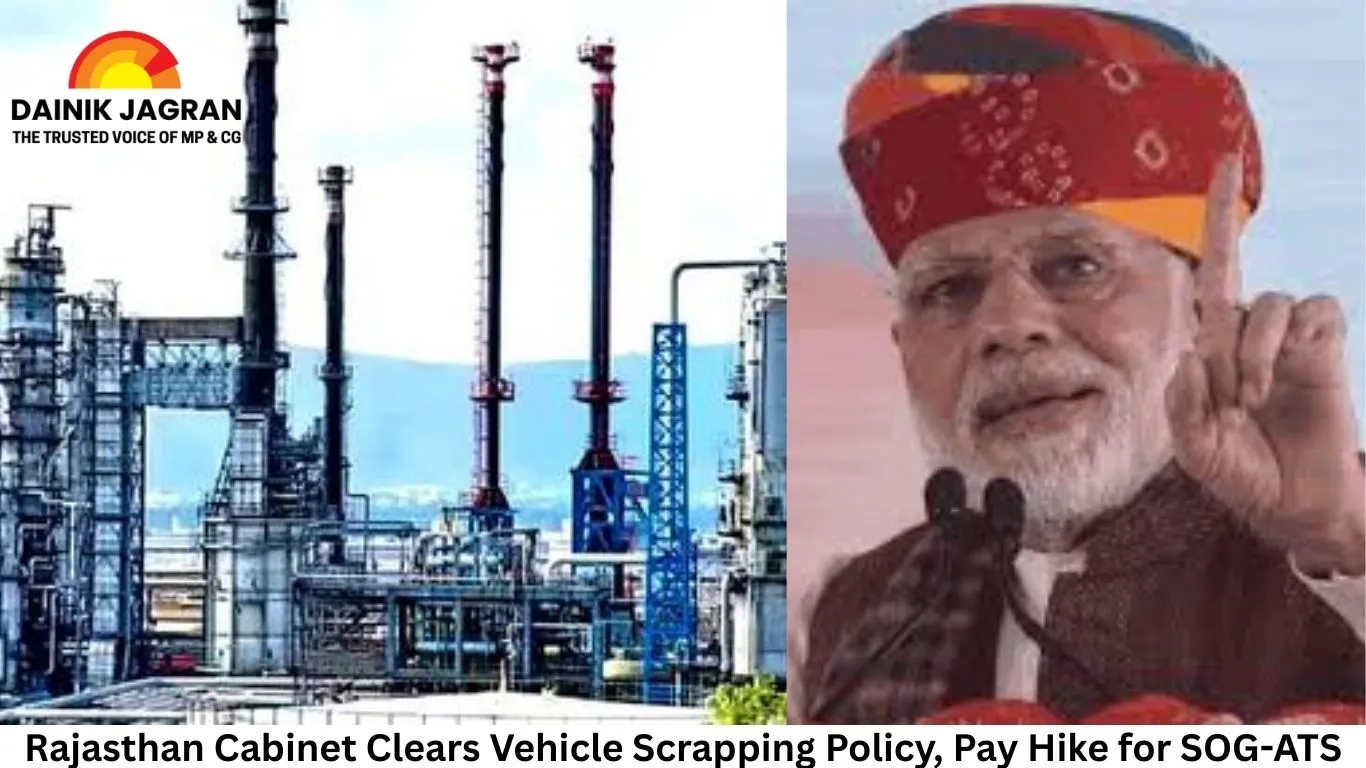
Rajasthan Cabinet Clears Vehicle Scrapping Policy, Pay Hike for SOG-ATS; PM Modi to Inaugurate Barmer Refinery Phase-I
Digital Desk
The decisions were taken at a cabinet meeting chaired by Chief Minister Bhajanlal Sharma. Deputy Chief Minister Premchand Bairwa said the Rajasthan Vehicle Scrapping Policy, announced earlier in the state budget, has now received formal approval and will soon be implemented across the state.
Under the policy, vehicles that have completed 15 years, pollution-causing vehicles, and those lying unused with scrap dealers will be phased out in a planned manner. Vehicle owners opting for scrapping will be issued an official certificate, making them eligible for incentives while purchasing new vehicles.
According to the government, certificate holders will receive a 50 per cent rebate on registration fees for new vehicles, subject to a maximum limit of ₹1 lakh. The policy is aimed at reducing vehicular pollution, improving road safety, and encouraging the use of cleaner and more efficient vehicles. The state government will also provide special concessions to vehicle scrapping units to promote investment and create employment opportunities in this sector.
In another major decision, the cabinet approved an increase in special allowance for personnel of the Special Operations Group (SOG) and Anti-Terrorism Squad (ATS). Their additional pay has been raised from 15 per cent to 25 per cent of basic salary. The move is intended to recognise the high-risk nature of their duties and boost morale among personnel involved in counter-terrorism and organised crime operations.
The cabinet also cleared the Rajasthan Artificial Intelligence and Machine Learning (AI-ML) Policy, which aims to strengthen e-governance and improve transparency in public service delivery. Officials said the policy will help enhance systems such as the public distribution mechanism and administrative monitoring through technology-driven solutions.
Meanwhile, the state government confirmed that Prime Minister Narendra Modi will inaugurate the first phase of the Barmer refinery in January. Law Minister Jogaram Patel said the project has strategic importance for Rajasthan’s industrial growth and energy security.
The refinery’s cost has risen to approximately ₹80,000 crore, reflecting expanded capacity and infrastructure development. Commercial production at the refinery is expected to begin from July 2026. Once operational, the Barmer refinery is expected to generate large-scale employment and significantly contribute to the state’s economy.
With these decisions, the Bhajanlal government has signalled its focus on environmental reform, technological governance, industrial expansion, and internal security, setting the stage for policy-driven development in the coming months.
.jpg)




