

The issue arose when Tiwari called for narco tests of senior leaders from both Congress and BJP in connection with the Jhiram Valley Naxal attack. He even submitted a letter to the judicial inquiry commission naming key political figures, which reportedly caused discomfort within the party. The Congress leadership viewed his actions as a breach of party discipline and a deviation from the official stance.
Following the statements, Tiwari was first removed from his role as a senior party spokesperson in Chhattisgarh. The state Congress, under the direction of president Deepak Baij, issued a notice asking him to submit a written explanation within three days. Party sources indicated that his response did not satisfy the leadership.
Subsequently, the Congress acted through its in-charge general secretary to expel Tiwari from the party’s primary membership for six years. This marks the latest step in a series of disciplinary measures against him.
During the controversy, Tiwari visited the Congress office in Raipur, paying tribute to party leaders who were martyred in the Jhiram Valley attack. He also claimed to possess critical documents related to the case and reportedly submitted an envelope at the Congress office. He reiterated his demand for narco tests in letters to both the National Investigation Agency (NIA) and the Jhiram inquiry commission, further intensifying internal party tensions.
The sequence of actions against Tiwari highlights the delicate balance within political parties between individual expression and adherence to the party line. Analysts suggest that his repeated insistence on pursuing an independent investigation on sensitive security matters strained his standing, ultimately leading to formal expulsion and removal from key positions.
The Congress party’s decision reflects an emphasis on discipline and unity amid politically sensitive issues. Tiwari’s case is expected to remain a point of discussion as it raises questions about internal dissent, accountability, and the handling of controversial security incidents.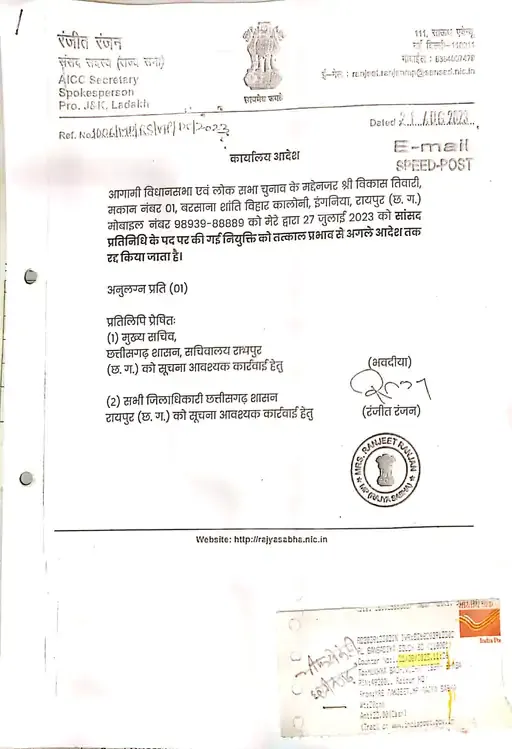

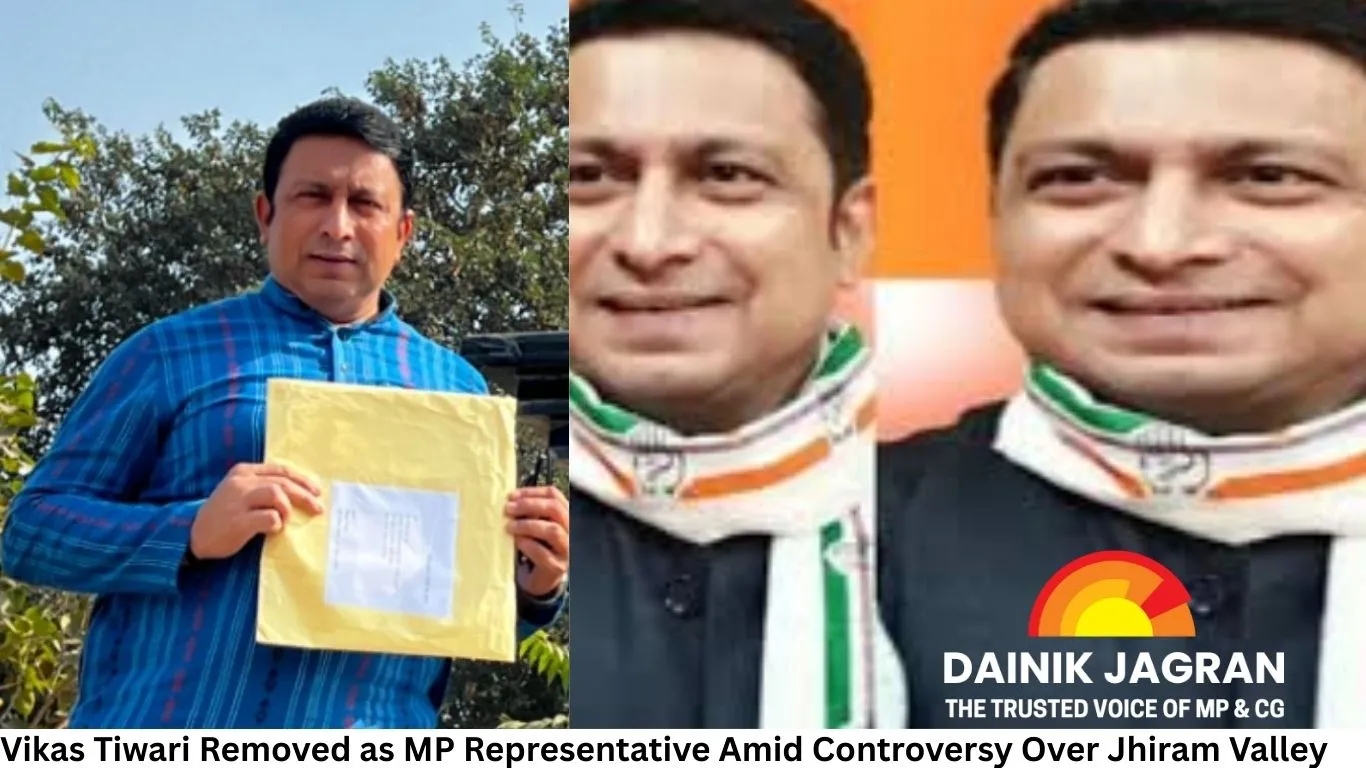
Vikas Tiwari Removed as MP Representative Amid Controversy Over Jhiram Valley Remarks
Digital Desk
The issue arose when Tiwari called for narco tests of senior leaders from both Congress and BJP in connection with the Jhiram Valley Naxal attack. He even submitted a letter to the judicial inquiry commission naming key political figures, which reportedly caused discomfort within the party. The Congress leadership viewed his actions as a breach of party discipline and a deviation from the official stance.
Following the statements, Tiwari was first removed from his role as a senior party spokesperson in Chhattisgarh. The state Congress, under the direction of president Deepak Baij, issued a notice asking him to submit a written explanation within three days. Party sources indicated that his response did not satisfy the leadership.
Subsequently, the Congress acted through its in-charge general secretary to expel Tiwari from the party’s primary membership for six years. This marks the latest step in a series of disciplinary measures against him.
During the controversy, Tiwari visited the Congress office in Raipur, paying tribute to party leaders who were martyred in the Jhiram Valley attack. He also claimed to possess critical documents related to the case and reportedly submitted an envelope at the Congress office. He reiterated his demand for narco tests in letters to both the National Investigation Agency (NIA) and the Jhiram inquiry commission, further intensifying internal party tensions.
The sequence of actions against Tiwari highlights the delicate balance within political parties between individual expression and adherence to the party line. Analysts suggest that his repeated insistence on pursuing an independent investigation on sensitive security matters strained his standing, ultimately leading to formal expulsion and removal from key positions.
The Congress party’s decision reflects an emphasis on discipline and unity amid politically sensitive issues. Tiwari’s case is expected to remain a point of discussion as it raises questions about internal dissent, accountability, and the handling of controversial security incidents.
.jpg)




