

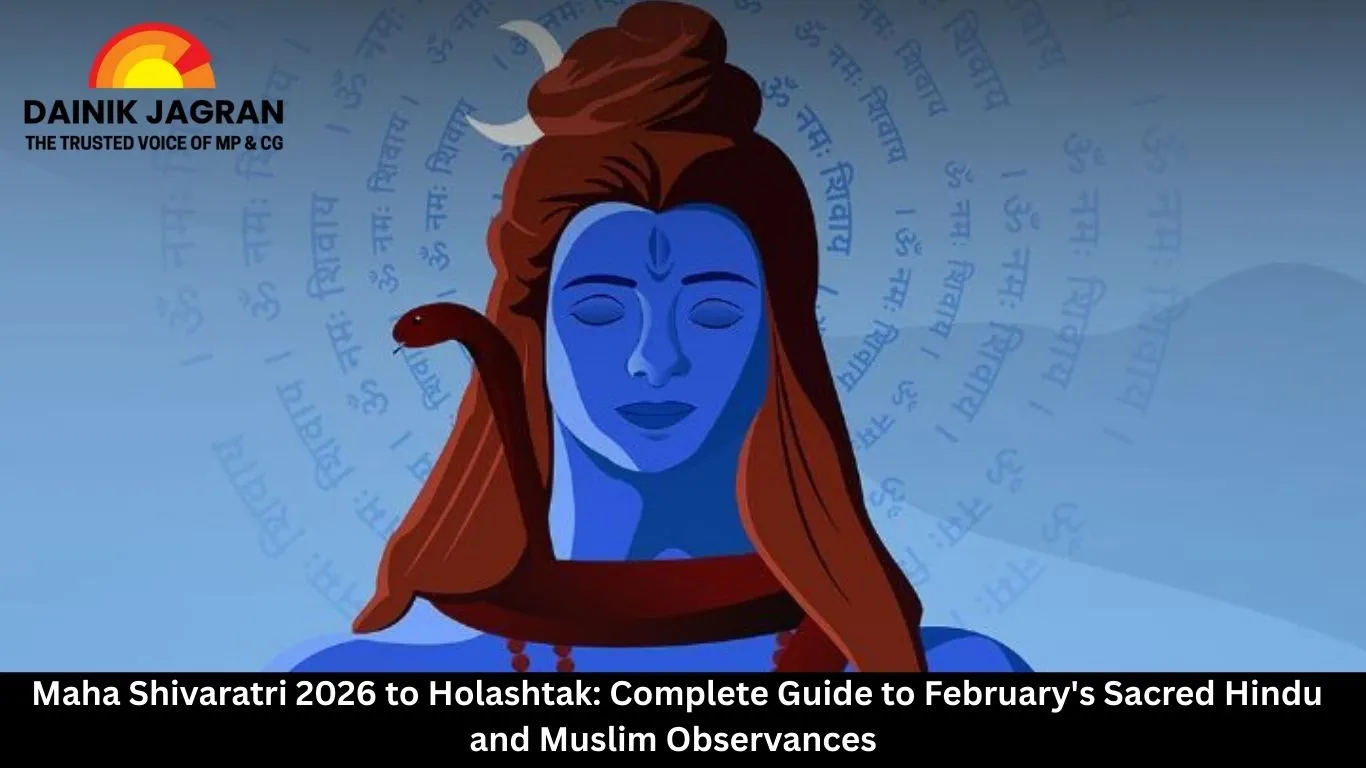
Maha Shivaratri 2026 to Holashtak: Complete Guide to February's Sacred Hindu and Muslim Observances

Digital Desk

 Maha Shivaratri 2026 to Holashtak: Complete Guide to February's Sacred Hindu and Muslim Observances

Maha Shivaratri on Feb 15, start of Ramadan on Feb 18, Bhaumvati Amavasya, and Holashtak—complete guide to religious festivals and vrats from February 15 to 28, 2026. Get shubh muhurat, puja vidhi, and significance.


The second half of February 2026 marks an intensely spiritual period in the Indian religious calendar, featuring a rare alignment of Hindu fasts, festivals, and the commencement of the holy month of Ramadan for the Muslim community. From the electrifying all-night vigil of Maha Shivaratri on February 15 to the start of Holashtak on February 24, devotees across the nation will immerse themselves in rituals, prayers, and acts of charity.

This 14-day window is packed with significant dates, including the rare Bhaumvati Amavasya, the birth anniversaries of spiritual leaders, and the beginning of the spring festive season.

February 15: Maha Shivaratri – The Grand Night of Shiva

The fortnight begins with the most significant festival of the Hindu lunar calendar: Maha Shivaratri. While there was initial confusion regarding the date due to the Chaturdashi Tithi spanning two days, religious authorities and panchang have confirmed that Maha Shivaratri will be observed on Sunday, February 15, 2026 .

Across the country, temples are witnessing an unprecedented influx of devotees. The festival, which symbolizes the divine marriage of Lord Shiva and Goddess Parvati and the triumph over darkness, involves a day-long fast and a night-long vigil (Jagran).

Grand Celebrations at Isha Yoga Centre:

The most high-profile celebration is taking place at the Isha Yoga Centre in Coimbatore, which is hosting its 32nd Mahashivratri festival. In a significant development, India's Defence Minister, Rajnath Singh, is attending as the special guest. The all-night event, led by spiritual leader Sadhguru, features powerful meditations, the Yogeshwara Linga Maha Abhishekam, and cultural performances in front of the iconic Adiyogi statue .

Shubh Muhurat for Puja:

For those observing at home, the puja is divided into four Prahars (periods). The most auspicious timings for the night-long worship are:

- First Prahar: 06:11 PM to 09:23 PM

- Second Prahar: 09:23 PM to 12:35 AM (Feb 16)

- Third Prahar: 12:35 AM to 03:47 AM (Feb 16)

- Fourth Prahar: 03:47 AM to 06:59 AM (Feb 16) 

Devotees are performing Abhishekam on the Shiva Linga with milk, honey, and bilva leaves, chanting "Om Namah Shivaya" throughout the night.

February 17: Bhaumvati Amavasya – A Day for Ancestors and Charity

Just two days after the festival of lights, Tuesday, February 17, marks a powerful Amavasya (new moon day). Since it falls on a Tuesday, it is known as Bhaumvati Amavasya, considered highly auspicious for performing ancestral rituals (Pitru Puja) and charity .

The Amavasya Tithi begins on February 16 at 5:34 PM and ends on February 17 at 5:30 PM. The Brahma Muhurat (5:16 AM to 6:07 AM) is considered the ideal time for a holy dip (Snan), particularly in the Ganga, to purify the soul . Devotees are also worshiping the Peepal tree and the Tulsi plant, offering water mixed with Ganga Jal to please the deities and ancestors.

February 18: Ramadan Fasting Begins & Chandra Darshan

This Wednesday is a day of dual significance, bridging two major faiths.

Start of Ramadan:

The holy month of Ramadan (Ramzan) is set to begin on Wednesday, February 18, 2026, marking the first day of fasting for Muslims worldwide. According to astronomical calculations and the Fiqh Council of North America, the first Taraveeh prayer will be conducted on the night of February 17 . This month is dedicated to self-reflection, prayer, and charity (Zakat), commemorating the revelation of the Quran.

Chandra Darshan:

On the same evening, Hindu devotees will look to the skies for the first sighting of the moon after Amavasya. Chandra Darshan on February 18 is considered extremely sacred. The ideal time to view the moon and offer prayers is between 06:03 PM and 06:52 PM . It is believed that offering arghya (water) to the moon god on this day brings peace, prosperity, and marital bliss.

February 19: A Day of Spiritual Birth Anniversaries

Thursday is a double celebration day for devotees, marking the birth of a saint and an auspicious day for union.

Ramakrishna Jayanti:

Devotees of the Ramakrishna Math and Mission are celebrating the 190th birth anniversary of Shri Ramakrishna Paramahansa. Born on February 18, 1836, the saint's birth is observed according to the lunar calendar on the Dwitiya Tithi of Shukla Paksha in the month of Phalguna, which falls on February 19 this year . Special prayers and bhajan sessions are being held at Belur Math and various centers worldwide, remembering the spiritual guru who influenced Swami Vivekananda.

Phulera Dooj:

On this same day, the Braj region of Mathura and Vrindavan is celebrating Phulera Dooj. Falling on the Dwitiya Tithi of Shukla Paksha, this day is considered free of all defects (dosha), making it extremely auspicious for starting new relationships or marriages without waiting for a specific muhurat . Temples are showcasing special decorations depicting Lord Krishna preparing for the Holi festival.

Shivaji Jayanti:

The day also holds historical significance as the birth anniversary of Chhatrapati Shivaji Maharaj, marked as a restricted holiday in several states .

Mid-Week Observances: Vrat and Holi Preparations

As the week progresses, the focus shifts toward regular fasting and the countdown to Holi.

- February 21 (Saturday): Chaturthi Vrat – Dedicated to Lord Ganesha, devotees observe the Sankashti Chaturthi fast .

- February 22 (Sunday): Shasti – Observed primarily in specific regions for deities like Lord Murugan.

- February 24 (Tuesday): Holashtak Begins – This marks a significant shift in the festive mood. Holashtak starts on this day, a period of eight days leading up to Holi. Considered inauspicious for weddings or new ventures, this period actually begins the countdown to the festival of colors. Interestingly, Durga Ashtami Vrat is also listed for this day, showing the diverse traditions running in parallel .

- February 25 (Wednesday): Rohini Vrat – Observed primarily by the Jain community, particularly women, for the well-being of their families.

Late February: Ekadashi and Dwadashi

The month concludes with two important fasting days:

- February 27 (Friday): Amalaki Ekadashi – This Ekadashi, falling in the Phalguna month, is dedicated to the worship of the Amla (gooseberry) tree and Lord Vishnu. Fasting on this day is believed to bring immense benefits, equivalent to visiting all the holy places.

- February 28 (Saturday): Govinda Dwadashi & National Science Day – Following the Ekadashi fast, devotees break their fast on Dwadashi by worshiping Lord Vishnu. On the same day, India celebrates National Science Day, commemorating the discovery of the Raman Effect by Sir C.V. Raman, blending scientific temper with spiritual tradition.

As February 2026 draws to a close, this rich tapestry of festivals highlights India's diverse cultural heritage, bringing communities together in prayer, charity, and celebration.


--------

🚨 Beat the News Rush – Join Now!

Get breaking alerts, hot exclusives, and game-changing stories instantly on your phone. No delays, no fluff – just the edge you need. ⚡

Tap to join: 

🟢 WhatsApp Channel: Dainik Jagran MP CG

Crave more?

🅕 Facebook: Dainik Jagran MP CG English

🅧 Twitter (X): Dainik Jagran MP CG

🅘 Instagram: Dainik Jagran MP CG

Share the fire – keep your crew ahead! 🗞️🔥

english.dainikjagranmpcg.com
15 Feb 2026 By Abhishek Joshi

Maha Shivaratri 2026 to Holashtak: Complete Guide to February's Sacred Hindu and Muslim Observances

Digital Desk

The second half of February 2026 marks an intensely spiritual period in the Indian religious calendar, featuring a rare alignment of Hindu fasts, festivals, and the commencement of the holy month of Ramadan for the Muslim community. From the electrifying all-night vigil of Maha Shivaratri on February 15 to the start of Holashtak on February 24, devotees across the nation will immerse themselves in rituals, prayers, and acts of charity.

This 14-day window is packed with significant dates, including the rare Bhaumvati Amavasya, the birth anniversaries of spiritual leaders, and the beginning of the spring festive season.

February 15: Maha Shivaratri – The Grand Night of Shiva

The fortnight begins with the most significant festival of the Hindu lunar calendar: Maha Shivaratri. While there was initial confusion regarding the date due to the Chaturdashi Tithi spanning two days, religious authorities and panchang have confirmed that Maha Shivaratri will be observed on Sunday, February 15, 2026 .

Across the country, temples are witnessing an unprecedented influx of devotees. The festival, which symbolizes the divine marriage of Lord Shiva and Goddess Parvati and the triumph over darkness, involves a day-long fast and a night-long vigil (Jagran).

Grand Celebrations at Isha Yoga Centre:

The most high-profile celebration is taking place at the Isha Yoga Centre in Coimbatore, which is hosting its 32nd Mahashivratri festival. In a significant development, India's Defence Minister, Rajnath Singh, is attending as the special guest. The all-night event, led by spiritual leader Sadhguru, features powerful meditations, the Yogeshwara Linga Maha Abhishekam, and cultural performances in front of the iconic Adiyogi statue .

Shubh Muhurat for Puja:

For those observing at home, the puja is divided into four Prahars (periods). The most auspicious timings for the night-long worship are:

- First Prahar: 06:11 PM to 09:23 PM

- Second Prahar: 09:23 PM to 12:35 AM (Feb 16)

- Third Prahar: 12:35 AM to 03:47 AM (Feb 16)

- Fourth Prahar: 03:47 AM to 06:59 AM (Feb 16) 

Devotees are performing Abhishekam on the Shiva Linga with milk, honey, and bilva leaves, chanting "Om Namah Shivaya" throughout the night.

February 17: Bhaumvati Amavasya – A Day for Ancestors and Charity

Just two days after the festival of lights, Tuesday, February 17, marks a powerful Amavasya (new moon day). Since it falls on a Tuesday, it is known as Bhaumvati Amavasya, considered highly auspicious for performing ancestral rituals (Pitru Puja) and charity .

The Amavasya Tithi begins on February 16 at 5:34 PM and ends on February 17 at 5:30 PM. The Brahma Muhurat (5:16 AM to 6:07 AM) is considered the ideal time for a holy dip (Snan), particularly in the Ganga, to purify the soul . Devotees are also worshiping the Peepal tree and the Tulsi plant, offering water mixed with Ganga Jal to please the deities and ancestors.

February 18: Ramadan Fasting Begins & Chandra Darshan

This Wednesday is a day of dual significance, bridging two major faiths.

Start of Ramadan:

The holy month of Ramadan (Ramzan) is set to begin on Wednesday, February 18, 2026, marking the first day of fasting for Muslims worldwide. According to astronomical calculations and the Fiqh Council of North America, the first Taraveeh prayer will be conducted on the night of February 17 . This month is dedicated to self-reflection, prayer, and charity (Zakat), commemorating the revelation of the Quran.

Chandra Darshan:

On the same evening, Hindu devotees will look to the skies for the first sighting of the moon after Amavasya. Chandra Darshan on February 18 is considered extremely sacred. The ideal time to view the moon and offer prayers is between 06:03 PM and 06:52 PM . It is believed that offering arghya (water) to the moon god on this day brings peace, prosperity, and marital bliss.

February 19: A Day of Spiritual Birth Anniversaries

Thursday is a double celebration day for devotees, marking the birth of a saint and an auspicious day for union.

Ramakrishna Jayanti:

Devotees of the Ramakrishna Math and Mission are celebrating the 190th birth anniversary of Shri Ramakrishna Paramahansa. Born on February 18, 1836, the saint's birth is observed according to the lunar calendar on the Dwitiya Tithi of Shukla Paksha in the month of Phalguna, which falls on February 19 this year . Special prayers and bhajan sessions are being held at Belur Math and various centers worldwide, remembering the spiritual guru who influenced Swami Vivekananda.

Phulera Dooj:

On this same day, the Braj region of Mathura and Vrindavan is celebrating Phulera Dooj. Falling on the Dwitiya Tithi of Shukla Paksha, this day is considered free of all defects (dosha), making it extremely auspicious for starting new relationships or marriages without waiting for a specific muhurat . Temples are showcasing special decorations depicting Lord Krishna preparing for the Holi festival.

Shivaji Jayanti:

The day also holds historical significance as the birth anniversary of Chhatrapati Shivaji Maharaj, marked as a restricted holiday in several states .

Mid-Week Observances: Vrat and Holi Preparations

As the week progresses, the focus shifts toward regular fasting and the countdown to Holi.

- February 21 (Saturday): Chaturthi Vrat – Dedicated to Lord Ganesha, devotees observe the Sankashti Chaturthi fast .

- February 22 (Sunday): Shasti – Observed primarily in specific regions for deities like Lord Murugan.

- February 24 (Tuesday): Holashtak Begins – This marks a significant shift in the festive mood. Holashtak starts on this day, a period of eight days leading up to Holi. Considered inauspicious for weddings or new ventures, this period actually begins the countdown to the festival of colors. Interestingly, Durga Ashtami Vrat is also listed for this day, showing the diverse traditions running in parallel .

- February 25 (Wednesday): Rohini Vrat – Observed primarily by the Jain community, particularly women, for the well-being of their families.

Late February: Ekadashi and Dwadashi

The month concludes with two important fasting days:

- February 27 (Friday): Amalaki Ekadashi – This Ekadashi, falling in the Phalguna month, is dedicated to the worship of the Amla (gooseberry) tree and Lord Vishnu. Fasting on this day is believed to bring immense benefits, equivalent to visiting all the holy places.

- February 28 (Saturday): Govinda Dwadashi & National Science Day – Following the Ekadashi fast, devotees break their fast on Dwadashi by worshiping Lord Vishnu. On the same day, India celebrates National Science Day, commemorating the discovery of the Raman Effect by Sir C.V. Raman, blending scientific temper with spiritual tradition.

As February 2026 draws to a close, this rich tapestry of festivals highlights India's diverse cultural heritage, bringing communities together in prayer, charity, and celebration.


https://english.dainikjagranmpcg.com/religion/-maha-shivaratri-2026-to-holashtak-complete-guide-to-februarys/article-14286

Related Posts

Latest News


