


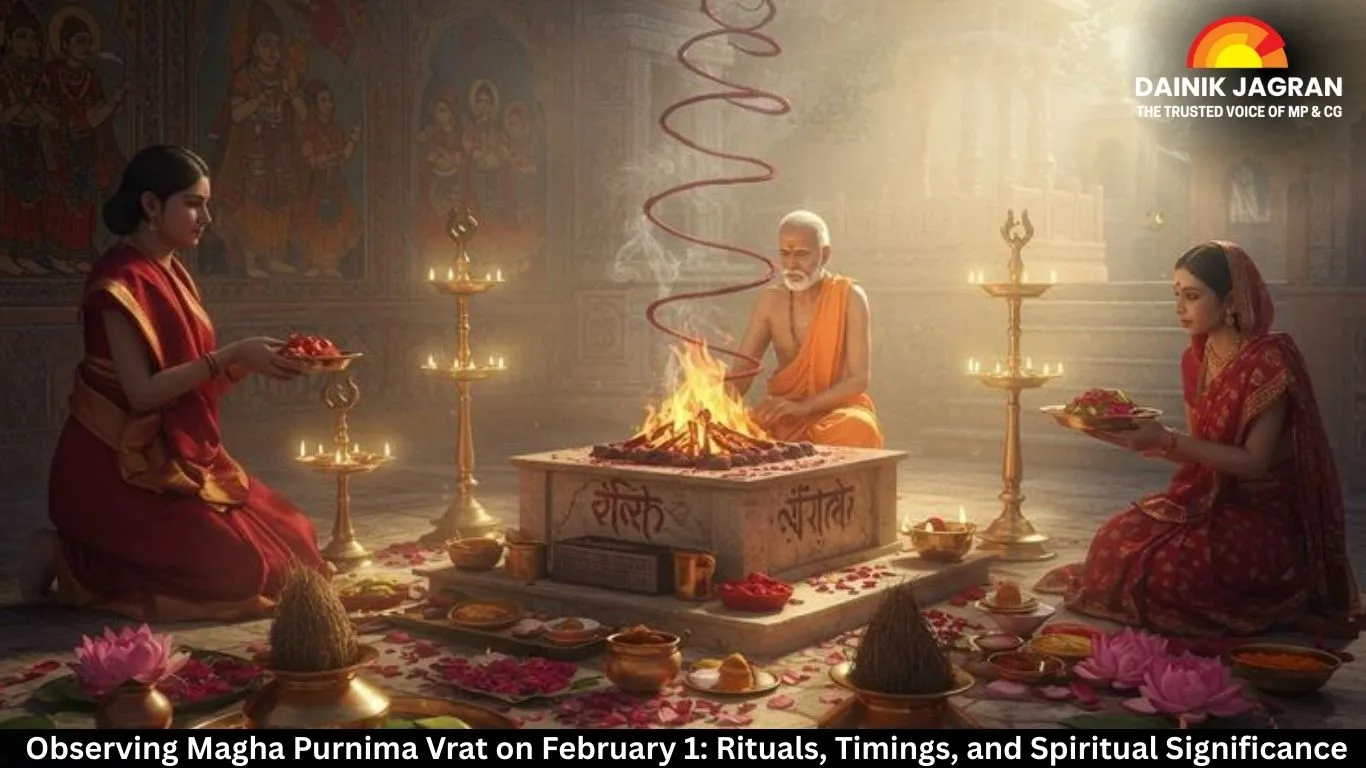
Observing Magha Purnima Vrat on February 1: Rituals, Timings, and Spiritual Significance
Digital Desk
The Purnima Tithi for Magha Purnima 2026 begins at 5:52 AM on February 1 and ends at 3:38 AM on February 2. Devotees will observe the fast from sunrise until moonrise, which is expected around 6:15 PM on February 1.
The Spiritual and Scientific Significance of Purnima
Purnima, or the full moon day, is revered as a time when the moon's energy is at its peak, believed to enhance mental clarity and spiritual awareness. Astrologically, the moon governs the mind and emotions. Worship on this day is said to sharpen intellect, reduce confusion, and alleviate stress.
Beyond spirituality, a scientific perspective is often intertwined with the tradition. It is believed that the heightened gravitational forces during a full moon can positively influence the body's water levels, potentially stabilizing metabolism and aiding digestion. This fusion of faith and perceived natural science makes the Purnima fast a holistic practice for many devotees.
How to Observe the Magha Purnima Vrat: A Step-by-Step Guide
For those observing, the day follows a traditional structure aimed at purification and devotion:
Begin at Sunrise: The vrat commences at dawn. Many devotees start with a holy bath, ideally in a sacred river, symbolizing the cleansing of the body and soul.
Observe the Fast: A strict nirjala fast (without food or water) is observed until moonrise. Those unable to maintain this can consume a single, simple meal devoid of salt, cereals, and pulses.
Perform Puja and Prayer: The day is dedicated to Lord Vishnu, often worshipped in the form of Satyanarayan. Performing the Satyanarayan Puja on Purnima is considered especially meritorious. Prayers are also offered to Chandra Deva, the Moon God.
Break the Fast at Moonrise: The fast concludes after sighting the full moon and offering 'arghya' (water) to the moonlight. Prasad is consumed to complete the observance.
A Look Ahead: Purnima Dates for 2026
Magha Purnima is the second of twelve spiritually significant full moons in the 2026 Hindu calendar. Each is associated with specific festivals and observances.
| Month (2026) | Date | Purnima Name | Key Festival / Significance |
| January | 3rd (Sat) | Pausha Purnima | Spiritual cleansing and charity. |
| February | 1st (Sun) | Magha Purnima | Auspicious for holy dips and pilgrimage. |
| March | 3rd (Tue) | Phalguna Purnima | Celebrated as Holi, the festival of colors. |
| April | 2nd (Thu) | Chaitra Purnima | Associated with Hanuman Jayanti. |
| May | 1st (Fri) | Vaishakha Purnima | Observed as Buddha Purnima. |
| June | 29th (Mon) | Jyeshtha Purnima | Fasting observed by married women in some regions. |
| July | 29th (Wed) | Ashadha Purnima | Celebrated as Guru Purnima. |
| August | 28th (Fri) | Shravana Purnima | Marked as Raksha Bandhan. |
| September | 26th (Sat) | Bhadrapada Purnima | Associated with harvest rituals. |
| October | 26th (Mon) | Ashwin Purnima | Sharad Purnima, ideal for night vigils. |
| November | 24th (Tue) | Kartika Purnima | One of the most sacred full moons. |
| December | 23rd (Wed) | Margashirsha Purnima | Prayers for peace and prosperity. |
As the bright full moon rises on the evening of February 1, it will mark a moment of widespread spiritual reflection. The Magha Purnima Vrat serves as a powerful reminder of the cyclical nature of time in Hindu tradition, offering a regular monthly opportunity for renewal, discipline, and connection with the divine.
.jpg)




